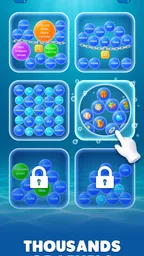
Bubble Word Jam review
 Analysis by Appsdrops
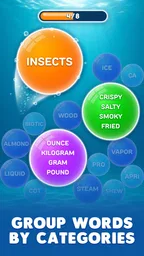
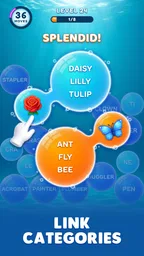
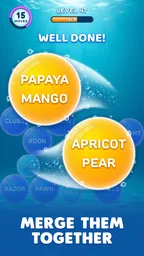
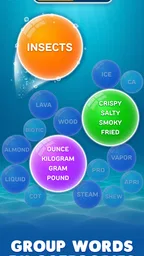
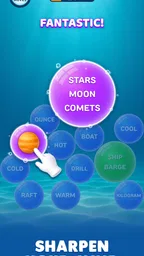
I went into Bubble Word Jam expecting a familiar word puzzle with a bright, tactile twist. Its appeal is easy to understand once you focus on the basic action: you work through word puzzles, connect ideas into categories, and get the pleasure of seeing bubbles pop as you make progress. That makes it a lighter-feeling alternative to a plain grid of letters, even though the thinking still comes from spotting relationships and finding the words that belong together.
I’d recommend it to someone who wants a short mental diversion rather than a serious study tool or a sprawling puzzle campaign. It is a free word game from Lion Studios Plus, rated for Everyone, and its current version is 1.7.2. The game has a 4.5 average from around 44,000 ratings, which gives a useful sense of its broad appeal, though the right question for me is whether its particular puzzle rhythm suits the way you like to play.
Make the first move, then look for the connection
The first useful habit is to treat each puzzle as a small sorting task, not a race to tap every plausible answer. Read the available words, pause over the ones that seem to share a theme, and use the category idea to narrow the field. That extra moment of inspection is especially helpful when two words could fit more than one group. The game’s bubble presentation gives the selection a lively feel, but the satisfying effect is most enjoyable when the choice itself makes sense.
This is where the title’s word-game identity matters. In a conventional word search, I scan a letter grid for a word I already have in mind. In a crossword, I work from clues and crossing letters. Here, the more natural approach is to notice how words relate and build categories from those links. If you enjoy classification, associations, and the little “of course” moment when a group clicks into place, this format has a clear advantage over simply hunting for hidden letters.
It also asks for a different kind of patience. A word that seems obvious can distract from a stronger shared theme elsewhere, so I’d avoid committing to the first grouping that looks plausible. I find it more effective to compare a couple of candidate categories before acting. That small adjustment makes the puzzle feel less like guessing and more like reasoning, without turning a casual session into homework.
Use a quick scan before committing
A practical way to approach a tricky board is to start with the most distinctive words. A specific object, activity, or idea often gives you a firmer anchor than a broad word that could belong to several themes. Then test the remaining candidates against that anchor. This is not a special feature or a shortcut built into the game; it is simply a reliable way to get more value from its category-based design.
I’d also recommend resisting random taps when you are uncertain. In this style of puzzle, a rushed selection can make the board feel confusing because your attention shifts from relationships to trial and error. Taking a breath and rereading the options is often more productive. That’s a small but meaningful distinction: the game rewards noticing patterns, and the pop effect works best as confirmation rather than as a substitute for thinking.
Why the feedback feels satisfying
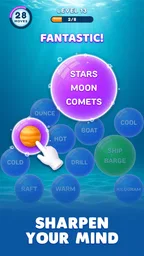
The pop is the immediate feedback that gives the puzzle its own texture. A correct move does not just advance an abstract word list; it gives the action a visible, playful payoff. That makes each solved connection feel more tangible than checking off a word on a static page. For a quick break, this matters: the reward arrives close to the decision, so I don’t need to hold a long chain of progress in my head to feel that I have accomplished something.
There is a trade-off, though. The same punchy feedback can make the experience feel more casual than a word game built around careful clue-solving. If you want dense vocabulary challenges, elaborate deduction, or a strong sense of narrative progression, the popping presentation may not be enough to carry your interest. I see it as a pleasant layer over the puzzle rather than the reason to choose the game on its own.
That distinction helps set expectations. Bubble Word Jam is best approached as a breezy category puzzle that adds a cheerful response to each successful connection. It is not the option I would pick when I want to train a particular language skill, sit with a difficult crossword for a long stretch, or measure improvement through formal lessons. For those goals, a dedicated vocabulary app, a crossword, or a more demanding word puzzle is likely a better fit.
The reward is a clean little moment of progress
When a category comes together, the reward is twofold: the answer feels resolved, and the animated pop makes that resolution enjoyable. I like that the satisfaction comes from recognizing a relationship rather than merely tapping quickly. The game’s core idea can therefore appeal to both word lovers and people who usually find traditional word puzzles too quiet or visually plain.
For everyday use, that makes it easy to fit between other tasks. I can imagine opening it while waiting for a drink, taking a short break between chores, or unwinding for a few minutes after work. In those situations, a compact puzzle is more appealing than a game that demands an uninterrupted evening. The mental effort is real enough to hold attention, but the playful feedback keeps the mood light.
One useful trade-off is that the category format favors flexible association more than exact spelling practice. If your main aim is to memorize definitions or improve spelling, you may want to pair it with something built for that purpose. If you enjoy finding a shared idea across several words, however, the design gives you a satisfying reason to keep looking for the next connection.
When to stop, and what brings me back
The game’s short-puzzle feel is a good match for stopping at a natural point. I’d use it in brief sessions rather than expecting a long, continuous campaign: finish the puzzle in front of you, enjoy the resolution, and decide whether you want another. That makes it easy to put down without needing to remember a complex strategy or return to a long story thread.
The reset is part of the appeal. Once one set of relationships has been sorted, the next puzzle offers a fresh chance to make sense of a new arrangement. The reason to continue is not a complicated system I need to manage; it is the simple curiosity of seeing what the next word grouping asks me to notice. That loop—inspect, connect, get the pop, then begin again—is clear and easy to understand.
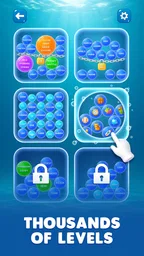
That same simplicity can become a limitation if you need a strong long-term goal. Players who prefer extensive progression, deep customization, or a sustained competitive challenge may find the basic loop too modest. I would not choose it as my main game for a long commute if I specifically wanted a story or a layered campaign. It is better as a small, repeatable diversion than as a game that takes over an afternoon.
What to expect from the free version
The game is free to install, with in-app purchases ranging from $0.99 to $99.99 per item. That range is broad, so I’d check the purchase details in the app store before spending and decide in advance whether you want to make any optional purchase. The core decision is simple: try the free game first and see whether the category puzzles hold your attention before considering anything extra.
Its audience is broad, and the Everyone age rating makes it a reasonable choice for casual play across age groups. That does not mean every player will find every word equally familiar; age suitability and puzzle difficulty are different things. I’d be comfortable recommending it for a shared low-pressure break, while still giving younger players room to work through unfamiliar words rather than rushing to supply answers.
With more than a million installs and around 2,100 written reviews, it has clearly reached a substantial audience. Those figures are useful context, not a guarantee that its particular puzzle style will suit you. Its release date is September 8, 2025, and the game requires Android 7.0 or later. If you are choosing between several word games, those practical details are worth checking alongside the more important question: do you enjoy connecting words by theme?
Who will enjoy it, and who should choose something else
I think Bubble Word Jam is a good fit for people who like short word challenges, visual feedback, and grouping ideas into categories. It is especially suitable if you want a game that asks for attention without demanding a long setup. The format can also work for someone who has bounced off crosswords because clues and crossings feel too demanding, but still wants more mental engagement than a basic matching game.
I would steer dedicated crossword fans toward crosswords when they want clue depth, and word-search fans toward a grid-based game when they prefer scanning and spelling out hidden terms. A vocabulary learner may be better served by a tool that explains and revisits definitions. Bubble Word Jam occupies a narrower middle ground: its main pleasure is seeing which words belong together, then receiving a quick, satisfying confirmation.
My overall impression is that the game understands its own scale. It offers a recognizable puzzle action, a pleasant payoff, and an uncomplicated reason to try another round. The bubble effects make the solving feel more tactile, while the category focus gives the player something to think about beyond reflexes. The main drawback is also part of its identity: players who want depth, instruction, or a strong sense of long-term progression may outgrow the loop.
If you are after a friendly word game for spare moments, I’d give it a try and judge it by whether the category discoveries keep you curious. Go slowly when a grouping is ambiguous, use distinctive words as anchors, and treat each pop as confirmation of a connection you have actually spotted. That approach brings out the best in the game. For a quick, thoughtful break with a cheerful reward, Bubble Word Jam is an easy one to recommend; for a demanding word workout, I’d choose a more substantial puzzle instead.
What we like
- Quick rounds make the game easy to enjoy in short sessions.
- Word puzzles offer a relaxing alternative to action-heavy games.
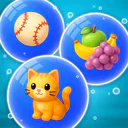
- Bubble mechanics add a playful twist to familiar word searches.
- The game can help reinforce spelling and vocabulary skills.
- Simple controls make it approachable for new players.
What could be better
- Some puzzles may feel repetitive after extended play.
- Later levels may become challenging without clear hints.
- Small text can be difficult to read on compact screens.
- Progress may depend on a steady internet connection.
- Ads can interrupt the flow between rounds.







