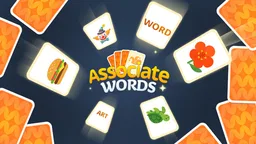
Associate Words: Solitaire review
 Analysis by Appsdrops
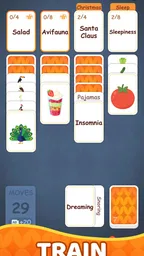
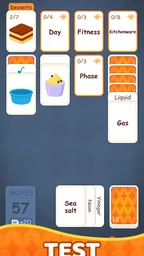
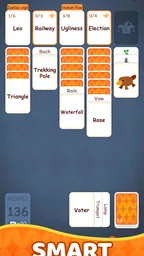
Associate Words: Solitaire makes a simple but appealing promise: bring the satisfying pattern-building feel of solitaire to word associations. I like that idea because it offers a different kind of word puzzle from the usual crossword or anagram challenge. Rather than asking only whether I can spell a word, it invites me to notice how words relate. That shift gives the game a relaxed, thoughtful character, though it also means its appeal depends on whether you enjoy making connections more than solving tightly defined clues.
What the word-and-card idea does well
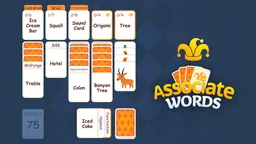
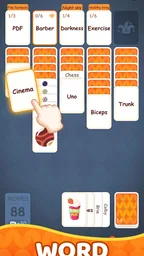
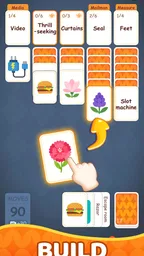
As a word game, it sits between two familiar habits: arranging cards into a workable sequence and grouping language by meaning. The combination is its main draw. A good association can feel obvious once spotted, but getting there may involve trying several possible links and reconsidering what a word suggests. I find that more conversational than a conventional crossword, where a clue usually points toward one intended answer.
The solitaire framing also makes the experience easier to approach in short bursts. It suits the small gaps in a day when I want something more engaging than scrolling but do not have the time or focus for a long session. A few minutes with a word puzzle can feel complete in a way that a sprawling story game often does not. The game’s central idea is therefore well matched to casual play: it asks for attention, but not necessarily a long stretch of it.
That flexibility is useful for different moods. If I am alert, I can think through the possible relationships between words and enjoy the moment when a connection clicks. If I am tired, the same basic activity can still feel approachable because it does not depend on reflexes or fast reactions. The trade-off is that a relaxed pace may not satisfy anyone looking for a demanding, high-pressure challenge.
I would describe the strongest part of the design as the way it makes language feel like a puzzle material rather than a test. Association games reward lateral thinking: a word can connect to another through meaning, context, or a familiar phrase. That leaves room for small surprises. It is a pleasant change from games that measure vocabulary mainly by how many obscure words a player already knows.
There is also a useful distinction between this and a standard card solitaire game. In traditional solitaire, the central question is often whether the cards can be moved into the right order. Here, language is part of the reasoning, so a move can prompt me to think about the relationship itself. That makes the game a better fit for people who want a light mental exercise than for players who simply want a familiar card layout to pass the time.
A good fit for brief, low-pressure sessions
One realistic use is a short break between tasks. I might open it while waiting for a kettle to boil or sitting in a waiting room, work through a puzzle, and put the phone away without needing to remember a complicated plot or a long sequence of actions. The attraction is not that every session will be gripping; it is that the format lends itself to picking up and setting down when convenient.
For a quieter evening, it can also work as a screen activity that asks for thought without demanding a competitive mindset. I would not choose it as a substitute for a deep strategy game, but I can see its value when I want to stay mentally occupied while keeping the mood gentle. That difference matters: the game’s appeal is less about mastery and more about the small satisfaction of finding a connection.
A practical tip is to approach a difficult association by asking what kind of link might be intended, rather than immediately searching for a single dictionary-style definition. A word can evoke a topic, a common expression, or a related idea. Thinking in those broader categories can help keep the puzzle from turning into a frustrating hunt for one “correct” synonym. It is a way to enjoy the game’s style of thinking, not a guarantee that every puzzle will land for every player.
Where the concept can lose its grip
The same openness that makes word association appealing can also be its main weakness. Connections are not always as precise as crossword clues or anagrams, and players may see a plausible relationship that does not match the puzzle’s intended path. When that happens, the experience can feel less like solving and more like guessing what the game expects. I would keep that in mind if you prefer rules that make the right answer unmistakable.
Another limitation is variety of challenge. The central loop is built around connecting words, so anyone who quickly tires of association puzzles may find that the core activity feels familiar after the novelty wears off. The solitaire label may suggest a broad range of card play to some people, but the distinctive reason to try this game is the word-linking angle. If you want a conventional deck-based solitaire experience, a dedicated card game is likely the clearer choice.
It is also not the strongest pick for someone who wants a structured vocabulary course. Playing with words can encourage reflection, but that is different from guided lessons, pronunciation practice, or a planned sequence of language instruction. I would treat it as entertainment with a language-minded twist, not as a replacement for a learning app or a reference tool.
There is a similar caveat for players who want competition or a strong social element. The attraction described by the game is the individual puzzle activity, not a head-to-head contest. If your preferred word games involve racing friends, comparing elaborate scores, or solving together, another option built specifically around those activities may suit you better. This one makes more sense when the pleasure is in your own moment of recognition.
Who I would recommend it to
I would point Associate Words: Solitaire toward casual players who enjoy language but do not necessarily want a crossword’s clue-by-clue structure. It is particularly promising for people who like making mental links between everyday words, and for card-game fans curious to see that familiar solitaire spirit applied to a different kind of puzzle. The game is marked for Everyone, so its basic audience is broad, although individual enjoyment will still depend on how much you like open-ended associations.
It may also be a good choice for a household looking for a simple word activity that does not rely on fast reactions. Players can take their time considering a connection, which makes the premise approachable for a range of ages. I would still recommend trying it with realistic expectations: it is a casual puzzle game, not a comprehensive educational program or a deep card strategy experience.
Those who prefer exact rules should compare it with crosswords, word searches, or anagram games before settling in. Crosswords are better when you enjoy working from specific clues; anagrams suit players who like manipulating letters; and standard solitaire is the obvious alternative for someone who wants card sequencing without a language layer. Associate Words occupies its own middle ground, and that is both its point of difference and a boundary on who will enjoy it.
The game is free to start, with in-app purchases priced from $0.99 to $99.99 per item. I would keep that range in mind before making any purchase and check the in-app options carefully, especially if the phone is shared with a younger player. The free entry makes it easy to see whether the word-association approach suits you, while the optional purchase range is a reason to be deliberate rather than tapping through prompts without checking.
Popularity, upkeep, and practical details
Astrasen Global is the developer behind the game. It has a 4.8 average from around 42,000 ratings, and more than a million installs, which suggests that the concept has found a sizable casual audience. I read that as useful context, not a guarantee that every puzzle style or association will work for every player. Ratings can help you judge whether a game has broad appeal, but your own preference for this particular kind of wordplay matters more.
The game was released on November 3, 2025, and its current version is 1.340. It requires Android 6.0 or later. Those details make it easier to judge basic compatibility before installing; the game is free to download, while in-app purchases are available. If you are installing it on an older device, checking the operating-system requirement first is a sensible step.
For anyone comparing it with other word games, I would focus less on the number of puzzles or the promise of a particular difficulty curve and more on the kind of thinking you want to do. This is about finding relationships, not proving spelling speed or filling a grid from fixed clues. If that distinction sounds enjoyable, the premise has a clear reason to stand out. If it does not, a more conventional word puzzle will probably feel more satisfying.
My verdict on the association-first approach
My overall view is positive but specific: this is a casual word puzzle for people who like spotting connections, not a universal replacement for every solitaire or vocabulary game. Its best quality is the simple, distinctive marriage of card-game framing and associative thinking. Its main risk is that open-ended links can feel subjective, and the core loop may not provide enough variation for players who need a steadily changing set of mechanics.
I would try it if you want a low-pressure way to give your mind something to do during short breaks, or if ordinary crossword clues have started to feel too rigid. I would skip it if you want competitive play, formal language lessons, or traditional card solitaire. For the right player, the pleasure is small but genuine: noticing a relationship that was hiding in plain sight. That is a focused idea, and the game is most convincing when judged on those terms.
What we like
- Quick rounds make it easy to play during short breaks.
- Simple controls are approachable for casual players.
- Word puzzles add a fresh twist to solitaire.
- Progression can encourage regular play.
- The familiar card format is easy to understand.
What could be better
- Some word clues may feel unclear or overly difficult.
- Players seeking classic solitaire may dislike the word focus.
- Repeated puzzle formats can become predictable.
- A missed answer may interrupt the pace of a round.
- Small screens can make card details harder to see.







