
Speak English with Loora AI review
 Analysis by Appsdrops
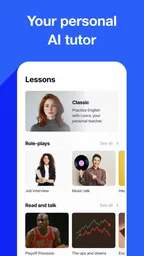
Speak English with Loora AI is most appealing when you need a low-pressure place to say English aloud, not another lesson to read through. I like the idea behind this Education app: make speaking practice easy to fit into an ordinary day, so starting a conversation feels less intimidating over time. Its focus is useful and clear, but it is also a narrow one. If you want a structured course, a human tutor, or a broad set of language-learning activities, this is unlikely to replace those options.
Practice that puts speaking first
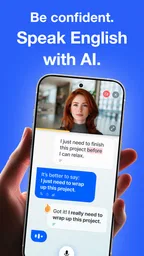
Loora AI, developed by Loora AI, is built around the gap many learners experience between understanding English and being willing to speak it. Reading and listening can improve comprehension, yet they do not necessarily prepare you to answer a question out loud without pausing to translate. A conversational practice app can help with that specific hurdle by giving you a place to try, stumble, and continue without the social pressure of a live conversation.
That distinction matters. I would treat Loora as a speaking companion rather than a complete English curriculum. The useful measure is not whether you finish a session feeling as if you have mastered a topic; it is whether you become more comfortable forming an answer instead of rehearsing every word silently first. For learners who already study grammar or vocabulary elsewhere, that makes the app a plausible addition rather than a replacement.
The app is free to install, with in-app purchases listed from $11.25 to $155.99 per item. That range is broad enough that I would check the exact offer and terms shown in the app before committing to anything. The free entry point makes it possible to explore whether AI-led conversation suits you, but it does not mean every part of the experience is free. If you are evaluating it on a budget, decide what kind of regular practice you want before considering a purchase.
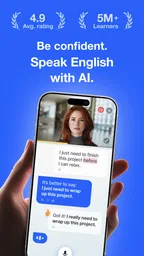
It has a 4.9 average from around 374,000 ratings, and it has passed 10 million installs. Those figures suggest that many people have tried it, but popularity alone cannot tell you whether its style will match your learning habits. The more useful question is personal: do you learn by speaking through uncertainty, or do you prefer to study a rule and prepare before attempting conversation?
Why speaking practice can be valuable
The strongest case for Loora is that it gives speaking a more practical place in a routine. Many learners do not lack opportunities to read English; they lack a comfortable setting in which to produce it. A conversation with an AI can lower the stakes enough to make repetition feel possible. You can focus on getting a thought across rather than worrying about taking too long or making a mistake in front of another person.
That can be especially helpful for someone who understands common phrases but freezes when asked an unscripted question. The first attempts may still feel awkward, and no app can make a learner fluent simply by being installed. But practicing the act of answering is different from collecting vocabulary. It encourages you to retrieve words under a little pressure, which is precisely the point at which passive knowledge often fails.
A practical way to use a speaking tool is to bring it into a moment that already exists in your day. For example, after work, you might spend a short stretch talking about what happened, what you plan to do tomorrow, or a meal you are preparing. The value is not that these subjects are sophisticated; it is that they are familiar enough for you to notice where your English falters. When you cannot find a word, try describing it another way rather than immediately switching back to your first language. That workaround is useful in real conversations, too.
I would also keep a small note of recurring stumbling blocks after practice: a phrase you repeatedly avoid, a tense that slows you down, or a topic where you run out of words. That turns a conversation session into a source of material for later study. Loora is better suited to building speaking habit than to replacing a notebook, grammar reference, or vocabulary review. Pairing it with those tools gives each one a clearer job.
How to get more from each session
One non-obvious advantage of AI conversation is that you can use the same general situation repeatedly without making a friend or tutor repeat themselves. I would deliberately revisit a familiar topic after a few days, but change the angle: explain an opinion, tell a story, or describe a problem. Repeating the subject gives you a fairer sense of whether your response is becoming more fluent, while changing the task stops practice from becoming a memorized script.
Another useful approach is to practice the moments that are hardest to improvise. Before a meeting, prepare how you might introduce your point or ask someone to clarify a detail; before travel, rehearse explaining a simple need. The goal is not to memorize a perfect speech. It is to make common conversational moves feel less foreign, then practice adapting when the wording in your head does not come out as planned.
It is also worth separating confidence from correctness. A smoother answer can feel like progress even if it contains errors, while a careful speaker may pause because they are trying to be accurate. I would not judge improvement by one session or by how quickly you respond. Notice whether you can express more of your meaning, recover when you get stuck, and speak with less internal translation. Those are more useful signs for this particular kind of practice.
AI conversation has a trade-off: it offers convenience and a forgiving practice partner, but it is not the same as talking with a person who has their own experiences, reactions, and conversational habits. Real people interrupt, misunderstand, change the subject, and use informal language in ways a practice tool may not reproduce. If your immediate goal is to prepare for natural conversation with colleagues, classmates, or neighbors, use AI as rehearsal, then seek human interaction as well.
Where it may fall short
The main limitation is the narrowness of the promise. Speaking practice can address hesitation, but it cannot by itself guarantee balanced progress in listening, writing, reading, pronunciation, grammar, and vocabulary. If you are starting from the basics and need a carefully staged path through core language skills, a course that explicitly organizes lessons may be a better first choice. Loora makes more sense once you have enough English to attempt a conversation, even if your spoken ability still feels shaky.
There is also a motivation issue. A conversational app can make practice accessible, but it cannot make you show up consistently. If you prefer fixed assignments, visible milestones, and a teacher who notices when you fall behind, a self-directed AI tool may feel too loose. Similarly, a learner who mainly wants corrections to formal writing or detailed grammar explanations should choose a resource designed around those tasks instead of expecting spoken practice to cover them.
Before paying, I would test whether the conversation style actually prompts you to speak rather than merely making you feel occupied. Try a few sessions with specific goals, such as explaining a routine or defending a simple preference. If you find yourself producing fuller answers and wanting to continue, the format may suit you. If you are mostly waiting for prompts or feeling unsure what to say, a structured class or a topic-based course may offer a better starting framework. With purchases spanning such a wide range, checking the exact in-app option matters more than assuming one price applies to everyone.
There is another trade-off in practicing with AI: a comfortable exchange may create a safer environment than the messy conversation you eventually want to handle. That is a benefit for building confidence, but it can also become a reason to avoid people altogether. I would set a simple progression: use the app to warm up, then try one real-world English interaction when an opportunity comes along. The practice is most valuable when it helps you participate beyond the app, not when it becomes a substitute for every human conversation.
Who is most likely to benefit?
I would recommend Loora most readily to an intermediate learner who can follow everyday English but hesitates when it is their turn to speak. It may also suit someone preparing for routine conversations at work, while traveling, or in a new social setting, provided they understand that rehearsal is not a substitute for interacting with people. The app’s low-pressure format is its strongest practical reason to try it: you can work on expressing yourself without asking a busy friend to act as a tutor every day.
It is less compelling for someone who wants a complete, teacher-led program, a formal exam-preparation plan, or detailed feedback on written English. Beginners who need a strong foundation may benefit more from a course that teaches vocabulary and grammar in a deliberate sequence, then add speaking practice once they have enough material to use. Learners who already speak comfortably but want expert coaching on subtle pronunciation or professional communication may also prefer a human instructor, who can respond to context and personal goals in a more nuanced way.
Loora is free to download and rated for Everyone, and the current version is 2.24.0, with a minimum operating system requirement of 9. It was released on March 24, 2024. These details make it straightforward to assess basic compatibility and access, but they do not change the central decision: whether you want a practice tool centered on speaking rather than a broad learning system. If you share a device with a child, remember that an Everyone rating is an age classification, not a promise that every learning approach will suit every learner.
A useful companion, not a complete course
My overall view is that Speak English with Loora AI has a clear purpose and is most convincing when treated as a repeatable speaking workout. Its potential strength is not a shortcut to fluency; it is the chance to turn speaking from an occasional, stressful event into something you practice more often. That is a meaningful benefit for people who know more English than they can comfortably say.
I would start with short, specific conversations tied to real situations, then note what repeatedly slows you down. Keep a separate route for learning grammar and building vocabulary, and make time for human conversation when you can. If you want one app to teach every part of English in a structured way, look elsewhere. If you already have some foundation and need a more approachable way to practice saying what you mean, this is a sensible option to try before deciding whether its paid offerings are worthwhile.
In short, Loora fits best as a confidence-building companion for learners who avoid speaking because they fear getting stuck. It is not the right choice for every learner, and its AI format has clear limits, but its focused approach can make regular spoken practice easier to begin. I would recommend it to someone who wants to talk more and is willing to use that practice as a bridge to English beyond the screen.
What we like
- Offers flexible practice without needing to schedule a tutor.
- AI conversation practice can help build speaking confidence.
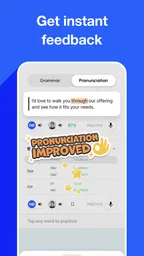
- Personalized feedback can highlight areas to improve.
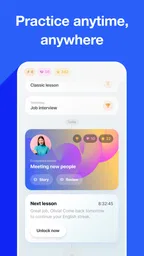
- Suitable for short practice sessions throughout the day.
- A private setting may feel less intimidating for beginners.
What could be better
- Some features may require a paid subscription.
- AI feedback may not always capture subtle pronunciation issues.
- Practice quality depends on a stable internet connection.
- Learners may need human conversation for natural interaction.
- Frequent reminders or prompts may feel distracting.





