




Busuu: Learn & Speak Languages review
 Analysis by Appsdrops
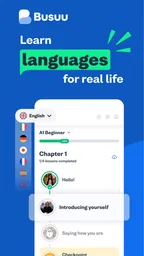
I like Busuu most when I treat it as a guided place to practise a language, not as a magic shortcut to fluency. Its lessons are built around learning Spanish, English, French, German, and Italian, and the app’s education focus shows in its emphasis on structured study rather than free-form conversation alone. That makes it a useful starting point if you want a clear next step each time you open it. It is less suited to someone who expects a few minutes of tapping to replace speaking, listening, and reading outside the app.
Busuu is developed by Busuu and is free to download, with in-app purchases ranging from $0.99 to $169.99 per item. It has a 4.7 average from around 1.3 million ratings and has been installed over 50 million times. Those figures suggest that it has found a broad audience, but they don’t tell you whether its approach fits your routine. The more important question is whether you want lessons that give your study some shape, and whether you’re willing to keep showing up when progress feels gradual.
Getting past the first-session friction
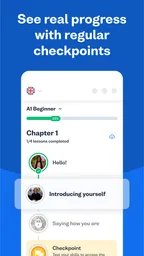
The first hurdle with any language app is choosing a realistic starting point. If you already know some French or Spanish, beginning at the very beginning can make the first sessions feel slow; starting too high can leave gaps that cause trouble later. I’d use the opening assessment or level choices carefully if they appear during setup, then treat the result as a working estimate rather than a verdict on your ability. If an early lesson feels unexpectedly easy or difficult, adjust your route instead of pushing through out of stubbornness.
Another common snag is expecting every lesson to match the way you personally learn. A structured course can give you a useful sequence, but it may not immediately line up with the phrases you need for an upcoming trip, a new job, or a conversation with family. I find it helps to name one practical goal before starting: understanding basic directions, introducing yourself, or following a short exchange. That goal makes it easier to judge whether a lesson is useful, even when it is not teaching the exact phrase you had in mind.
Language choice also deserves a deliberate moment. Busuu focuses on five languages, so it is not the right pick if your priority is a language outside Spanish, English, French, German, and Italian. If you are choosing between several of those, pick the one you are most likely to practise consistently rather than trying to launch multiple courses at once. Splitting a small daily study window across different languages can make it harder to retain vocabulary and notice progress in any one of them.
The app is rated for Everyone, which makes it broadly accessible, but that does not mean every learner will find the same lesson pace or style comfortable. A younger learner may still benefit from an adult helping them set a routine, while an adult returning to study may want to go slowly at first. I would not interpret a beginner-friendly interface as a substitute for deciding what level of challenge keeps you engaged.
Check the basics before blaming a lesson
If something feels off during setup, begin with simple checks: confirm that you selected the language you intended, revisit your chosen level, and make sure you are using the current app version available to you. The current version is 32.52.0(1807115), and the listed minimum operating-system requirement is version 9. If the app behaves unexpectedly, checking that your device meets that requirement and that the app is up to date is a sensible first step before assuming the course itself is at fault.
It is also worth separating a learning problem from a navigation problem. When you cannot find a lesson or are unsure what to do next, return to the course path or the lesson you last completed and check whether you have moved into a different language or level. Small setup mismatches can make a course seem confusing even when the content is fine. I’d avoid changing several settings at once; make one adjustment, reopen the relevant lesson, and see whether that resolves the issue.
Busuu is free to install, but purchases are available inside the app. If you are exploring it for the first time, take a moment to understand what is available without paying and what a purchase would unlock before committing. The listed in-app purchase range is broad, so I would not assume that every item has the same purpose or value. Decide what you want from the app first—such as a more complete study routine—then compare that aim with the purchase details shown to you.
A practical way to evaluate the setup is to complete a few sessions before deciding whether the format suits you. Notice whether you can follow the instructions, whether the lesson length fits your day, and whether you remember anything after closing the app. That is more useful than judging it by the welcome screen or by how quickly you can finish an individual activity. If the course feels mismatched after a fair try, changing your level or choosing another learning method may be a better fix than buying more content.
Recovering a routine when progress stalls
When I lose momentum, I don’t try to compensate with a long catch-up session. I return to one manageable lesson and make a note of a phrase or pattern that I can use later that day. This works especially well for a language like English or French when I can connect a lesson to something I will read, hear, or say soon. The point is not to turn every spare moment into study; it is to make the next session easy enough that I actually come back.
For example, imagine I am learning Italian and have a few minutes before leaving home. I can work through a short portion of a lesson, then try to recall one useful expression while planning the day. Later, I can revisit the same idea rather than starting a new topic simply because it looks more interesting. That small loop—study, recall, reuse—helps expose what I genuinely remember. It also prevents the misleading feeling of progress that can come from recognizing an answer on screen but being unable to produce it independently.
If a particular exercise keeps tripping you up, slow down and identify the kind of mistake you are making. Is the word unfamiliar, is the sentence structure confusing, or are you rushing through the prompt? Repeating an activity without noticing the cause can become frustrating. I’d pause, review the relevant material, and try again later. If the same concept remains unclear, use a separate explanation or a teacher as a complement rather than expecting one app lesson to answer every grammar question.
One useful trade-off with a guided course is that the structure saves you from deciding what to study, but it can also make your progress feel tied to completing the next item. I try to resist racing through lessons just to clear the path. Revisiting a familiar topic can be more valuable than pushing ahead when I cannot recall the basics. Conversely, if a section is clearly too easy, lingering there for the sake of completion is not productive; a sensible level adjustment is better.
Busuu can support a study habit, but I would pair it with real-world listening and speaking. A lesson may help me recognize a phrase, while a conversation asks me to retrieve it under pressure and respond to someone else. If your goal is travel, practise saying useful expressions aloud and listen to language outside the app. If your goal is an exam or professional fluency, use Busuu as one part of a broader plan that includes the specific vocabulary and practice your target requires.
When a technical issue is not a course issue
Sometimes a lesson does not load or an activity appears to stop responding. Before changing your learning plan, try the general recovery steps that make sense for any mobile app: close and reopen it, check that your device has a working connection, and restart the device if the problem persists. If the issue continues, updating the app or seeking help through the app’s available support route is more useful than repeatedly tapping the same control.
It is equally important to distinguish a technical interruption from a difficult exercise. A lesson that is challenging but still responds normally is probably asking you to work through the material, not signalling a fault. By contrast, if the screen does not react or the app repeatedly fails to proceed, focus on basic troubleshooting before drawing conclusions about the course. This distinction saves time and avoids treating a temporary device or connection problem as evidence that your account or language level is wrong.
For people studying on the move, the surrounding conditions matter. A noisy bus, a brief break, or a weak connection can make concentrated language work harder, even if the app is functioning normally. I save demanding study for a quieter moment when possible and use short breaks for review rather than new, complicated material. That is not a special feature; it is a practical way to get more from a lesson without confusing the limits of the moment with the limits of the app.
If you are using a device with an older operating system, check the minimum requirement before spending time troubleshooting. The listed minimum is version 9. If your device meets it but the problem remains, basic steps such as restarting, updating, and checking connectivity are still reasonable. Avoid assuming that reinstalling is always the first answer, especially if you are unsure how your progress is handled; try less disruptive checks first and consult the app’s support options if you need account-specific guidance.
How it fits beside other ways to learn
Compared with flashcard apps, Busuu’s strongest appeal is its course-like direction: it gives a learner a path instead of asking them to build a vocabulary deck from scratch. Flashcards can be better when you already have a list of words to memorize or want tight control over review. Compared with a tutor or language exchange, an app is easier to fit into a short daily window, but it cannot reproduce the full unpredictability of a live conversation. I see Busuu as the middle ground between self-made drills and human instruction.
It is also different from using videos, podcasts, or books as your main resource. Those materials can provide richer exposure to natural language, but beginners may struggle to know what to focus on or how to build from one topic to another. A guided course can give that structure, while outside media helps you hear how language works beyond lesson prompts. If you are already comfortable studying independently, you may prefer authentic content and a tutor; if you need a clear starting route, Busuu is more approachable.
Busuu is not the right choice if you need a language it does not teach, if you want only spontaneous conversation, or if you dislike a structured lesson sequence. It may also disappoint anyone expecting a free download to mean every study option is included at no cost. Before paying, check the purchase information in the app and consider whether the available course experience meets your needs. For an urgent goal, such as preparing for a specific interview, a targeted teacher or specialist resource may be more direct than following a broad course.
My practical verdict
I’d recommend Busuu to a friend who wants a guided way to begin or maintain Spanish, English, French, German, or Italian, especially if they have a few quiet minutes on most days and benefit from knowing what to study next. Its scale—over 50 million installs—and strong average rating make it a familiar option, but the real reason to try it is the course structure, not popularity alone. The developer, Busuu, has built an education app that is easiest to judge through regular use rather than a quick browse.
My main advice is to start with one language, choose a level that feels usefully challenging, and focus on remembering and reusing what you learn instead of racing through activities. Treat the app as a steady practice partner, then add listening, reading, or conversation to fill the gaps that a phone-based course cannot cover. If you want a clear routine and can accept that meaningful progress takes repetition, Busuu is a sensible place to build one. If you need deep personal feedback, a different language, or a course tailored to a narrow goal, I would look for a more specialized alternative.
Overall, Busuu works best when I use it deliberately: one course, a realistic pace, and a practical reason to return tomorrow. It is free to get started, carries an Everyone age rating, and offers optional in-app purchases, so I would explore the learning experience before deciding whether any paid item is worthwhile. For a learner who wants structure without pretending that an app can do all the work, it earns a place in the routine.
What we like
- Lessons cover practical situations such as travel and everyday conversation.
- Speech exercises help learners practise pronunciation.
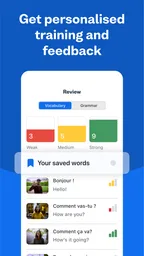
- Review tools reinforce vocabulary from earlier lessons.
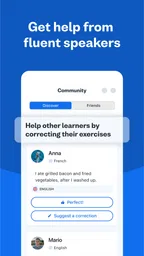
- Community feedback can provide input from fluent speakers.
- Courses are available for several widely studied languages.
What could be better
- Many learning features require a paid subscription.
- Some languages offer less course content than others.
- Community corrections may vary in detail and consistency.
- Speech recognition can misjudge accents or pronunciation.
- Progress may feel slow without regular practice.





