Babbel - Learn Languages review
 Analysis by Appsdrops
I judge a language app less by how quickly it gets me through a lesson than by whether I can return tomorrow and still remember what I practised. Babbel is built for that kind of steady study: short, structured lessons rather than an open-ended stream of vocabulary. In my experience, its main appeal is a clear route through learning, while its main trade-off is that progress depends on making time to revisit material instead of simply tapping through new topics.
What using Babbel feels like
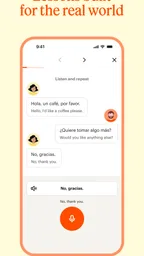
Babbel is an education app from developer Babbel, aimed at people who want guided practice in languages such as Spanish, French, Italian, German and Russian. The experience feels more like following a course than browsing a collection of disconnected activities. That distinction matters if you are starting from scratch or prefer to know what to study next, but it may feel restrictive if you want to jump freely between subjects.
The app is free to install, though access to learning content can involve in-app purchases. Those purchases range from $12.95 to $299.99 per item, so I would check the options shown in the app before committing and decide whether the available course structure suits you. Babbel is rated for Everyone, but that does not make it a child-focused classroom tool; I see it primarily as a self-study app for learners who can choose a goal and keep returning to it.
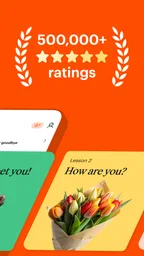
Its scale is substantial: it has more than 50 million installs, with an average rating of 4.6 from around 1.1 million ratings and roughly 42,000 written reviews. Those figures suggest broad use, not a guarantee that its teaching style will fit every learner. The version identified as 22.22.0 supports devices running OS 9 or later, a practical point to check if you are using an older phone or tablet.
Speed: quick to open, slower to learn
I would separate app speed from learning speed. A lesson is designed to fit into a small break, so the format can make it easy to begin a study session without setting aside a long block of time. That is useful on a commute or while waiting for an appointment, provided you have enough attention to listen, read and respond. A few spare seconds are better spent reviewing one item carefully than rushing through a sequence just to mark it complete.
Learning itself is not instant. Babbel can help create a routine, but it cannot make unfamiliar sounds or grammar stick without repetition. If you are preparing for travel, for example, I would start well ahead of departure and use the lessons to build a base rather than expecting a last-minute session to make you conversational. The course-like approach gives study a direction; it does not replace real conversations or the effort of recalling words without a prompt.
A useful habit is to stop when your attention starts slipping, even if you planned to do more. With language study, a tired learner can mistake recognition for recall: an answer looks familiar on screen, but may not come to mind in a real conversation. I would use short sessions for new material and reserve another moment to revisit what felt uncertain. That approach makes the app’s compact lesson format work in your favour instead of turning it into a checklist.
Busy sessions and the value of returning
Babbel is most useful when it becomes part of an ordinary routine. Picture a learner studying Spanish before a trip: a lesson during a lunch break can introduce a small amount of material, and a later review can help bring it back to mind before ordering food or asking for directions. The practical insight is to connect a lesson to one situation you expect to face. That gives vocabulary a purpose and makes it easier to notice what you still cannot say.
When you use any language app heavily, the challenge is not only the number of lessons you complete but how much new information you can absorb at once. I would avoid stacking lots of unfamiliar material into one sitting. Instead, pause after a difficult section, say the phrases aloud if that suits your surroundings, and return later to check what you remember. This is a study strategy, not a claim that the app automatically adapts to your pace.
For a more focused workflow, keep a small note of the phrases or distinctions that repeatedly trip you up, then use your next session to look for them in context. This helps prevent a common trap: spending all your time on what feels easy because familiar exercises provide quick reassurance. Babbel’s guided sequence can keep you moving, but your own attention still has to steer time toward weak spots.
There is also a trade-off between convenience and depth. Short lessons are easier to fit into a crowded day, but they cannot provide the same social pressure or spontaneity as speaking with another person. If your goal is to handle an interview, negotiate at work or discuss a complicated subject, I would pair app study with conversation practice. Babbel can help prepare the building blocks; it is not a substitute for testing them in unpredictable exchanges.
Reliability and what a steady routine requires
For a learning app, reliability means being able to keep a consistent routine, understand what to do next and recover your attention after an interruption. Babbel’s structured course format is helpful here because it gives a learner a clear study path rather than requiring them to invent a curriculum from nothing. I find that particularly valuable when motivation is uneven: deciding what to study can be an obstacle of its own.
At the same time, a clear path should not be mistaken for a guarantee of personal fit. A learner who already knows the basics may want to move selectively, while a complete beginner may appreciate more guidance. Before paying for access, I would use the free experience to see whether the lesson style, pace and language choice feel comfortable. The most reliable plan is one you are willing to repeat, not the one that looks most ambitious on day one.
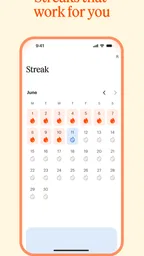
If you lose momentum, a practical recovery plan is to restart with a short review rather than trying to compensate with a marathon session. Pick a familiar topic, notice what returns without effort, then focus on one gap. That lowers the barrier to coming back and gives you a better sense of what you actually retained. I would also avoid treating a missed day as evidence that the whole routine has failed; consistency over time matters more than a perfect streak.
Device limits and choosing the right setup
The stated minimum operating system is version 9, so anyone with an older device should check compatibility before planning to rely on the app. Beyond that, I would think about where you intend to study. Listening and speaking practice are more comfortable in a quiet place, while reading and tapping through material can fit into a shared or public setting. A phone is convenient for brief sessions, but a larger screen may feel easier for sustained reading if you have a compatible tablet.
I would not make assumptions about battery use, storage needs or how smoothly the app behaves on every device. Those experiences can depend on the phone, its age and what else is running. A sensible first test is to install it on the device you actually plan to use, open a lesson and see whether the controls and text are comfortable. If you study during travel, try the routine in the places you expect to use it rather than discovering too late that noise or interruptions make listening difficult.
Device choice also affects the kind of practice you can realistically do. A quick phone session can keep a habit alive, but it is easy to be distracted by messages or surroundings. For a more demanding lesson, I would choose a quieter moment and put the phone aside from unrelated tasks. The benefit is not a faster device; it is giving the language enough attention to make the session worthwhile.
How it compares with other ways to learn
Compared with a general-purpose flashcard app, Babbel is a better fit if you want a guided sequence and lessons that feel connected. Flashcards can be excellent for drilling a personal vocabulary list, but they often leave the learner to decide what to study and how to build broader skills. Conversely, someone who wants complete freedom to assemble a course may prefer a tool designed around custom decks rather than a set learning path.
Compared with free video lessons, Babbel offers a more contained study routine: you can sit down with a specific learning task rather than searching through material and deciding whether it matches your level. Videos can expose you to a wider range of voices and natural speech, but the quality and progression vary. I would not frame these options as rivals. A structured app can provide the backbone of a study habit, while videos, reading and real conversation add variety and context.
It is also not the right choice for every goal. If you mainly need live correction, spontaneous speaking or a tutor’s explanation of a persistent grammar question, a conversation partner or teacher is likely to be more useful. If you only want a few travel phrases and do not intend to continue studying, a compact phrase resource may be quicker. Babbel makes more sense when you want an ongoing course and are willing to practise between lessons.
Who will benefit, and who may not
I would recommend Babbel to a beginner who wants a plan, a returning learner who needs a regular structure, or a busy person who can protect a small study window several times a week. It can also suit someone who feels overwhelmed by the number of online language resources and would rather begin with a defined route. The strongest use case is not learning in one burst; it is building a repeatable pattern that leaves room for review and real-world practice.
I would hesitate to recommend it to someone who dislikes guided coursework, expects an app to produce fluency without outside practice, or needs a specialist course for a narrow professional task. It may also disappoint a learner whose priority is extensive conversation from the first session. In those cases, use it only as one part of a broader plan, or choose a format centred on speaking or custom study materials instead.
The free entry point makes it possible to test whether the approach suits you before spending money, but the in-app purchase range is broad enough that I would read each option carefully. Think about the language you want, how often you can study and whether you will make use of a continuing course. Paying for access makes little sense if you are unlikely to return; a modest routine with a format you enjoy is more valuable than an ambitious plan left unopened.
My performance verdict
Babbel’s strongest performance is as a structured companion for steady language learning. It breaks a large goal into manageable study sessions and gives people who want direction a clear place to begin. Its 2012 release and continued presence in the education category have made it a familiar choice, but its real value for an individual still comes down to lesson fit, regular practice and the learner’s willingness to go beyond the screen.
I would try it if you want guided lessons you can fit around daily life, especially if you are starting a language and need help maintaining a routine. I would compare it with conversation-based options if speaking confidence is your immediate priority, and with flexible flashcards if you mainly need to memorise a personally chosen list. My advice is to start with a realistic schedule, test the learning style before buying, and use each lesson as preparation for something you will read, hear or say outside the app.
My bottom line: Babbel is a practical choice for learners who value structure and can return to their studies consistently. Its short-session approach can make the first step easier, but meaningful progress still takes patience, review and practice beyond the app. If that balance matches how you like to learn, Babbel is worth trying; if you need immediate live conversation or total control over your curriculum, another approach may serve you better.
What we like
- Lessons are short enough to fit into a busy day.
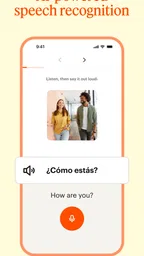
- Speech recognition offers practice with spoken responses.
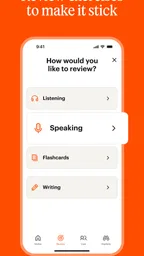
- Review exercises reinforce vocabulary from earlier lessons.
- Courses are adapted to the learner’s chosen language pair.
- Audio from native speakers helps with pronunciation.
What could be better
- Most lessons require a paid subscription.
- The available course depth varies by language.
- Some exercises rely heavily on translating sentences.
- Offline access may require downloading lessons in advance.
- Babbel is less suited to open-ended conversation practice.





