
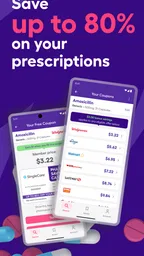
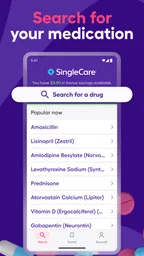
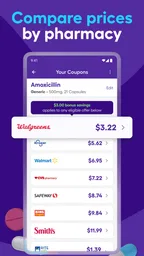
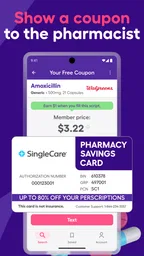

SingleCare - Rx Coupons review
 Analysis by Appsdrops
I would not judge a prescription-savings app by how exciting it feels on the first day. The real test is whether I remember to check it when a refill is due, and whether the effort still makes sense after I have done that a few times. SingleCare is built around that practical moment: finding a coupon to compare with the price of a medication at a pharmacy. It is a free medical app from RxSense, and its appeal is less about daily screen time than about being useful when a specific purchase comes around.
Why the first check can feel worthwhile
The initial task is easy to understand: look up a prescription and see whether a coupon could help lower what you pay. That makes the app approachable even if you do not want another complicated health tool. I find the idea most compelling when someone has a medication they pay for themselves, faces a high out-of-pocket cost, or simply wants to check whether another route is worth considering before collecting a prescription.
The important word is “compare.” A coupon is not automatically the best choice in every situation, and a headline promise of savings should not be treated as a guaranteed result for every medication or pharmacy. I would use the app to investigate a price, then confirm the details for the exact prescription and location before relying on them. That small verification step is a more sensible habit than assuming the first displayed option will fit.
That also makes the app useful before a pharmacy visit rather than only at the counter. If a refill is coming up, I can check ahead, note the option that appears relevant, and avoid trying to make a rushed decision while waiting to pay. For a family member who helps manage prescriptions, the same routine can make price checking a deliberate part of planning instead of an improvised conversation at pickup.
SingleCare has an average rating of 4.6 from around 11,000 ratings, with roughly 5,200 written reviews and more than a million installs. Those figures suggest that the service has found an audience, but they do not tell me whether a particular coupon will work for a particular prescription. I would treat the app’s popularity as reassurance that it is established, not as a substitute for checking my own circumstances.
Make the first search a useful comparison
My practical advice is to compare the coupon option with the way you would otherwise pay, rather than looking at a savings figure in isolation. The relevant question is not merely whether a lower price appears; it is whether that price applies to the medication and pharmacy you intend to use and whether it makes sense alongside your other payment arrangements. That is a more useful first-week test than browsing without a prescription in mind.
One non-obvious benefit of checking early is that it gives you time to ask a pharmacist a clear question. Instead of saying, “Can you make this cheaper?” you can ask whether the coupon you found applies to the prescription and what the final price would be. This keeps the decision grounded in the actual transaction. It also prevents the app from becoming a source of frustration if a displayed option does not match what the pharmacy can process.
I would not treat the app as medical guidance. Its role is to help with prescription costs, not to decide whether a medication is appropriate, change a dose, or replace advice from a clinician. If a treatment question is the real concern, a prescriber or pharmacist is the right person to ask. Keeping that boundary clear makes the savings tool easier to use responsibly.
Does it earn a place in the monthly routine?
Prescription spending often follows a repeating cycle: a refill approaches, the same medication needs to be obtained, and the price matters again. That gives a coupon app a natural chance to prove recurring value. Rather than opening SingleCare every day, I would keep it as a check-in tool for the moments when a prescription is due or a cost changes enough to warrant another look.
A realistic example is someone who picks up a regular medication once a month. A week before the refill, they check the app, compare the available coupon option with their usual payment route, and confirm the relevant price with the pharmacy. If the comparison is useful, the next refill is easier to plan. If it is not, they have spent a little time learning that their usual approach remains the better fit for that purchase.
That repeatable workflow is the strongest argument for keeping the app installed. It turns an uncertain cost into something the user can investigate before making the trip. The gain is not necessarily dramatic every time; sometimes the value is simply knowing that you checked. For someone with several prescriptions or changing pharmacy needs, a quick comparison may be worthwhile more often than it is for a person with one predictable, low-cost refill.
There is a trade-off, though. A coupon is a separate way to pay, and it may not be the right option for every person or every prescription. If you already have a payment arrangement that works well, the app may not improve it. I would not switch away from an established option just because a coupon looks appealing at first glance; I would compare the actual costs and confirm how the transaction will be handled.
That distinction matters for people who use insurance or other prescription benefits. I would check with the pharmacy about which payment method applies to the specific purchase rather than assuming that a coupon can be combined with another arrangement. The app is most useful as a comparison point, not as a promise that every available discount stacks with everything else.
Keep the habit light, not automatic
The best routine is small enough to repeat: check when a refill is approaching, verify the option for the intended pharmacy, and then decide whether it is worth using. I would not turn this into a daily task or repeatedly search when nothing is due. That would create activity without adding much value. A medication-cost app earns space by being easy to return to at the right moment, not by demanding constant attention.
Another useful habit is to recheck when something changes. A new prescription, a different pharmacy, or a different payment situation can make an old comparison irrelevant. Even if a coupon helped last time, I would not assume the same result will apply on the next visit. Treating each refill as a fresh check avoids carrying forward a price expectation that may no longer fit.
SingleCare is free and rated for Everyone, which lowers the barrier for someone who wants to try a price check without paying for access. Its current version is 7.0.8, and the app has been available since April 20, 2016. I see those details as context rather than a reason to install it: the stronger test is whether its lookup and coupon process fits the way you actually manage prescriptions.
What can make the routine tiring
The main source of fatigue is the gap between seeing a possible saving and completing a purchase. A price check is only helpful if the coupon applies to the medication and pharmacy in front of you, and if you are comfortable using that payment option. When the result needs extra confirmation, the app can feel less immediate than its simple premise suggests. I would plan for that verification rather than expecting every search to settle the question on its own.
There is also a temptation to keep checking for a perfect price. For a one-off expensive prescription, comparing options can feel worthwhile. For a small, familiar refill, repeated searching may cost more attention than it returns. I would set a sensible threshold for myself: check when the medication is costly, the price has changed, or a new pharmacy is involved; do not make every routine purchase a research project.
People who want one place to manage their health may find the app too narrow. SingleCare is a prescription-savings tool, not a replacement for a pharmacy account, a clinician’s advice, or a broader system for tracking treatment. If your main need is refill coordination, medical records, or communication with a care team, a dedicated provider or pharmacy service is likely to fit better. The coupon app can still be an occasional companion, but it should not be expected to handle those other jobs.
Likewise, someone whose prescriptions are consistently affordable through an existing arrangement may gain little from adding another step. There is no need to keep an app just because it might be useful in theory. If you rarely compare prices and your current process is reliable, installing it may create more clutter than value. I would give it a fair test around a real refill, then decide based on whether the comparison changed what I did.
For a person who helps an older relative, the app may be useful as part of a shared planning conversation, but I would keep the process simple. The helper can check a possible coupon and ask the pharmacy to confirm the final amount before the relative makes a decision. That avoids putting the burden on someone who is uncomfortable with apps and keeps the important information tied to the actual prescription rather than to an assumption made from a search result.
My long-term verdict
After the novelty fades, SingleCare makes sense as a practical tool with an occasional rhythm. I would not expect it to become part of my daily routine; I would expect to open it when a prescription is due, when a cost is concerning, or when circumstances change. That limited role is not a weakness if it saves effort at the exact moment a price comparison matters.
Its best fit is someone willing to check a coupon, confirm the details, and compare the result with their normal way of paying. It is less compelling for someone who expects guaranteed savings, wants a full health-management app, or has no reason to revisit prescription costs. The app’s free access makes trying that workflow straightforward, but the lasting value depends on whether the checks are useful for your own medications.
RxSense has built a focused medical app rather than a broad pharmacy or care platform. I appreciate that clear purpose, while keeping my expectations measured: the coupon is a tool for evaluating a purchase, not a universal answer to medication costs. My recommendation is to try it with an upcoming refill, verify any option with the pharmacy, and keep it only if that comparison genuinely helps.
For me, SingleCare earns a lasting place when it becomes a brief, repeatable checkpoint rather than another app to monitor. If I can use it to make a more informed choice before pickup, it has done its job. If the process adds friction without changing the decision, it is perfectly reasonable to rely on a different option that already works for you.
What we like
- Free to use with no membership fee.
- Coupons can be used at many participating pharmacies.
- Savings may apply to some pet prescriptions.
- The app helps compare prescription prices across pharmacies.
- A digital coupon is convenient to show at the pharmacy.
What could be better
- Discounts cannot be combined with insurance.
- Prices and savings can vary by pharmacy and location.
- Not every prescription is eligible for a coupon.
- Using a coupon may not count toward your insurance deductible.
- You may need to show the coupon before the prescription is processed.





