

PragerU review
 Analysis by Appsdrops
I’d treat PragerU as a focused video-learning app, not a neutral reference library or a full course platform. It is designed around short, watchable lessons with a distinctly pro-American point of view. That makes it easy to fit a video into a spare moment, but it also means the perspective is part of the product, not a detail to overlook. If you already know that framing suits your interests, the app can be a convenient way to explore its educational videos; if you want several viewpoints presented side by side, you’ll need other sources as well.
Making the videos fit an ordinary day
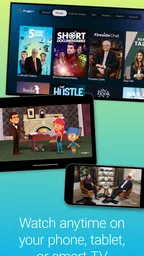
The simplest way to use PragerU is to open it with a question or subject in mind, choose a video that looks relevant, and give it your attention rather than letting it become background noise. A short video can be easier to start than a long article or a structured online course, especially when you have a few minutes between tasks. I find that this format works best as a prompt for further thought, not as the last word on a complicated subject.
A realistic routine might be watching one video during a lunch break, then noting the central claim or looking up a point that deserves more context later. That small follow-up matters: persuasive, concise video can make an argument feel complete even when a topic has more history or disagreement behind it. Treating each clip as an introduction helps preserve the convenience without confusing a single presentation with a broad survey.
The app is an education app from PragerU, and its material has an explicitly pro-American orientation. In practical terms, that can make it more useful to someone who wants to understand how a particular set of ideas is explained than to someone seeking a detached encyclopedia. I would approach it as one voice in a wider reading and viewing routine, particularly for subjects where political assumptions shape how facts are selected or interpreted.
That distinction also helps answer who is likely to enjoy it. People who prefer video, want accessible material to discuss with family, or are curious about PragerU’s outlook have a clear reason to try it. A reader who values academically neutral instruction, detailed citations, or a balanced presentation of competing positions may be better served by a textbook, a university course, or a source that deliberately compares schools of thought.
Build a repeatable viewing habit
Rather than browsing indefinitely, I’d use a repeatable pattern: choose a topic, watch one relevant video, and write down one claim to check or discuss. This keeps a casual session from turning into a stream of unrelated clips. It also makes the app more useful for family conversations or personal study, because you can return to a specific idea instead of relying on a vague impression of what you watched.
For parents considering the app, the Everyone age classification is useful context, but it is not a substitute for deciding whether the material and its point of view suit a particular child. I’d preview content and watch together when the subject touches politics, history, or social questions. That creates room to ask what evidence supports an argument and what another perspective might say, rather than treating the age label as an endorsement of every video for every household.
PragerU is free, which lowers the barrier to trying it. It has passed one million installs, while its average rating is three and a half stars from around six and a half thousand ratings, with about two thousand four hundred written reviews. I’d read those figures as signs of a substantial audience and mixed reactions, not as a substitute for checking whether the app’s editorial approach matches what you want to watch.
Check the practical details before settling in
The app was released on October 1, 2016, and its stated minimum operating-system requirement is version 7.0. If you are using an older device, checking compatibility before planning a routine around it is sensible. That is a particularly practical step for a family tablet or a spare phone, where operating systems may not be kept current.
I would also take a moment to look through the controls and preferences that are actually available on your device, rather than assuming the app has a particular playback or organization option. A useful habit is to decide in advance how you will keep track of videos worth revisiting: a brief note with the topic and the main claim works even if the app itself does not provide the workflow you prefer. This avoids relying on memory after a quick viewing session.
For a focused session, silence notifications on the device and choose a setting where you can hear the video clearly. Those are ordinary device-level adjustments, not special PragerU features, but they can make short lessons easier to follow. If you watch with someone else, pause after the central argument and ask what would count as evidence against it. That simple check turns passive viewing into a more useful learning exercise.
Save time without mistaking speed for depth
Experienced viewers can make the app feel more purposeful by repeating the same small workflow: pick a subject before opening it, watch one video at a time, and record a question for later. The benefit is not a hidden shortcut; it is less time spent browsing and a clearer sense of what you learned. When a topic is unfamiliar, I would avoid stacking several persuasive videos back to back before checking basic background from another source.
Another helpful pattern is to use a video as a conversation starter. A parent and teenager might watch together and each identify the argument they found strongest, then look for a source that challenges it. A teacher or discussion-group leader could use a clip to introduce a debate, while making clear that the video represents a particular viewpoint. In both cases, the app’s strongest role is opening discussion, not supplying every perspective needed to settle it.
Compared with general video platforms, PragerU gives you a more clearly defined editorial lens, which can reduce uncertainty about the kind of material you are opening. The trade-off is that a focused viewpoint is not the same as a comprehensive education resource. Compared with conventional online courses, it is easier to sample casually, but it is less suited to a learner who wants a sequenced syllabus, guided practice, or a systematic assessment of progress.
Where its limits matter
The main limitation is the need to keep perspective in view. A video can be engaging and clearly argued while still leaving out counterarguments or context that matters to your question. I would not use a single clip as the sole basis for a school assignment, a major decision, or a firm conclusion about a contested issue. For those purposes, compare the presentation with primary sources and reputable material from other perspectives.
There is also a difference between being easy to watch and being easy to verify. Concise video is convenient, but it may not give you the room to examine every qualification behind a claim. If you prefer citations close at hand, a written reference or a course with reading lists may serve you better. Likewise, if you dislike politically framed educational content, the app’s central outlook is likely to feel like friction rather than a useful point of comparison.
The app is not the right choice when your goal is a balanced overview supplied in one place. It can still be useful in that situation as an example of how one perspective makes its case, provided you pair it with contrasting sources. That distinction is worth deciding before installing: are you looking for material that shares a particular outlook, or a guide designed to weigh multiple outlooks evenly? The answer changes how rewarding the app is.
A measured verdict for regular users
I recommend PragerU to viewers who are interested in its pro-American approach and want short educational videos they can fit into an existing routine. Its best use is deliberate and modest: choose a subject, watch attentively, and follow up when a claim matters. The app’s free access makes that trial straightforward, while the mixed average rating is a reminder that it will not suit everyone’s expectations.
For a repeat user, the most valuable habit is not watching more videos; it is making each viewing more active. Keep a simple note of the topic, the argument, and one question to investigate. If you share videos with children or a group, add context and invite disagreement. These small steps help the material become a starting point for learning rather than a substitute for it.
My overall view is that PragerU is a specific kind of educational app, and it works best when you choose it for that reason. It offers an accessible way to encounter PragerU’s ideas, but it should sit alongside sources that broaden or challenge them. If you want exactly that focused perspective, it is worth trying; if you need neutral instruction, extensive evidence, or a structured course, another option will be a better fit.
What we like
- Features educational videos on history and public affairs.
- Offers content for a broad range of age groups.
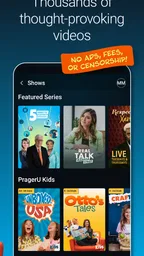
- Includes a dedicated kids section with family-oriented material.
- Provides access to many videos without a subscription.
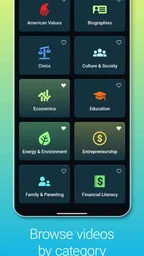
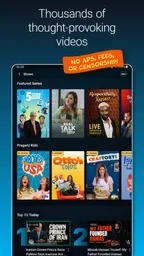
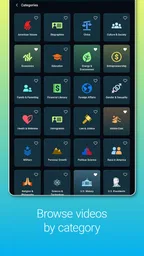
- Makes it easy to browse content by topic.
What could be better
- Its commentary reflects a clear conservative viewpoint.
- Some topics may present limited perspectives.
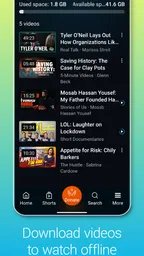
- Video availability may depend on internet access.
- The amount of content can make relevant videos hard to find.
- Parents may want to review content before sharing it with children.





