
MYIO review
 Analysis by Appsdrops
MYIO makes the most sense when I think of it not as a general wellness app, but as a digital doorway to behavioral health care. That distinction is important: it can be useful for someone whose provider uses Valant, yet it is not a substitute for therapy, a crisis service, or a self-guided mental health program. My overall view is favorable but specific. Its value depends on whether it fits into care you already receive; without that connection, there is little reason to choose it over a broader health or wellbeing app.
A portal, not a pocket therapist
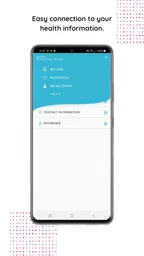
MYIO is a free medical app from Valant, built around a behavioral health portal. That purpose shapes how I would judge it. A portal is meant to help a patient engage with a provider’s care process, not to offer a library of exercises or make clinical decisions. If you are looking for guided meditation, mood coaching, or a way to find a therapist, this is probably the wrong starting point. If your behavioral health provider asks you to use MYIO, the app may be a practical companion to that relationship.
The difference between those two situations is easy to overlook when browsing app stores. Many mental health apps try to keep users coming back through standalone content and daily activities. A provider portal has a different job: make the ordinary business of care easier to manage. That can be meaningful, but only when the clinic has made the app part of its workflow. I would check with the provider before downloading it, rather than assume the app works independently for every patient.
For a first impression, the store information presents MYIO plainly rather than promising a dramatic change in mental health. I appreciate that restraint. A digital portal should support treatment, not imply that opening an app is the same as receiving care. My recommendation is therefore conditional from the start: consider it if your provider uses it, and skip it if you want an independent wellbeing tool.
Where it can earn a place in care
The strongest case for MYIO is continuity. Behavioral health care often involves more than the appointment itself: a patient may need to keep track of what is happening, remember to follow up, or make room in a busy week for treatment-related tasks. A dedicated portal can give that relationship a digital point of contact. I find that more useful than scattering care-related details across email, notes, and general-purpose calendar apps, provided the provider’s process actually uses MYIO.
Consider a realistic week in which someone has an appointment coming up while juggling work and family commitments. They have a brief moment during a lunch break to check the care portal, then need to return to the day without turning that moment into a long search through messages. A purpose-built patient portal can make that kind of check-in feel more organized. The practical gain is not a mental health breakthrough; it is reducing the small administrative friction that can make ongoing care harder to manage.
There is also a useful boundary here. MYIO should be treated as a channel for engaging with a provider’s care process, not as a place to rely on when urgent help is needed. If someone is in immediate danger or needs rapid clinical support, they should contact emergency services or an appropriate crisis resource rather than wait for an app-based interaction. That is not a criticism unique to MYIO; it is a basic limitation of treating a portal as though it were live care.
What the numbers say—and what they cannot
MYIO has a 4.7 average from around 6,700 ratings, with more than 100,000 installs. Those figures suggest that it has found an audience, but I would not read them as proof that every clinic’s setup is equally smooth. A portal can feel helpful in one care relationship and irrelevant in another, because the provider’s use of it matters as much as the app itself.
It has also received 684 written reviews, which gives prospective users more than a handful of reactions to consult. Still, ratings do not answer the question I would ask first: does your own provider use this portal for the parts of care you need to manage? A highly rated app cannot create a connection to a clinic that has not adopted it. The practical test is local and personal, not simply numerical.
The app is rated for Everyone and is listed as free. That makes it approachable from a cost and age-label perspective, but it does not mean every feature or care arrangement will be appropriate for every person. The patient’s age, treatment situation, and provider’s process still matter. I would involve a parent or caregiver where appropriate and confirm with the clinic how the account should be used.
Small workflow choices make a difference
One useful habit is to treat a portal as the place to check the official state of a care-related task, rather than keeping a second, informal version in a notebook or text thread. If a clinic asks you to use MYIO, decide which source you will check before an appointment or follow-up. Duplicating everything may seem reassuring, but it can create conflicting reminders or leave you unsure which information is current. Keep personal notes for your own reflection; use the provider’s channel for provider-directed steps.
A second practical tip is to make the first use a setup check, not something you attempt when you are already rushing. Confirm with the clinic that you have the right access and understand how it expects patients to use the portal. If the app is not connecting you to the care process you were expecting, asking the clinic is more productive than repeatedly reinstalling or guessing at the workflow. This is a particularly important trade-off for a provider-linked app: its convenience relies on coordination outside the app.
Finally, avoid assuming that a portal is monitored like a live chat. Before relying on any digital channel for a time-sensitive concern, ask the provider how to contact the office and what to do between appointments. That one conversation can prevent a serious mismatch between what a patient expects and what the app is designed to support. I consider this a worthwhile step even when the app itself is easy to use.
The limitation is the provider connection
That dependency is also MYIO’s main weakness from a consumer point of view. A person cannot judge its usefulness solely by installing it, because the experience is tied to whether their behavioral health provider uses it and how the provider has integrated it. If you have no connection to a participating care process, the app may offer little practical value. This makes it less immediately useful than independent wellness apps, which can usually be explored without a clinician’s involvement.
There is a second, related limitation: a portal is not necessarily the right tool for every part of a person’s mental health routine. Someone who wants to journal privately, build a meditation habit, or learn general coping techniques may prefer an app designed for those activities. Someone who needs appointment details and provider-related follow-through may find a portal more relevant. The choice is not about one category being universally better; it is about matching the tool to the job.
I would also be cautious about relying on any medical app as the only place to remember important information. For essential appointments or personal reminders, keep a backup method that works for you, especially while learning how your provider uses the portal. That is not a claim that MYIO loses information; it is sensible planning when care logistics matter. A calendar reminder, for example, can serve a different purpose from a provider’s portal, without trying to replace it.
Who should use it, and who should look elsewhere
I would recommend MYIO first to people whose behavioral health provider has specifically directed them to it. In that situation, the app has a clear role: support the patient’s connection to the care relationship and make related routines easier to keep track of. It may also suit someone who prefers using a phone for practical care tasks instead of relying entirely on paper or scattered messages.
It is a weaker fit for someone searching for a therapist, crisis assistance, or a self-guided mental health course. Those needs call for services built around finding care, immediate support, or structured content. I would also skip it if your provider has not mentioned it and you simply want a general-purpose wellbeing app. Downloading a portal without a provider workflow to connect to can add an icon to your phone without solving the problem that brought you to the app store.
Compared with the usual alternatives, MYIO sits on the clinical-administration side of the spectrum. A general wellness app may offer more independent activities, but it cannot stand in for the relationship with your own provider. Paper notes or a normal calendar are flexible and familiar, but they do not serve the same role as a provider-linked portal. I would use each only for what it does well: MYIO for the clinic’s digital process, a calendar for personal reminders, and a separate wellbeing app only if I wanted self-directed tools.
Compatibility and expectations before installing
The app was released on October 29, 2022, and its current version is 1.1.67. It supports Android 6.0 and later, so owners of older devices should check their operating system before trying to install it. Those details help answer the practical compatibility question, but they do not settle whether it will fit your care. The more important question remains whether your clinic expects you to use it.
Because MYIO is free, there is no purchase decision to weigh before trying it. I would still avoid treating “free” as a reason to install every medical app without a purpose. Before creating an account or changing how you manage care, ask your provider what the portal is used for, which tasks they expect patients to handle there, and what channel to use for urgent matters. Those questions can save time and establish realistic expectations before the app becomes part of a routine.
Valant is the developer behind the app, and its medical focus is apparent in the product’s role as a behavioral health portal. I would approach it as a piece of care infrastructure rather than a standalone treatment product. That framing also helps answer whether it is worth keeping installed: if it supports an active relationship with your provider, its narrow purpose may be a strength; if it does not, a different tool is likely more useful.
A measured recommendation
My verdict is that MYIO is worth trying when your behavioral health provider uses it, but not as a general mental health download. Its strongest potential is practical: giving patients a dedicated digital route into the provider’s care process. Its most important drawback is the same dependency that gives it purpose, because usefulness varies with the clinic’s adoption and workflow.
The app’s 4.7 average and broad install base make it a credible option for people who have been asked to use it, but they should not override the fit test. Ask your provider what the portal handles, confirm how quickly messages or requests are handled, and keep a separate urgent-contact plan. With those expectations in place, MYIO can be a sensible companion to behavioral health care. Without them, I would choose a tool designed for the specific task I actually need.
What we like
- Quickly view account balances and recent transactions.
- Access MYIO from a mobile device when away from your computer.
- A clear dashboard makes key account details easy to find.
- Secure sign-in helps protect access to personal financial information.
- Useful for checking account activity between visits to a branch.
What could be better
- Some features may depend on the financial institution you use.
- You may need an eligible account to sign in.
- Access to account details requires an internet connection.
- The app may request permissions that some users prefer to limit.
- Availability and features can vary by region or institution.





