



Linguza: AI English Tutor review
 Analysis by Appsdrops
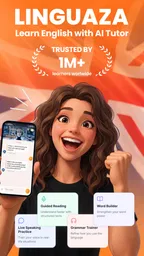
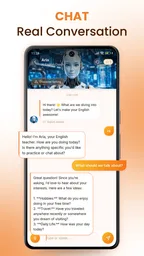
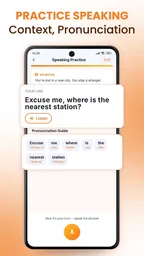
If you’re looking for a way to practise English without having to schedule a conversation partner, an AI tutor can sound like a handy option. Linguza: AI English Tutor is built around speaking practice with an AI tutor, with the promise that you can use it whenever and wherever it suits you. I see its appeal as straightforward: it puts spoken English at the centre, rather than asking you to rely only on reading or written exercises.
Choosing an English-learning app that fits
The best English learning app for you depends on what you want to improve and how you like to study. If your main goal is getting more comfortable speaking, look for a tool that makes practising aloud feel easy to fit into ordinary life. If you’re focused on grammar, vocabulary, or structured lessons, another kind of language-learning app may be a better match. There isn’t one approach that suits every learner, so it’s worth starting with the skill you most want to work on.
That’s the lens I’d use for Linguza. Its central idea is speaking and practising English with an AI tutor, available anytime and anywhere. In practical terms, that makes it most relevant to learners who want a chance to use English actively, rather than simply review material. The AI-tutor format may also feel less daunting than speaking with another person, especially if you’re still building confidence.
It’s also sensible to consider your routine. A learning tool is only useful if you’ll actually return to it. Some people prefer short, flexible practice they can start when they have a spare moment; others do better with a course plan, scheduled classes, or a teacher who can guide their progress. Linguza’s promise of anytime access points toward flexibility, which may suit independent learners who like deciding when to practise.
What Linguza puts at the centre
The name gives away the app’s focus: Linguza: AI English Tutor presents itself as a place to speak and practise English with AI. That clear positioning is helpful when you’re comparing options. Rather than treating it as a general-purpose study tool, I’d consider it specifically for speaking practice and for adding more chances to use English in an interactive way.
An AI tutor can be appealing because it offers a practice partner without requiring you to coordinate with someone else. That convenience can matter when your schedule is unpredictable or when you want to try speaking without feeling self-conscious. For learners who understand English reasonably well but hesitate when it’s time to say something aloud, making practice easier to begin could be a meaningful advantage.
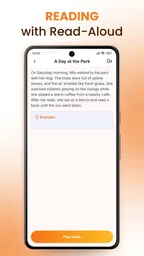
Still, the format is best viewed as one part of learning, not a magic shortcut. Speaking practice can help you become more accustomed to expressing yourself, but language learning often involves several skills and habits. Reading, listening, writing, and studying vocabulary can all play a role too. I’d treat Linguza as a potential companion for spoken practice, then decide whether it belongs alongside other resources you already enjoy.
Where it may suit learners best
Linguza may be a good fit if you want to practise at your own pace and value the ability to start whenever it works for you. That can be useful for a learner who has a few minutes between other activities, or for someone who wants a low-pressure way to make speaking a more regular part of their routine. Its simple promise is easy to understand: open the app and practise English with an AI tutor.
It may also appeal to people who feel nervous about making mistakes in front of a human conversation partner. A private practice setting can make it easier to experiment with words and build confidence gradually. I wouldn’t assume that an AI tutor replaces the experience of talking with people, but it may help you get more comfortable before you use English in a class, at work, while travelling, or in everyday conversation.
The app is free to download, which makes it possible to explore its basic appeal before deciding whether it suits you. It has an average rating of 3.9 from around 5,000 ratings, and more than 10 million installs. Those figures suggest that it has reached a broad audience, while the rating leaves room for individual experiences to differ. I’d use that as context, not as a substitute for checking whether the format works for your goals.
When another kind of app may fit better
If you want a highly structured course, a traditional language-learning app may fit your preferences more closely. Some learners like lessons that move through topics in a set order, with a clear sense of what to study next. Others prefer tools centred on vocabulary review, grammar explanations, listening exercises, or written practice. Those categories can complement speaking practice, but they serve different needs.
A live tutor or language exchange may be a stronger choice if your priority is conversation with a person. Human interaction can bring natural variation, personal perspective, and the experience of responding to someone in real time. That doesn’t make an AI tutor pointless; it simply means the two approaches offer different kinds of practice. If real-world conversation is your main objective, you may want to combine independent practice with opportunities to speak to people.
Likewise, learners who need a teacher to explain difficult points or keep them accountable may prefer a class or guided program. Independent apps ask you to bring some of that motivation yourself. Linguza’s anytime format could be convenient, but flexibility works best when you can build a habit around it. If you know that you rarely study without reminders or a fixed schedule, a more structured option may be easier to stick with.
The useful comparison isn’t whether one category is universally better. It’s whether the learning experience matches the skill you want to develop. Choose Linguza for the possibility of flexible AI-based speaking practice; consider a course for a more organised sequence, a reference tool for specific study needs, or a human tutor when live conversation and personal guidance matter most.
Cost, commitment, and switching
Linguza is free, with in-app purchases ranging from $6.99 to $89.99 per item. That range is worth keeping in mind before spending. I’d begin by working out what you want from an English-practice app, then check the options presented in the app store and within the app before making a purchase. A free starting point can make it easier to judge whether the general approach suits you, while paid items may affect the overall cost depending on what you choose.
Switching between learning apps is usually less about technical effort and more about the routine you’ve built. If you’ve been using one tool to study grammar or vocabulary, trying a speaking-focused app doesn’t have to mean abandoning it. You can keep the resources that serve you well and add a new one only if it fills a genuine gap. On the other hand, if you’re already using several apps and rarely open them, adding another may create clutter rather than progress.
I’d recommend setting a simple goal before you commit: for example, decide that you want more opportunities to practise speaking, then see whether an AI-tutor format feels comfortable enough to use consistently. Avoid judging an app only by how appealing it sounds in theory. The more important question is whether you enjoy the experience and whether it helps you make practice a repeatable habit.
For device compatibility, Linguza lists Android 8.0 as its minimum operating-system requirement. It is rated for Everyone, and its current version is 2.4.0. The app was released on May 18, 2026. These details are useful when checking whether it fits your device and expectations, though your own study needs should remain the main consideration.
My recommendation
I’d consider Linguza if your priority is speaking English more often and you like the idea of practising with an AI tutor on your own schedule. The app’s clearest strength is its focused promise: a flexible way to speak and practise, without needing to arrange a lesson or conversation partner each time. For learners who want to lower the barrier to starting a spoken practice session, that could be just the nudge they need.
I’d be more cautious if you’re searching for a complete, structured language course or expect a human teacher to explain mistakes and shape a personalised plan. Those goals point toward different types of learning tools. You can still use an AI speaking app as one element of a broader routine, but it makes sense to match your main resource to the skill you care about most.
Overall, Linguza is worth considering as a flexible AI English speaking practice option, particularly if confidence and regular conversation are your priorities. Its free entry point makes it approachable, while the in-app purchase range means it’s sensible to review costs before buying anything. My recommendation is to choose it when you specifically want an accessible way to practise speaking; if you need a more comprehensive course or human guidance, compare it with those alternatives before making it your primary study tool.
What we like
- Offers AI-guided English practice at any time.
- Lets learners practice at their own pace.
- Can provide a low-pressure space to build confidence.
- Supports study without scheduling a live tutor.
- May help learners keep up a regular practice habit.
What could be better
- AI feedback may miss context or nuance.
- Practice quality depends on the prompts and responses.
- It cannot fully replace conversation with native speakers.
- Some features may require a paid plan.
- Learners need a reliable internet connection for AI tools.





