






Hilingo: Learn & Speak English review
 Analysis by Appsdrops
I would approach Hilingo: Learn & Speak English as a practical starting point for speaking English, not as a complete language course. Its focus is useful if you already know a few words but hesitate when it is time to say them aloud: practice a short spoken response, get feedback from AI, and use that response to decide what to work on next. That gives a beginner a clearer first step than simply opening a dictionary or scrolling through vocabulary lists.
The app is free to install, and its age rating is Everyone. Pera Soft developed it as an education app, and its current version is 2.2.0. It has a 4.8 average from around 17,000 ratings and over 1 million installs. Those figures suggest that many learners have tried it, but they cannot tell you whether its approach will suit your learning style. The useful question is whether speaking practice with automated feedback matches what you need right now.
What to expect from a speaking-first app
The central idea is simple: practice English by speaking, rather than treating learning as a purely reading-based task. Hilingo is aimed at beginners, so I would expect it to be most useful for building comfort with everyday expression, especially if forming a sentence aloud feels harder than recognizing one on a screen. Its instant AI feedback is meant to make practice feel responsive instead of leaving you to wonder whether your attempt was clear.
That focus is also a boundary. A speaking tool is not automatically a full substitute for a structured course, a human teacher, or reference materials. If your main goal is to study grammar rules in depth, prepare for an exam, or get careful feedback on a long piece of writing, you may need a separate resource. I see Hilingo as a companion for getting words out of your mouth, not a promise that every part of English will be covered equally.
Compared with familiar alternatives, the difference is the emphasis on saying something and receiving a quick response. A flashcard app can help you recall words, while a textbook can explain rules at your own pace; neither necessarily gets you to speak. On the other hand, a live tutor can respond to context and ask follow-up questions in a way an AI tool may not. Hilingo makes most sense when you want a low-pressure practice step between those options, or when a tutor is not part of your routine.
One useful way to set expectations is to treat feedback as a prompt for another attempt, not as a final verdict on your ability. AI feedback can be convenient because it arrives during practice, but the learning value comes from noticing what to adjust and trying again. If feedback feels confusing, focus on the specific part you can act on—such as saying the sentence more clearly—rather than turning one response into a judgment about your English overall.
Getting started without turning setup into a project
After installing it, keep your first session modest. Choose a quiet moment, open the app, and begin with the practice it presents rather than spending your energy trying to plan a perfect study system. For a beginner, the first aim is not to prove fluency; it is to complete one speaking attempt and learn how the feedback feels. A short, imperfect response is a better start than waiting until you feel fully prepared.
I would also decide in advance what kind of English you want to use in practice. If your immediate need is everyday conversation, think of a simple situation—introducing yourself, asking for help, or describing your day—and keep your attention on expressing that idea. This makes feedback easier to interpret than attempting a complicated answer with unfamiliar vocabulary. It is a practical way to turn a general speaking exercise into something connected to your life.
There is no need to make a long daily commitment before you know whether the approach suits you. Try a brief session and notice two things: whether you are comfortable speaking to the app, and whether the feedback helps you decide what to try next. Those are more useful early signals than judging your progress by how many screens you complete. The app’s stated minimum operating system is version 7.0, so it is intended to run on devices meeting that requirement.
Some learners prefer to practice aloud when nobody else is around. If that describes you, use a quiet break or a moment at home rather than trying to speak while distracted. The point is not to create a perfect study environment, but to make it easy enough to hear yourself and respond thoughtfully. If you are in a shared space, you can save speaking practice for later and use another learning resource in the meantime.
Your first meaningful success: finish one response
A realistic first win is completing a single speaking exercise and using its feedback to make a second attempt. For example, imagine you have a few minutes before starting work and want to get more comfortable with everyday English. You open Hilingo, respond aloud to a prompt, read or listen to the feedback it gives, then try the same idea again with one small change. That repeat attempt is more meaningful than simply tapping through a session without noticing what changed.
To get more from that first attempt, keep the message simple. If you cannot remember a word, use a word you already know to express the idea another way. This keeps you practicing communication instead of stopping at the first gap in your vocabulary. It also helps you separate two different challenges: knowing the English word and being willing to speak. Hilingo’s speaking focus is particularly relevant to the second one.
A small personal routine can make the feedback more useful without adding unnecessary work. After an exercise, note one phrase or correction you want to remember, then use it in a fresh sentence the next time you practice. Do not try to record every detail or turn each response into a grammar lesson. One takeaway is manageable, and it gives your next session a clear purpose.
Try not to chase a perfect-sounding answer on the first go. Beginners often pause because they are mentally translating every word before speaking; that can make an otherwise simple response feel daunting. In my view, a better early target is to communicate the idea, notice one improvement, and repeat it. The confidence comes from doing the task repeatedly, not from waiting until every sentence feels flawless.
Common points of confusion and sensible workarounds
Instant feedback can sound more authoritative than it deserves to. It is best treated as practice guidance rather than a complete explanation of why a sentence works or fails. If a correction does not make sense, do not build a complicated rule around it based on one exchange. Rephrase the thought in simpler English and see whether that makes the speaking task easier. For a rule you want to understand deeply, a grammar reference or teacher will usually be a better source.
Another possible frustration is expecting a speaking app to teach every skill at once. Speaking practice can help you become more comfortable producing English, but it does not guarantee that listening comprehension, spelling, reading, or formal writing will progress at the same pace. If you are preparing an application, essay, or test, pair your speaking work with materials designed for that specific purpose. That is not a weakness in the idea of speaking practice; it is a reason to choose the right tool for each job.
It is also worth distinguishing a quick feedback loop from a conversation with a person. AI can make it easier to practice without arranging a lesson, but it may not give the same social cues, flexible discussion, or tailored explanation as a live exchange. If your priority is handling interruptions, accents, or a complex back-and-forth conversation, practice with another person when possible. Hilingo can help you prepare to speak, but it should not be mistaken for every kind of speaking experience.
The app is free to download, with in-app purchases priced from $4.99 to $49.99 per item. If you reach a point where a paid option is presented, pause and decide whether it addresses a learning need you have actually identified. You can first judge whether the basic speaking approach feels helpful. That keeps a beginner from paying simply because a prompt or offer appears before they know what kind of practice they will stick with.
As with any app that offers AI feedback, your experience may depend on how clearly you speak and how well the feedback fits your intended meaning. If you are in a noisy place or rush through a response, the result may be less useful than a calm attempt. When something seems off, repeat the idea clearly and simply before concluding that the whole approach is not working for you.
Who will benefit, and when another option is better
I would recommend trying Hilingo if you are a beginner who understands some English but wants a practical reason to speak more often. It may also suit someone who feels self-conscious practicing with other people and wants to start privately. The most helpful mindset is to see each exercise as rehearsal: you are building the habit of responding aloud, not demonstrating that you already speak perfectly.
It is a weaker fit if you mainly want a detailed grammar curriculum, a broad reference library, or a human conversation partner. Learners preparing for a formal exam should use exam-specific practice as well, because speaking prompts and immediate feedback alone are not a complete preparation plan. Likewise, if you already speak comfortably and need nuanced coaching for professional presentations or advanced conversation, a teacher or specialist resource may offer more depth.
Hilingo is most useful when you attach it to a moment that already exists in your day. A short practice before lunch, after a commute, or during a quiet pause is easier to maintain than an ambitious schedule that competes with everything else. To keep that habit concrete, finish each session with one phrase you want to reuse and bring it into your next practice. That turns separate exercises into a modest, personal learning thread.
A practical next step after the first session
Once you have completed an initial exercise, repeat the app on another day with a slightly different everyday idea. Notice whether the feedback gives you something clear to try, and whether speaking feels a little less awkward after you have begun. If it does, keep the routine small and consistent. If you find yourself wanting explanations the feedback does not provide, combine it with a beginner grammar resource rather than forcing one app to do everything.
Hilingo: Learn & Speak English is a focused option in education, developed by Pera Soft, and its appeal is straightforward: it gives beginners a way to practice speaking and receive quick AI feedback. I would start with one short response, make one adjustment, and judge the experience by whether that helps you speak again. That first repeat attempt is a more useful measure of fit than a promise of instant fluency. If you want a gentle speaking routine, it is worth trying; if you need a comprehensive course or nuanced human coaching, choose it as one part of a broader plan rather than your only resource.
What we like
- Short lessons fit easily into a daily routine.
- Speaking practice helps learners build confidence.
- Progress tracking makes it easier to monitor study habits.
- Useful for practicing English outside a classroom.
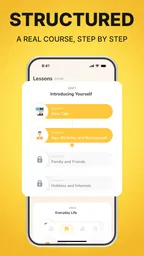
- The app offers a structured way to study regularly.
What could be better
- Some features may require a paid subscription.
- Speech recognition can misjudge accents or pronunciation.
- A stable internet connection may be needed for some content.
- Beginners may need extra grammar explanations.
- Daily practice can feel repetitive over time.





