
Garner Health review
 Analysis by Appsdrops
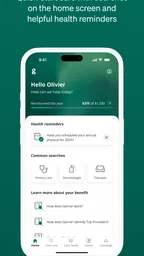
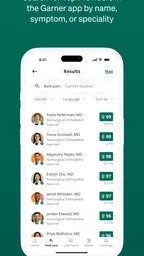
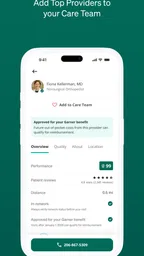
I can see the appeal of Garner Health quickly: it gives people a reason to look beyond the first doctor they find and consider the quality of care when choosing where to go. The promise is not a new way to diagnose or treat a problem; it is a practical nudge toward higher-quality doctors, with reimbursement as the incentive. That makes this medical app most relevant when you are already planning a visit and want to make a more informed choice.
My view is that its lasting value depends less on how often you open it than on whether it helps with the decisions that matter: choosing a doctor, understanding what to do before an appointment, and following through on any reimbursement process. It is free, aimed at everyone, and developed by Garner Health. The app has a 4.6 average from 357 ratings, with 63 written reviews and more than 100,000 installs. Those figures suggest that it has found an audience, but the best reason to try it is whether its approach fits the way you manage care.
Why the first week feels useful
At first, the idea is easy to understand. Many people pick a doctor through a familiar referral, a nearby location, or whichever option is easiest to book. Garner Health puts quality more directly into that decision and connects it with the possibility of reimbursement. I like that this frames doctor selection as something worth pausing over rather than treating convenience as the only factor.
The first useful step is to think of the app as a decision aid, not as a replacement for a clinician or a promise that every appointment will be reimbursed. Before acting on a recommendation or arranging care, I would check whether the provider and visit suit my medical needs, then confirm the relevant reimbursement details in the app. That small sequence can prevent a frustrating mismatch between finding a doctor and discovering later that the visit does not fit the terms that apply to you.
A realistic first-week scenario is a routine appointment you have been putting off. Instead of booking with the first available clinic, you can use Garner Health as a prompt to consider a higher-quality option, then compare practical details such as location and appointment availability yourself. If the option works, the reimbursement angle may make the extra thought worthwhile. If it is too far away or difficult to schedule, convenience may still reasonably win.
That balance matters. “Higher quality” is not the only thing people need from care: a doctor also has to be accessible, appropriate for the issue, and workable with your schedule. I would not treat any single app as the final authority on a medical choice. Its value is in improving the starting point for that choice, while your own needs and any advice from your existing care team remain central.
What to check before choosing
Before booking, I would identify the exact care you need and make sure the doctor is relevant to that need. Then I would check what the app says about the option and what steps apply to reimbursement. This is a useful habit because reimbursement is not the same thing as a discount at the time of booking: you should understand the process and any conditions before assuming what you will receive.
It is also worth considering the whole appointment, not just the doctor’s quality. Travel time, the ability to get a suitable slot, and whether you can continue care with the same clinician can shape the experience just as much. For someone with a straightforward, one-off visit, a different provider might be more practical. For someone actively comparing options, Garner Health has a clearer role.
Where recurring value comes from
After the initial novelty, a medical app earns its place through repeat usefulness rather than daily engagement. Garner Health is naturally tied to moments when care decisions arise, so I would not expect it to become a daily habit for most people. Its month-to-month value is more about remembering to consult it when a new appointment is needed, especially if you are choosing among doctors rather than returning to a long-established clinician.
One helpful way to make that use consistent is to bring the app into your appointment-planning routine: first clarify the reason for the visit, then look for a suitable doctor, and only then settle on a time and location. This makes the quality question part of the process without letting it overwhelm everything else. It also avoids the common trap of browsing options after you have already committed to an appointment.
For a household that manages care for more than one person, the app may be useful at different points in the year, since each person’s needs and preferred doctors can differ. I would still make the decision separately for each visit instead of assuming that a choice that worked once will suit every family member or medical concern. The right fit depends on the individual situation, and a useful recommendation for one type of care does not automatically settle another.
The app’s place in the medical category is distinct from a symptom checker or a general health tracker. Those tools are often used to interpret symptoms or record ongoing information; Garner Health’s central purpose is more closely tied to selecting care and the reimbursement incentive. If what you want is help deciding whether a symptom needs urgent attention, or a place to record health measurements, this is not the substitute I would reach for.
For people who already have a trusted doctor and no reason to change, the app may be an occasional reference rather than a regular tool. That is not necessarily a weakness. A good medical app does not need to demand constant attention; it needs to be worthwhile when a relevant decision comes up. The strongest recurring use case here is a planned visit where you are open to comparing doctors and can act on what you learn.
Keeping the process manageable
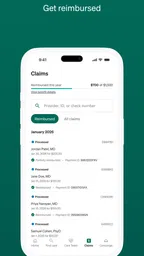
I would keep any relevant appointment and reimbursement information together while arranging care, rather than relying on memory after the visit. That is a practical precaution, not a claim that the app has a particular document-storage feature. The general point is that reimbursement has a follow-through component, so users should be prepared to complete whatever steps apply instead of assuming that choosing a doctor finishes the job.
If you are helping a parent or another adult arrange care, it is sensible to involve them in the choice and check that the provider suits their needs. A quality-focused recommendation can be helpful, but it does not remove the need to consider preferences, travel, and continuity. In medical decisions, the person receiving care should not become an afterthought just because an app makes one option look attractive.
The upkeep and friction to expect
The maintenance burden seems modest in principle: the app is most useful when you remember it at the point of choosing care. The harder part is not necessarily managing the app itself, but fitting another step into an already busy healthcare process. If you are ill, under time pressure, or arranging urgent care, comparing options and understanding reimbursement may feel like too much. In those moments, getting appropriate care promptly should take priority.
There is also a natural limit to how much an app can simplify healthcare. Doctor availability, distance, appointment timing, and the details of a particular visit can complicate an otherwise appealing choice. A person may find a doctor they prefer but be unable to schedule soon enough, or may need a familiar clinician who already knows their history. I would not let the reimbursement incentive push me to delay needed care or abandon a relationship that is working well.
Another possible source of fatigue is expecting every appointment to produce a clear financial benefit. Reimbursement can be motivating, but it should be treated as part of the decision rather than the whole reason to seek care. Before relying on it, I would review the terms that apply to the visit and make sure the process is clear. If you do not want to deal with any follow-up or conditions, a simpler route through your existing provider may be preferable.
The app also cannot make the choice for you in the human sense. A quality signal may help narrow the field, but personal comfort, communication style, and whether a clinician understands your circumstances matter too. If you have a complex condition or need coordinated ongoing care, a new option chosen mainly for an incentive may not be better than continuity with a clinician you trust. I see Garner Health as a useful input, not a universal instruction.
Who may prefer another route
I would skip it for an immediate medical concern where time matters more than comparing providers, and I would not use it as a source of diagnosis. It may also be less useful if you are satisfied with your current doctor, cannot travel to alternatives, or do not want to manage a reimbursement process. In those situations, a direct conversation with your care team or a more convenient booking route may solve the real problem faster.
On the other hand, it is a reasonable fit if you are planning non-urgent care, open to changing providers, and willing to check the details before booking. That combination lets the app’s focus work in your favor. The key trade-off is straightforward: more deliberate provider selection can be worth the effort, but only when the option is accessible and the reimbursement process makes sense for your visit.
Does it earn a lasting place?
Garner Health is not the kind of app I would keep opening out of habit. I would keep it available for the occasions when I need to choose a doctor and want quality and reimbursement to be part of the decision. That is a narrower role than a daily health companion, but it can still be meaningful because provider choice has consequences beyond the moment of booking.
The app is free, and its current version is 11.24.0; it runs on operating systems starting at version 7.0. It was released on November 5, 2020, giving it a longer history than a new arrival in the category. Those details may help someone check basic compatibility, but they do not change the central question: will you use it before arranging care, and can you complete the steps its reimbursement approach requires?
My recommendation is for people who have upcoming, non-urgent appointments and are willing to compare options rather than automatically choose the most familiar one. I would approach each recommendation with practical questions about fit, access, and reimbursement, then decide based on the whole picture. If those checks lead you to a doctor who suits your needs, the app has earned its place for that moment.
For someone who wants medical advice, urgent guidance, or a hands-off booking experience, I would choose a different kind of service. For someone who wants to make provider selection more intentional, Garner Health offers a focused reason to return when care decisions arise. Its lasting value is not constant use, but a better-informed choice at the point it matters.
What we like
- Personalized recommendations can make healthcare options easier to navigate.
- The app can help users find providers who match their insurance coverage.
- Health information is organized in one convenient place.
- It may help users compare care options before making a decision.
- A guided experience can be useful for people unsure where to start.
What could be better
- Recommendations may be limited by the information available in your account.
- Provider listings may not reflect recent changes in availability.
- Some features may depend on employer or health-plan eligibility.
- The app is less useful if your coverage details are incomplete.
- Personal health data requires careful attention to privacy settings.





