



EngLearn Speak: AI Tutor review
 Analysis by Appsdrops
My first impression of EngLearn Speak is that it is aimed at a practical problem: knowing English words is not the same as being comfortable using them. This free education app from DQL TechLab puts AI-supported speaking, chat, and vocabulary practice at the center, so it may suit someone who wants to move beyond passive study. I would approach it as a place to practise and build a habit, rather than as a complete replacement for a teacher, course, or conversation partner.
What to expect from an AI English tutor
The useful promise here is variety in how you practise. Speaking asks you to produce language aloud, chat gives you a lower-pressure way to form sentences, and vocabulary work can help you collect words you want to use. Those activities address different sticking points: a learner may understand a phrase while reading but freeze when trying to say it, or may be able to speak casually but struggle to find the right word.
That mix makes the app potentially more engaging than a routine built only around word cards. It also gives you a way to choose a smaller challenge based on your mood. If you are tired or somewhere you cannot speak, chat is the sensible option; when you have privacy and a few minutes, speaking can make practice feel closer to real communication. I would not treat either mode as proof of fluency, but both can help you notice where you hesitate.
The AI element is best understood as a practice partner, not an authority whose every response should be accepted without thought. Automated conversation can make it easier to try a sentence without worrying about interrupting someone or making a mistake in front of a group. Still, an AI exchange cannot fully reproduce the pace, accents, intentions, and social cues of a human conversation. Use it to rehearse and experiment, then look for chances to use the language with people as well.
EngLearn Speak has a 3.5 average from around 700 ratings, and it has passed a million installs. That suggests it has reached a broad audience, while the middling score is a reason to keep expectations measured rather than assume every learner will find the experience equally smooth. I would start with a short trial of the core activities and judge whether they fit your routine before making the app a central part of your study plan.
Who is likely to get the most from it?
I can see it working well for a learner who already knows some English and wants regular, low-stakes practice forming sentences. It may be especially helpful if you have limited access to conversation partners, feel self-conscious speaking in a group, or want to turn a spare moment into a quick language exercise. A beginner could also use it, but should be ready to supplement it with structured explanations when grammar or basic foundations need careful teaching.
If your main goal is exam preparation, detailed grammar instruction, or feedback from a qualified human teacher, I would choose a resource built specifically for that purpose and use this app only as a supplement. The same goes for learners who want a carefully sequenced course with a clear syllabus: a collection of practice modes is not automatically a step-by-step curriculum. Its strongest fit is active use of English, not every part of language learning.
Getting started without overthinking setup
On a first visit, I would keep the goal modest: choose one activity and try it before exploring everything. The current version is 1.9.0, and the stated minimum operating system is Android 8.0. Rather than spending the first session deciding on a perfect study system, open the app, identify whether you most need speaking, chat, or vocabulary practice, and begin with the least intimidating option.
A useful first choice depends on your surroundings. At a desk or in a quiet room, try speaking so you can concentrate on saying a complete thought. On a commute or in a shared space, chat is a more practical starting point. If you are short on time, focus on a few useful words and try to place them in your own sentences rather than merely recognizing them. This small decision makes it easier to complete a session instead of abandoning it while searching for the ideal feature.
Before starting, decide on a real-life topic you might need soon: introducing yourself, describing your work, asking for help, or making small talk. A familiar subject reduces the mental load of inventing ideas and lets you pay attention to the English itself. It also gives you a simple way to assess the session: did you manage to express something you might actually say, and did you notice a word or phrase worth practising again?
Your first meaningful practice session
For a concrete first win, I would use a short self-introduction. In chat or speaking practice, try to explain who you are and what you do in a few sentences, without aiming for a polished speech. If you get stuck, make the thought simpler and continue. The point is to finish communicating, not to produce flawless English on the first attempt.
Afterwards, pick one awkward sentence or missing word to work on. That is more useful than trying to fix every mistake at once. A practical loop is to attempt the idea, notice where you stalled, and try expressing it again in simpler language. If the app gives a response that seems unclear, treat it as a prompt to investigate rather than a final ruling. A dictionary, trusted grammar reference, or human teacher can help when precision matters.
One non-obvious advantage of combining chat and speaking is that you can rehearse the same idea in two forms. First write a response to organise your wording; later say the idea aloud without reading it directly. That shift can expose a gap between what you can compose and what you can retrieve quickly. It is a small workflow, but it turns separate practice options into a more deliberate exercise.
For an everyday scenario, imagine you have a call or appointment coming up and want to explain a simple request in English. Use chat to draft the request, then practise saying it in your own words. Keep the useful phrase and repeat it later from memory. This approach is less about collecting a long vocabulary list and more about preparing language you are likely to need, which makes a brief session feel relevant.
Common points that can trip up a new learner
The first confusion is expecting an AI tutor to behave exactly like a patient human instructor. A conversational reply may keep practice moving, but it is not a guarantee that every correction will explain the underlying rule or suit your intended meaning. When a suggestion feels odd, compare it with the sentence you wanted to say and ask whether the change preserves your meaning. If you need a dependable explanation, consult a more structured learning source.
Another trap is equating activity with progress. It is possible to spend time chatting without remembering much afterward. I would finish each session by choosing one phrase to reuse later, either in another conversation or in a short spoken attempt. That tiny recall step gives the practice a purpose and makes it easier to see whether a new expression is becoming available rather than simply familiar.
Speaking practice also depends on context. If you are in a quiet public place, reluctant to talk aloud, or unable to focus, forcing a spoken session can make the app feel frustrating. Switch to chat and return to speaking when circumstances suit it. Conversely, if you always choose text because it feels safe, you may never address the hesitation that brought you to a speaking app in the first place. A balanced routine should make room for both comfort and a manageable challenge.
Pricing is another point to understand before settling into a routine. The app is free to download, while in-app purchases range from $6.99 to $89.99 per item. I would explore the free experience first and only consider a purchase if you have identified a specific benefit you expect to use. Avoid paying simply because you feel you ought to commit; a subscription or one-off purchase only makes sense if the app’s actual practice style works for you.
The app is rated for Everyone, which describes its content rating, not the level of English instruction. It does not mean every lesson will be equally suitable for every age or ability, so a parent or learner should still decide whether the style and content fit their needs. Likewise, a general-purpose English practice tool should not be mistaken for tailored support where a learner needs individual accommodations or detailed, expert feedback.
How it compares with familiar study options
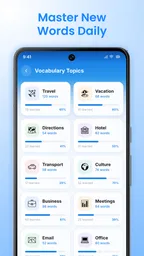
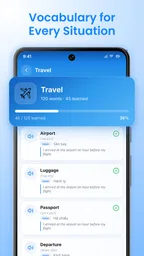
Compared with flashcard-focused study, EngLearn Speak’s appeal is that it encourages you to produce language, not just recognise it. Cards can be better for systematic memorisation and quick review, especially when you have a large set of words to learn. This app is more compelling when your problem is turning known words into a response. The two approaches can complement one another, but they solve different problems.
Compared with a live tutor or language exchange, AI practice is easier to fit into an unpredictable day and may feel less intimidating for a beginner. A real person is better at responding to nuance, asking unexpected follow-up questions, and helping you understand how a phrase lands socially. If confidence is the main obstacle, AI can be a useful rehearsal space; if natural interaction and precise correction are the goal, make human conversation part of the plan.
Traditional course apps often make their advantage a fixed path through lessons. That structure can be reassuring if you want to know what to learn next and how topics build on each other. Here, I would take more responsibility for choosing a useful task and reviewing what I learned. That flexibility is a plus for someone who knows their weak spots, but it may feel less satisfying to a learner who wants a very guided programme.
Turning a promising start into a useful habit
After the first session, keep the next step small and specific. Decide whether you most need quicker speaking, more confidence writing a reply, or a stronger working vocabulary, then choose the matching activity when you return. Revisit useful expressions instead of chasing novelty every time. If you can explain a familiar topic more smoothly after several attempts, that is a more meaningful sign of progress than simply spending longer inside the app.
For many learners, a realistic routine might be a short chat during a break and a spoken rehearsal when they have privacy. The exact schedule matters less than returning often enough to practise retrieving English. Try to connect each session to a situation outside the app: a conversation, a message, a meeting, or a question you may need to ask. That bridge keeps practice from becoming an isolated exercise.
EngLearn Speak is free to start, is developed by DQL TechLab, and may be worth trying if you want an accessible way to practise using English rather than only studying it. I would recommend it most to learners who are willing to set their own small goals and treat AI feedback thoughtfully. I would skip it as a primary resource if you need a rigorous course, reliable human correction, or a complete exam-preparation plan. For everyone else, begin with one familiar topic, complete a short exchange, and keep one phrase you can genuinely use.
What we like
- AI conversation practice can help build confidence speaking English.
- Personalized feedback can make practice feel more relevant to your goals.
- On-demand lessons let you study without arranging a live tutor.
- Short practice sessions can fit into a busy daily routine.
- A structured learning path can help you stay consistent.
What could be better
- AI feedback may miss nuance in pronunciation or grammar.
- Practice with an AI does not fully recreate real conversations.
- Some features may require a paid subscription.
- Speech recognition can struggle with accents or background noise.
- Progress depends on regular practice and self-motivation.





