DMV Permit Practice Test 2026 review
 Analysis by Appsdrops
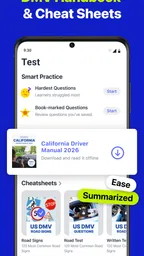
Preparing for a learner’s permit can feel like studying for a test whose questions are hidden inside a thick handbook. DMV Permit Practice Test 2026 gives that preparation a more approachable shape: it is an education app focused on practice for permit exams. I see its main value as helping you turn spare moments into targeted study, rather than trying to replace your state’s official driver handbook or teach you everything about driving from scratch.
Practice that fits around real life
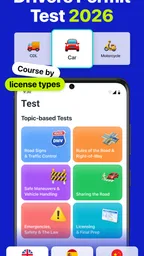
DMV Permit Practice Test 2026 is a free app from Astraler, aimed at people getting ready for a DMV permit test. It is rated for Everyone, so its subject is relevant to new drivers while remaining suitable for a broad audience. The app has a 4.7 average from around 47,000 ratings, and more than a million installs. Those figures suggest that practice-test preparation is a familiar use case for many learners, though popularity alone does not establish whether its material matches your particular state’s current exam.
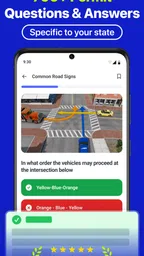
The most useful way to approach a practice app like this is as a study companion, not an answer key to memorize. A question you get wrong can reveal a rule you need to revisit; a streak of correct answers can show that you are getting comfortable with a topic. I would use each session to identify uncertainty, then check the relevant passage in the official handbook. That habit matters because permit rules and wording can vary by state, and practice questions are most helpful when they lead you back to the source material.
For instance, imagine you have ten minutes before a class or during a quiet break. Rather than opening a long chapter and stopping midway, you can spend that time working through permit-test practice and note the subjects that make you hesitate. Later, use those notes to guide a longer handbook session. This short-session approach is especially practical for a learner who struggles to find a single uninterrupted hour, but it is less useful if you simply tap through questions without understanding why an answer is correct.
How I would build a study routine around it
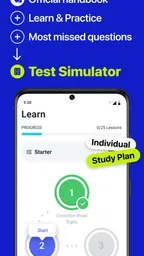
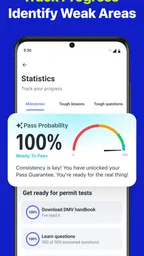
I would start with a baseline session before serious revision. The point is not to judge your readiness from one result; it is to discover which rules already feel familiar and which need attention. After that, keep a brief list of missed or guessed questions. Grouping mistakes by subject is more revealing than treating every wrong answer as an isolated slip: repeated uncertainty about signs, right-of-way, or safe driving rules may indicate a gap in understanding rather than bad luck.
A useful workflow is to practice, review, and then retest after a pause. If an item feels easy only because you remember its wording, changing the order or returning to it later can help distinguish recognition from real recall. I would also avoid doing all the practice in one marathon session. Short rounds with time between them make it easier to see whether a rule has stuck, and they leave room to consult the handbook instead of guessing repeatedly.
One trade-off is that quick quizzes can make studying feel more complete than it is. Recognizing a correct option among choices is not the same as being able to explain the rule in your own words or apply it to an unfamiliar situation. When I study for a permit exam, I treat a correct answer that came from a guess as unfinished work. That small distinction helps prevent a reassuring score from hiding a topic I still do not understand.
What the current release tells us—and what it does not
The app was released on June 16, 2022, and its current version is 4.1.6. That gives a clear picture of its basic timeline and present version, but version numbers by themselves do not reveal which features have changed or how the questions have been revised. I would not assume that a newer version automatically means the practice material has been checked against every recent state-level handbook. For a test date that matters, confirm the rules with the current official materials for your location.
For existing users, the practical question is not whether the version number has advanced; it is whether the app continues to serve their study routine and whether the content they rely on is appropriate for their exam. If you have used it before and are returning after a break, it makes sense to revisit the handbook rather than assume your old familiarity is enough. New users can take the same cautious approach from the start: use the app to locate weak areas, and let official guidance settle questions where state rules matter.
The app’s minimum operating-system requirement is version 8.0, which can make it an option for people using older supported devices. It is also free to download, with optional in-app purchases priced from $0.99 to $29.99 per item. I would check what an optional purchase covers before spending anything, and first decide whether the free study experience fits your needs. A learner who only wants a way to practice may prefer to begin without paying; someone considering an upgrade should compare its value with simply studying the official handbook alongside the app.
Where it fits among permit-study options
Compared with relying only on a handbook, a practice-test app offers a more active way to check recall. The handbook remains the better reference when you need complete explanations, precise local rules, or context beyond a multiple-choice answer. Compared with informal online quizzes, a dedicated permit-preparation app can provide a more focused place to practice, but the key question is still whether its material lines up with your jurisdiction. Neither a quiz interface nor a confident result should replace checking official requirements.
This makes the app a good fit for a first-time learner who wants a low-friction way to review between longer study sessions. It can also help a parent or other supporter structure practice: ask the learner to explain why an answer is right, rather than checking only whether the letter matches. That turns a short quiz into a conversation about safe decisions and makes it easier to notice when the learner is relying on memorized phrasing.
I would be more cautious about recommending it as a sole resource to someone whose permit test is imminent, whose state has recently changed a rule, or who needs instruction beyond test preparation. In those cases, the official handbook and local DMV guidance should take priority. If you are looking for driving lessons, road-test coaching, or a broad course on vehicle handling, this app’s permit-test focus is not the same thing. Its role is narrower: help you rehearse knowledge that may appear on a written permit exam.
Limits to keep in mind before test day
The biggest limitation of any practice-test format is the gap between choosing an answer and understanding the rule behind it. A learner can become familiar with repeated question patterns without being ready for a differently worded question. I recommend explaining each uncertain answer aloud, especially when it concerns a decision you might face on the road. If you cannot explain the reasoning, return to the handbook before counting that topic as mastered.
Another important constraint is local variation. “DMV” is a convenient label, but permit procedures and road rules are not identical everywhere. Before depending on a question set, check that your preparation corresponds to your state or jurisdiction. If a practice answer seems to conflict with the official handbook, do not resolve the disagreement by choosing whichever source sounds more confident; use the official local material and seek clarification from the relevant licensing authority when needed.
Finally, passing a knowledge test is only one step toward becoming a safe driver. It does not substitute for supervised driving, practical instruction, or learning how to respond calmly in real traffic. Keeping that boundary clear is not a criticism of this app; it is a sensible way to use a test-prep tool. It can help organize the knowledge side of preparation, while hands-on learning addresses skills a quiz cannot teach.
Who should try it, and what to watch next
I would recommend DMV Permit Practice Test 2026 to learners who want practice they can fit into a busy day and who are willing to follow up on uncertain answers. Its education focus, free starting point, and broad reach make it easy to consider as part of a study plan. The strongest results are likely to come from pairing short practice sessions with careful reading, not from treating a run of correct responses as proof that every rule is covered.
Before your exam, check the current handbook for your location, review the subjects you repeatedly miss, and make sure you can explain the underlying rule without relying on the exact wording of a question. If you are using an older device, the stated minimum operating-system requirement is worth checking before you plan your study routine. If you are considering an in-app purchase, judge it on the specific value it offers you rather than assuming payment is necessary to prepare.
For current users, the most useful thing to watch is whether the app continues to support their routine and whether its practice remains aligned with the official material they need. For newcomers, the sensible expectation is more modest: it can make permit-test revision easier to begin and easier to repeat, but it cannot guarantee readiness or replace local guidance. Used with that distinction in mind, I find it a practical companion for building confidence without confusing quiz practice with the whole process of learning to drive.
What we like
- Practice questions help reinforce road rules and safe driving habits.
- Short quizzes make it easy to study in spare moments.
- Answer explanations can clarify why an option is correct.
- A practice format helps users get comfortable with test-style questions.
- Useful for reviewing before taking a learner permit exam.
What could be better
- Questions may not match the latest test in every state.
- App content may vary by state and license type.
- Practice scores cannot guarantee success on the official exam.
- Some features may require an internet connection.
- Ads or paid features may interrupt the study experience.





