Blood Donor review
 Analysis by Appsdrops
Giving blood is a generous act, but turning good intentions into an actual donation can take a little planning. Blood Donor from the American Red Cross is built around that practical gap: its purpose is to make donating blood and platelets easier to manage. I see its strongest appeal in keeping the donation process at the center, rather than treating blood donation as a one-time decision. It is a medical app with a clear, community-minded focus, and the experience is best judged by how well it supports a donor from the moment they decide to help through the real-world visit that follows.
From good intentions to a planned donation
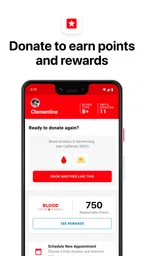
When I’m considering donating, the first challenge is often not motivation; it’s figuring out how to turn that motivation into a concrete next step. That’s the situation Blood Donor is designed for. The app’s central promise is simple: donating blood and platelets should be easier than ever with the American Red Cross. That direct focus makes it approachable, especially for someone who wants to contribute but would rather not piece together the process from scattered sources.
The app is free, which lowers one small barrier to trying a donation-focused tool. Its age rating is Everyone, so its intended audience is broad. Those details don’t make donating effortless by themselves, of course, but they reinforce the app’s practical role: helping people engage with blood donation without making the app feel exclusive or complicated before they have even begun.
Blood donation also involves a handoff between a person’s intention and the work of a real organization. The American Red Cross is the developer, so the app is associated with the organization behind its donation mission. For me, that connection gives the experience a clear identity. This isn’t a general wellness tracker that happens to mention donation; it is a purpose-built blood donation app with a straightforward reason to exist.
A focused starting point
A useful donation app needs to meet people at different stages. Some may already donate and want a familiar place to keep the activity in mind; others may simply be exploring whether they can take part. The promise of making blood and platelet donation easier gives the app a natural starting point for both groups. Rather than asking users to care about a long list of unrelated tools, it keeps attention on the act of donating and the path toward it.
That focus matters because a blood donation is not completed inside a phone. The app can support the journey, but the meaningful outcome happens through a donor’s participation in the real world. I appreciate that the basic purpose is easy to understand: open a medical app intended for donors, and the subject is immediately clear. That clarity is more useful than a crowded first impression filled with features that distract from the reason someone installed it.
The app has been available since September 5, 2014, and its current version is 3.0.1. It has more than one million installs and an average rating of 4.8 from around 36,000 ratings, alongside roughly 7,000 written reviews. Those figures suggest that many people have encountered it, while the strong average points to a generally positive reception. They are helpful context, but the real test for an individual donor is whether the app fits their own routine and makes the next step feel manageable.
Following the donation journey
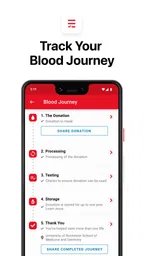
The most sensible way to think about the app is as one part of a larger workflow. First comes the decision to donate. Next, a person needs to move from that decision toward an actual donation opportunity and prepare to take part. Then the process passes from the digital experience to the people and arrangements involved in a real donation. Finally, the donor’s intention becomes a tangible contribution. The app’s stated purpose is to make that broader journey easier, which gives it a useful role even though the donation itself happens beyond the screen.
In practice, I would approach it with a specific goal in mind: use it as a donor-oriented companion, not as a substitute for the organization or the donation process. That expectation keeps the experience grounded. A phone can help organize a task and direct attention toward it, but showing up and donating still requires a real-world commitment. The app’s value is in supporting that transition, not in pretending that a few taps can replace the human and medical sides of donation.
For a returning donor, the appeal is the possibility of keeping blood or platelet donation present in everyday life. For a first-time donor, the appeal is having a dedicated place to begin thinking about participation. In either case, the most useful outcome is a smoother path from “I should do this” to taking the next practical step. The app’s clear emphasis makes that goal easy to grasp, which is a good starting point for a tool tied to an important public service.
The handoff from app to real life
The defining handoff happens when planning on a device gives way to participating in a donation. That boundary is worth keeping in mind. Blood donation involves more than browsing an interface: the donor has to engage with the real process and the organization coordinating it. A good app can make that transition feel less abstract, but it cannot remove every logistical consideration or make the donor’s decisions on their behalf.
I also see the relationship with the American Red Cross as central to the app’s identity. The developer is not an unrelated company using donation as a theme; the product is presented as a way to make the organization’s blood and platelet donation process easier. That gives the app a coherent purpose and makes it more straightforward to understand where it fits in a donor’s routine. The organization-to-donor relationship is the bridge between the phone and the eventual act of giving.
That said, users should treat the app as a companion to the wider donation process. If a question depends on personal circumstances or on arrangements outside the app, the appropriate next step is to use the organization’s official channels or speak with the relevant staff. This is a sensible boundary for any medical-context app: digital guidance can help a person move forward, while individual decisions and the actual donation process belong in the appropriate real-world setting.
What the experience is good at
The clearest strength is focus. Blood and platelet donation are specific goals, and the app does not need an elaborate pitch to explain why it might be useful. That makes it easy to recommend to someone already interested in contributing or to someone who wants to make donation a more intentional part of their routine. Its medical category fits the subject, while its straightforward purpose avoids making the user decode what the app is for.
There is also an encouraging quality to a tool that keeps the outcome in view. Donating is not just another task to clear from a list; it is an action that can help other people. An app centered on that process can serve as a small nudge toward follow-through. I like that the concept ties a personal decision to a wider community benefit, without needing to turn the experience into a game or a social competition.
The broad audience is another practical advantage. With an Everyone age rating and no purchase price, the app is easy to consider across different kinds of users. That does not guarantee that every feature or step will suit every person, but it makes the initial decision to try a donor-focused tool uncomplicated. For a service-oriented app, keeping that first barrier low supports the overall mission.
Where the flow can feel less seamless
The biggest limitation is built into the task itself: an app cannot complete a donation on your behalf. Even a useful digital companion depends on a donor taking action outside the screen, and that means the experience inevitably includes a handoff. People still need to fit donation into their lives and follow the process established by the organization. If someone expects a phone app to remove every planning challenge, the real-world nature of blood donation may feel less convenient than the promise suggests.
Another source of friction is that the app’s value depends on what the user needs at that moment. Someone looking for a broad health dashboard, medical advice across many topics, or a general fitness tool may find this narrow focus is not what they want. That is not a flaw in the app’s purpose; it is simply a reminder that Blood Donor is best suited to people interested in donating blood or platelets rather than anyone seeking an all-purpose medical application.
There can also be a gap between feeling ready and actually completing the journey. A donor may need to pause, reconsider timing, or seek guidance before moving forward. That kind of pause is normal, and it should not be mistaken for a failure of the app. The app’s job is to support the path, while the donor remains responsible for deciding what to do and engaging with the real donation process. Keeping those roles clear makes the experience more realistic and more useful.
Who should consider it?
I’d point this app toward people who already donate, people considering their first donation, and anyone who wants a focused tool connected to blood and platelet donation through the American Red Cross. It is particularly relevant if the main goal is to make donation feel easier to approach and keep the process in view. The app’s specific mission is also helpful for users who prefer a dedicated tool over a broader collection of unrelated health functions.
On the other hand, there is little reason to install it if blood or platelet donation is not part of your plans. Its value comes from that commitment, not from offering general entertainment or a wide range of everyday phone utilities. Knowing that upfront helps set the right expectation: this is a practical, cause-focused app, not something designed to serve every kind of mobile user.
A practical companion for a meaningful outcome
Overall, Blood Donor has a clear and worthwhile role. It takes a real-world activity that starts with personal willingness and gives it a dedicated digital companion from the American Red Cross. The strongest part of the experience is that the goal is immediately understandable: make donating blood and platelets easier. Its purpose is focused, its audience is broad, and its positive reception suggests that many users value having a donation-centered app available.
I would describe it as a helpful starting point rather than a complete replacement for the donation process. Its success depends on the handoff from intention to action, and that final step still belongs to the donor. If you want to explore blood donation or keep it more present in your routine, this app is worth considering. If your needs are unrelated to donation, its narrow scope may not give you much reason to keep it installed.
For me, that honest, focused purpose is the right way to judge the app. It does not need to be an all-purpose medical platform to be useful; it needs to help people move toward a meaningful act. As a Red Cross blood donation app, it offers a direct route into that goal and keeps the real-world result where it belongs: with the person who chooses to give.
What we like
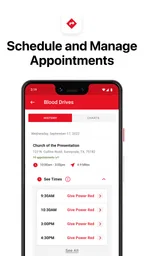
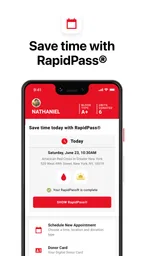
- Convenient appointment scheduling helps reduce time spent at donation centers.
- Eligibility information can help users prepare before visiting.
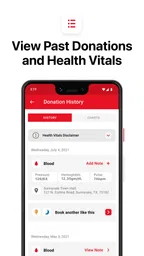
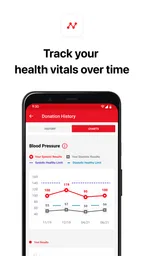
- Donation history makes it easier to keep track of previous visits.
- Reminders can help donors remember upcoming appointments.
- A useful option for donors who want to support local blood supplies.
What could be better
- Availability of features may vary by location.
- Some donation centers may not appear in the app.
- Appointment slots can fill quickly during busy periods.
- Users may need to provide personal health information.
- The app is less useful for people who cannot donate.





