




Bible Offline-KJV Holy Bible review
 Analysis by Appsdrops
I tend to judge a Bible app less by how impressive it feels on the first day and more by whether it remains easy to open a few weeks later. Bible Offline-KJV Holy Bible has a clear strength for that kind of routine: it puts the King James Version at the center and is intended to work offline. That makes it a practical choice for reading in short intervals, including when a connection is inconvenient or unavailable.
It is a free Books & Reference app from Bíblia Offline, with optional in-app purchases ranging from $0.99 to $49.99 per item. Its focus is specific rather than encyclopedic: readers looking for the KJV, a way to study its wording, and verses to share will find a more direct fit than someone seeking a broad library of translations or a full-featured theological research suite.
Why the first week can feel straightforward
When I try a Bible app, I want to get from opening it to reading without having to build a system first. This one’s KJV focus keeps the task simple: choose a passage, read at your own pace, and return when you have another quiet moment. The offline emphasis is especially useful for a commute, travel, or a place where reception is unreliable. It also makes the app a sensible companion for someone who prefers not to depend on a browser to reach scripture.
The first week is often when the daily-verse idea has the strongest pull. A verse can give a short reading session a natural starting point, and sharing one can make the app useful beyond private reading. I would treat that as a prompt, not a substitute for context: if a line catches my attention, I prefer to read the surrounding passage before deciding what it means. That small habit helps prevent a memorable excerpt from standing in for the wider chapter.
The King James wording is a defining choice, not a neutral default for every reader. Its familiar cadence may be part of the appeal if you already read this translation or want to become more comfortable with it. If older English phrasing slows you down, however, an app offering a modern translation alongside the KJV may be a better everyday reading partner. I would not choose this one expecting the same ease of comparison as a multi-translation reference tool.
Its popularity suggests that it has reached a large audience: the app has over 100 million installs, an average rating of 4.9, and around 12 million ratings. Those figures are useful context, but they cannot tell me whether the KJV is right for your reading style or whether the app’s particular approach suits your routine. A quick personal test—reading a familiar passage and then a less familiar one—is more informative than popularity alone.
What gives it value after the novelty fades
After the initial curiosity wears off, an app earns space by fitting into ordinary life. The offline orientation supports a reliable reading habit because access does not have to depend on a strong signal. For a few minutes before work, a quiet break, or a bedtime routine, that can matter more than a long list of extra tools. The app’s value is strongest when the KJV is already the translation you want to return to.
One practical workflow is to use a verse of the day as a doorway rather than as the whole session. I would read the verse, locate it in its chapter, and continue far enough to see who is speaking and what is happening. If I want to share the verse, I would first check that the excerpt still communicates fairly on its own. This approach turns a brief prompt into a more grounded reading practice without requiring a formal study plan.
Sharing also changes the app’s role. A verse can be a quick way to send encouragement or begin a conversation, but the reader receiving it may not know the surrounding passage. I find that a short personal note can help explain why the verse mattered to me, especially when the wording is unfamiliar. That is a small but useful distinction: the app can make sharing convenient, while the care and context still come from the person sharing.
For study, I would use it as a focused reading companion, not assume that a single KJV text answers every interpretive question. A useful routine is to note a phrase that seems unclear, read the larger passage, and then consult a trusted reference or a second translation if precision matters. This is a sensible trade-off: a compact, translation-centered app may feel less distracting, while a dedicated study platform is better when you need commentary, extensive cross-references, or several renderings side by side.
That distinction helps answer a common practical question: is it suitable for someone new to the Bible? It can be, if the reader wants to start with the KJV and is comfortable taking time over its language. A beginner who wants immediate, contemporary phrasing may find a modern-language translation easier to follow. I would choose based on comprehension rather than on the assumption that one translation is automatically the best starting point for everyone.
Keeping the app useful without turning it into a chore
Maintenance is part of the long-term experience, even for a reading app. The current version is 6.5.8, and the stated minimum operating system is Android 7.0. On a compatible device, I would keep the app updated through the app store when updates are available, while avoiding the temptation to treat every update as a reason to rebuild my reading routine. A familiar, repeatable path to a passage is more valuable than constant tinkering.
The offline angle brings one practical habit worth adopting: check that the app is ready before relying on it somewhere you expect to be disconnected. That is useful before a trip, a long commute, or a reading group meeting. I would also keep a separate note of any passage or question I want to revisit, rather than assume that a reading app will serve as a complete personal study archive. This makes the routine resilient even if I later change devices or reading tools.
There is little reason to make upkeep elaborate. Decide when you are most likely to read, pick a manageable passage, and use the daily verse only when it helps you begin. If a reminder or sharing prompt starts to feel like an obligation, step back and read without it. The recurring value comes from returning to the text, not from maintaining a perfect streak or using every available prompt.
The app is free to install, while in-app purchases are available at a range of prices. I would start with the free experience and decide whether any paid option is useful only after I know what I actually use. That is especially important for a simple reading habit: spending more does not automatically make a routine more meaningful, and a casual reader may have no reason to purchase anything.
Where reading fatigue can set in
The clearest source of friction is the same thing that gives the app its identity: the KJV. Its formal language can be rewarding when read slowly, but it can also make a quick session feel like work. If I repeatedly have to stop to interpret a sentence, I am less likely to open the app during a busy day. In that situation, a modern translation—or an app that lets me compare translations—may be a better primary choice, with this one reserved for KJV reading.
A second limitation is the risk of treating a daily verse as a complete spiritual or study routine. Short excerpts are easy to consume and easy to share, but they can flatten a passage if the surrounding argument, story, or speaker is ignored. I would avoid judging the app by how many verses I see in a day. A slower session with a whole section of text can offer more substance than a stream of isolated lines.
There is also a difference between having scripture available and having a research environment. Readers preparing a lesson, comparing a disputed phrase, or tracing a theme across books may want commentary and richer reference tools. This app’s KJV-centered purpose can be an advantage when the goal is uncomplicated reading, but it is not the option I would pick as my only resource for close academic study.
As with any app that offers optional purchases, the presence of paid items is worth keeping in mind if you prefer a strictly no-cost experience. The initial price is free, but the purchase range extends from $0.99 to $49.99 per item. I would check the app store details before buying and make the decision based on a concrete need, rather than assuming that a paid option is necessary for basic reading.
Who should keep it installed
Bible Offline-KJV Holy Bible makes the most sense for readers who specifically want the King James Version close at hand, appreciate an offline-oriented reading option, and like having a verse to prompt or share. Its Everyone content rating makes it broadly accessible, but that does not mean its older style will suit every reader. People who already have a favorite KJV routine may find it a convenient companion; those who want modern wording, many translations, or extensive study resources should compare alternatives before settling on it.
For a realistic everyday use, I can picture opening it during a lunch break with no dependable connection, reading the daily verse, and then taking a few extra minutes to read the rest of the passage. Later, I might share the line with a friend, adding a sentence about why it stood out. That is a modest routine, but it combines reading, context, and conversation without asking the app to do more than it is suited for.
The app was released on March 4, 2019, and its ongoing appeal is easier to understand as a matter of dependable access than novelty. It has been developed by Bíblia Offline and now stands at version 6.5.8. Those details help identify the product, but my longer-term recommendation depends more on whether the KJV is a translation I genuinely want to read regularly.
My verdict is favorable, with a clear qualification: this is a good fit when its specific focus matches your habits. It offers a low-friction way to return to the KJV, especially when offline access and brief verse-led sessions matter. It is not the app I would recommend to someone who finds traditional English tiring or needs a deep reference library. If the wording feels natural to you, it can earn a lasting place through steady, ordinary use; if it repeatedly slows you down, a more accessible translation will likely serve you better.
What we like
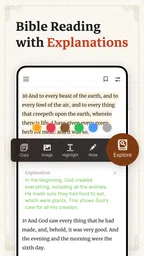
- Read the King James Bible without an internet connection.
- Search for passages by keyword or verse reference.
- Bookmark verses for quick access later.
- Adjust text size for more comfortable reading.
- Share selected verses with others.
What could be better
- The King James wording may feel difficult for modern readers.
- The app may include ads that interrupt reading.
- Offline audio may not be available for every passage.
- Some features may require an internet connection.
- The interface may feel dated compared with newer Bible apps.




