



King James Bible - Verse+Audio review
 Analysis by Appsdrops
When I want a Bible passage close at hand, I’m looking for more than a page of text: I want to find a verse, settle into a reading, and carry a useful thought into the rest of the day. King James Bible - Verse+Audio is built around that straightforward routine. It brings the King James Bible together with audio books and a daily verse, making it a practical option for readers who want scripture available in one focused app.
A reading routine that starts simply
The first impression is clear: this is a Bible study app centered on the King James Bible, rather than a broad library of unrelated reading material. That focus suits me. If I open it with a passage or a short moment of reflection in mind, the app’s purpose is immediately understandable: read, listen, or take a daily verse as a starting point.
The app is free to download and is rated for Everyone. It has an average rating of 4.8 from around 2.5 million ratings, alongside roughly 273,000 written reviews. Those figures suggest that it has found a substantial audience, although popularity alone cannot tell me whether a particular reading style will feel comfortable. What matters in everyday use is whether the app supports a routine without making the reading itself feel like work.
My preferred way to approach a reference app is to begin with a small, concrete intention. I might want to read a familiar section, listen rather than stare at a screen, or pause over one verse. This app’s combination of scripture, audio books, and a daily verse maps naturally onto those intentions. I don’t need to treat every session as a formal study; a short reading can be worthwhile on its own.
From opening the app to choosing a passage
For a reading session, I start by deciding what I want from the moment. If I already have a passage in mind, I can make that the focus. If I don’t, the daily verse offers a simple entry point. That small distinction matters: a Bible app can serve both deliberate study and the less structured moments when I just want a thoughtful prompt.
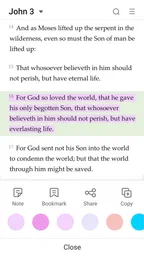
Once I’m reading, the King James translation gives the experience its character. Its familiar, traditional language will appeal to readers who specifically want the KJV, and it may also be a reason someone chooses this app over a more general scripture reader. At the same time, that style is not the most conversational English for everyone. I find it works best when I approach the wording patiently, especially if I’m reading slowly rather than skimming.
The useful habit here is to let the passage set the pace. I can read a short portion, pause, and return to a phrase that stands out instead of trying to race through a long session. The app’s purpose is not to force a particular study method; it gives me a few clear ways to spend time with the text. That keeps the experience approachable whether I’m opening it for a brief check-in or a more attentive read.
When listening fits better than reading
Some days, listening is the more natural handoff. The audio-book element gives the app a role beyond displaying text, which can be helpful when I want scripture in an audio format rather than another screen-based task. I can think of it as a change in how I receive the same kind of material: reading asks for my eyes and attention to the page, while listening lets me focus without following every line visually.
That shift is most useful when it matches the situation. If I’m settled and want to examine wording, reading is the better fit. If I want to listen and reflect, audio can make the session feel less demanding. I wouldn’t expect listening to replace careful reading in every circumstance, but having both approaches available makes the app more adaptable to ordinary routines.
The transition from one mode to another is also a reminder to keep expectations realistic. An audio Bible is valuable because it changes the format, not because it automatically turns every spare moment into deep study. I still need to choose whether I’m listening attentively or simply letting the words accompany another activity. For me, the best outcome comes when I treat audio as an intentional option rather than background noise.
The daily verse as a starting point
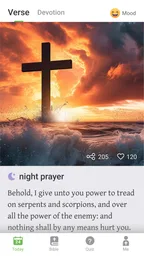
The daily verse gives the routine a small, repeatable anchor. When I don’t have a particular chapter in mind, one verse can be enough to begin. I can read it, consider what it says, and decide whether I want to continue into a longer passage. That makes the app useful even on a day when I have only a little time or no clear plan.
I like this kind of entry point because it lowers the effort needed to get started. It doesn’t require me to map out a study session before opening the app. A verse can prompt a longer reading, but it can also stand on its own as a brief moment of reflection. The important thing is that the daily feature supports a routine without making the routine feel like a checklist.
There is a natural handoff here from the app to the reader. The verse may catch my attention, but the meaning comes from the time I give it. I might read it once and move on, or sit with its wording for a while. Either way, the app supplies a simple prompt; what I take from it depends on my attention and the context I bring to the reading.
How the pieces work together
The full workflow is uncomplicated: I arrive with a purpose, choose a passage or begin with the daily verse, and decide whether reading or audio suits the moment. From there, I can keep the session brief or give it more time. That sequence is the app’s strongest practical quality. Its main elements support different stages of the same activity rather than pulling me toward unrelated tasks.
That focus also helps when I return to the app after a break. I don’t have to rethink what the product is for. It remains a place for the King James Bible, with an audio option and a daily verse to help me begin. For readers who already prefer the KJV, that consistency is a real advantage. For someone still deciding which translation they enjoy, the traditional wording is a more important consideration than the feature set.
There is a difference between a tool that encourages a habit and one that does the work for me. This app can make scripture easier to access and offer a prompt for returning to it, but a meaningful reading still depends on the reader. I see that as a sensible boundary. The app is at its best when it stays a useful companion to the text rather than pretending that a feature can substitute for reflection.
Where the experience can feel less smooth
The most obvious point of friction is the translation itself. The King James style is a draw for many readers, but its older phrasing can take more concentration than contemporary language. If I’m tired or trying to understand a passage quickly, I may need to slow down. That isn’t a flaw unique to this app; it is part of choosing the KJV, and it is worth considering before making this the main Bible app in a reading routine.
Another practical limitation is that the app’s appeal depends on what I want from a Bible tool. Its defining elements are scripture, audio books, and a daily verse. Readers who want a broad set of study resources or a highly customized reading environment should think carefully about whether this focused approach matches their expectations. I would rather see the app judged on the experience it aims to provide than assume it covers every possible study need.
It is also easy to overestimate what a daily prompt can accomplish. A verse can make it easier to open the app, but a brief glance may not be enough when I want to understand a passage in depth. In those moments, I need to take the next step myself: read more, pause over the language, or return to the text later. The app gives me a starting point, not a complete study plan.
There are in-app purchases, with items ranging from under a dollar to just under ten dollars. The app itself is free, so readers can begin without paying to download it. I’d treat any optional purchase as something to consider based on personal preference, rather than as a reason to assume the basic reading routine will suit every need. Keeping that distinction in mind makes it easier to decide whether the app fits my habits.
Who is likely to enjoy it?
I’d recommend this app to readers who specifically want a King James Bible app and value having text, audio, and a daily verse in one place. It makes sense for someone building a short daily reading habit, for a reader who likes to alternate between listening and reading, or for anyone who wants an uncomplicated way to return to familiar scripture.
It may be a less natural choice for someone who prefers modern wording or expects a wide-ranging collection of advanced study tools. In that case, the central question is not whether the app is useful in general, but whether the KJV and its focused set of features match the reader’s priorities. I find that distinction more helpful than treating every Bible app as though it should serve the same audience.
Ozion’s app has been available since January 2, 2018, and its current version is 4.6.0. It has surpassed 100 million installs, which shows how widely it has been adopted. Its minimum operating-system requirement is version 7.0, so it is designed to work across a broad range of supported devices. Those details place the app in context, but the most important test remains whether its reading and listening options fit the way I actually engage with scripture.
A steady companion for scripture
After following the workflow from opening the app to choosing a passage, listening, and taking a verse into the day, I see King James Bible - Verse+Audio as a clear, approachable option with a defined purpose. It does not need an elaborate setup to make sense: I can begin with a verse, read the KJV, or choose an audio approach. That simplicity is what makes it easy to return to.
The experience is strongest for readers who are comfortable with traditional Bible language and want a straightforward way to read or listen. The daily verse can help me get started, while the audio option gives me another way to spend time with scripture. The main friction is equally clear: the KJV may feel demanding to readers who prefer more contemporary wording, and a focused app will not satisfy every expectation for in-depth study.
Overall, I’d call it a useful free Bible reading app for building a modest, repeatable routine around the King James Bible. I appreciate that its main tools serve a simple path from intention to reading, listening, and reflection. If the KJV is the version I want, this is an easy app to consider; if not, its central strength may not be the right fit. For the right reader, it offers a dependable way to keep scripture close at hand.
What we like
- Audio playback makes listening to Bible passages convenient.
- Verse sharing helps users send passages to others.
- Bookmarks make it easier to return to selected verses.
- Daily verse reminders can support a regular reading habit.
- Offline access lets users read without an internet connection.
What could be better
- Audio files may use substantial storage space.
- Some audio features may require an internet connection.
- Ads can interrupt the reading experience.
- The app may request notification permissions for reminders.
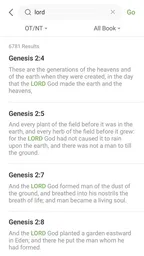
- Search results can be less useful for broad or vague terms.





