




Zoodoku: Brain Puzzle Games review
 Analysis by Appsdrops
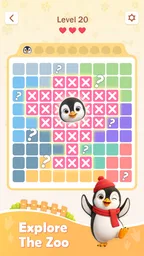
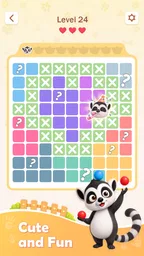
I’m drawn to puzzle games that let me settle into a short challenge without needing to learn a complicated control scheme, and Zoodoku: Brain Puzzle Games is aimed squarely at that kind of session. It is a free animal-themed logic game from Nebula Studio, built around cat puzzles and daily brain-game play. The appeal is easy to understand: it gives familiar number-and-pattern puzzle fans a softer, more playful presentation. Whether it becomes a useful daily habit depends on how much you enjoy that particular style of thinking.
What the puzzle experience is suited to
The game sits in the puzzle category, with logic rather than reflexes at its center. That makes it a natural choice when I want to focus for a few minutes, but don’t want the pressure of a timer-driven action game. The animal theme gives the experience a friendlier identity than a plain grid puzzle, while the underlying attraction is still the satisfaction of making a sound deduction.
If you already enjoy Meowdoku-style puzzles, the idea will feel familiar. If you are new to this kind of game, the useful question is whether you like scanning a board, spotting what is missing, and ruling out possibilities carefully. The theme can make the activity feel inviting, but it won’t change the fact that logic puzzles reward patience more than quick tapping.
I would reach for it during a commute, a quiet break, or while waiting for an appointment—situations where I can pause if needed and return my attention to the board. It is less suitable when I want a story to follow, a social game to share, or a puzzle that constantly introduces new mechanics. Its strength is a focused, repeatable kind of mental exercise, not a broad collection of entertainment modes.
How it compares with familiar alternatives
Compared with a conventional number-grid puzzle, Zoodoku has an animal-led presentation that may make a familiar logic format feel less stark. Compared with word puzzles, it asks for visual pattern recognition and deduction rather than vocabulary. That distinction matters: if I enjoy identifying constraints, this is more appealing than a crossword-style challenge; if I prefer clues that form a narrative or a changing set of rules, another puzzle type may hold my attention better.
The daily-game framing also suits people who like returning to a small mental ritual. It gives a reason to open the game regularly, but I wouldn’t choose it on that basis alone if I mainly want a large, varied puzzle library. A daily routine is most useful when the core puzzle itself feels satisfying, and whether it does will come down to your taste for this specific logic format.
Keeping a session comfortable
A practical way to approach a logic board is to scan for the most constrained spaces first, rather than guessing at a tempting option. I find that this habit reduces unnecessary backtracking in grid puzzles generally, and it suits a game like this better than tapping quickly through possibilities. If you get stuck, a deliberate second pass—checking what is already ruled out—can be more useful than restarting in frustration.
For a short break, I’d set a natural stopping point before opening the game: finish the current puzzle or stop after a brief attempt. This is especially helpful if the board starts to feel like work rather than a relaxing challenge. Daily puzzles can encourage a regular check-in, but there is no need to turn that into an obligation; the game is better as an enjoyable mental pause than as another task on a checklist.
What repeated play asks of you
Heavy use of a logic game is less about rapid reactions and more about sustained attention. When I spend longer on one board, the main friction is mental: I can overlook a constraint, repeat a check, or start making guesses instead of reasoning. Taking a short pause and returning with fresh eyes is a sensible way to handle that. It also helps keep a relaxing puzzle from becoming an irritating test of persistence.
Animal artwork can make a puzzle feel warmer, but it does not remove the need to concentrate. Players who want something they can play almost unconsciously may find that the logic demands more attention than expected. On the other hand, that focus is precisely the point for someone who wants to step away from scrolling and give their mind one contained problem to solve.
I would also think about the setting before starting a longer session. A noisy environment or frequent interruptions can make it harder to hold a chain of deductions in mind. For a quick wait, that may not matter; for a challenging board, a quieter moment is likely to make the experience more rewarding. That is a useful trade-off to keep in mind when choosing between this and a casual game that asks less sustained thought.
Reliability and sensible expectations
The game’s average rating is 4.6 from around 39,000 ratings, with about 1,900 written reviews and over one million installs. Those figures suggest that many players have tried it and that the general reception is positive, but they cannot tell me how every device or session will behave. I’d treat them as a helpful sign of broad interest, not a promise that the game will suit every puzzle fan.
For everyday reliability, I would judge it by whether it opens when I want a short break and lets me concentrate on the puzzle without making the experience feel cumbersome. I can’t responsibly promise a particular loading speed, battery impact, or recovery behavior across all phones. If I were planning to rely on it during a trip or a long wait, I’d try a short session beforehand on my own device and see whether it fits my routine.
That modest test is useful for any mobile puzzle, especially if you tend to switch between apps. It lets you learn whether you can comfortably leave and return to a game without disrupting your focus. I would avoid assuming that a daily puzzle must be completed in one sitting; a flexible approach is better if your day is unpredictable.
Device fit and who should pass
Zoodoku is free and rated for Everyone, so it is broadly accessible as a casual family-friendly puzzle choice. Its current version is 1.2.7, and the listed minimum operating-system requirement is 7.1. That requirement is the practical compatibility check I would make first; a phone that does not meet it is not a good candidate, regardless of how appealing the theme looks.
The game is a better fit for people who like quiet deduction, animal-themed presentation, and a small daily mental challenge. I’d recommend looking elsewhere if you prefer puzzles that teach a new rule in every stage, competitive play, a strong narrative, or fast action. Likewise, someone who dislikes grid-based logic is unlikely to be won over by the cats alone.
It may also be the wrong choice for a player who wants a guaranteed low-effort distraction. A logic puzzle can be calming, but a difficult board still asks you to pay attention. If you want something to play while watching a show or talking with friends, a simpler casual game may be a more comfortable companion.
My verdict after weighing the trade-offs
The best reason to try Zoodoku is the combination of approachable animal styling and focused logic play. It has a clear audience: people who enjoy familiar puzzle thinking and want a daily challenge they can fit into spare moments. Its free price and Everyone rating make it easy to consider, while its popularity gives a prospective player some reassurance that it has reached a sizable audience.
I wouldn’t recommend it as a universal puzzle pick. The experience depends on enjoying deduction, and the daily framing is only a benefit if you like returning to the same kind of mental exercise. If you want variety, a narrative, or high-energy play, another game will likely serve you better. If you do like logic grids, though, this is a straightforward option to try and judge on your own phone.
Overall, I see it as a good fit for a short, deliberate break rather than something that needs to occupy every spare minute. Start with a brief session, notice whether the board style feels satisfying, and keep it in your rotation only if the reasoning is enjoyable rather than draining. That is the clearest way to tell whether this particular animal-themed puzzle belongs on your device.
What we like
- Easy to learn with familiar Sudoku-style rules
- Quick rounds suit short breaks
- No internet connection is needed to play
- Simple controls work well on touchscreens
- A calm pace makes it accessible to casual players
What could be better
- Limited variety may make sessions feel repetitive
- Later puzzles can be challenging for beginners
- Ads may interrupt play depending on the version
- Small board elements may be harder to tap on phones
- Progress can feel slow without frequent rewards







