

Woodoku Blast review
 Analysis by Appsdrops
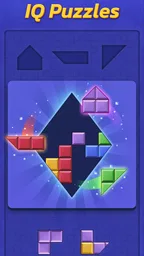
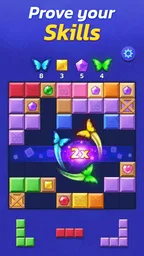
Woodoku Blast is a good fit when I want a quiet puzzle that asks for a little planning but does not demand a long session. Its appeal is the familiar pleasure of arranging blocks, with a wood-themed presentation that gives the game a calmer feel than many brighter, busier puzzle titles. I found its best quality is how easily it can fill a short break; its main limitation is that players looking for a story, rich variety, or a deeper strategic system may find the basic puzzle loop too restrained.
A compact puzzle built around thoughtful placement
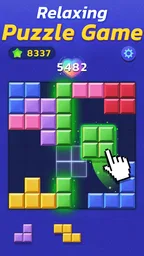
At heart, this is a block puzzle game: you consider the available shapes, look for useful placements, and try to keep the board workable as play continues. That simple premise makes it easy to understand without a tutorial-heavy commitment. The challenge comes less from learning complicated rules than from noticing how one placement affects your options a few moves later.
That distinction matters. A casual puzzle can look effortless while still rewarding attention, and Woodoku Blast works best when I resist dropping the first shape into the first open space. I try to preserve open areas that can accommodate more than one kind of piece. A move that clears room now may be less useful than one that keeps the board flexible for the shapes still to come.
The wood-inspired look supports that measured pace. It feels more like a small tabletop diversion than a frantic arcade challenge, which suits people who want to think without being put under pressure by a loud or hectic presentation. Tripledot Studios Limited is the developer, and the game sits squarely in the puzzle category rather than trying to mix in unrelated genres.
Why the simple loop holds attention
The strongest evidence for its appeal is how naturally it fits spare moments. I can pick it up while waiting for a drink, between household tasks, or during a short pause in the day. Because the central action is immediately legible, I do not need to remember a plot or reconstruct a complicated sequence of objectives before playing.
There is still room for small strategic decisions. I find it useful to treat the board as a resource rather than a collection of empty squares: leaving a clean, broad space can be more valuable than filling gaps neatly. When the board starts to look awkward, I pause and compare placements instead of focusing only on the next obvious opening. That habit makes the puzzle feel more deliberate and helps avoid the common trap of making a tidy move that leaves poor options afterward.
Another practical approach is to avoid committing to one corner too early. If I concentrate all placements in a single area, the remaining space can become fragmented, making later shapes harder to accommodate. Keeping a few connected areas open gives me more flexibility. It is a modest adjustment, but it changes the feel of play from reactive placement to light planning.
That makes the game particularly suitable for people who enjoy spatial reasoning in small doses. It can also work as a low-key alternative to scrolling through a feed: there is a clear task, a reason to pay attention, and a natural point to stop when a session ends. I would not call it a substitute for a long-form strategy game, but it asks for enough thought to make a brief break feel active.
Where it feels less satisfying
The same simplicity that makes Woodoku Blast easy to approach also limits its range. If you want a puzzle game that continually introduces new mechanics, builds a world, or changes its rules in surprising ways, this may feel narrow. The main pleasure comes from handling the block-placement challenge itself; anyone who tires quickly of repeating a central loop should be realistic about that before installing it.
It is also not the best choice when you want a demanding, fully absorbing challenge. Its relaxed presentation and straightforward premise make it approachable, but players seeking deep tactical complexity may prefer a more involved logic or strategy puzzle. I would choose Woodoku Blast for a short, calm session, not as my first pick for an evening devoted to mastering a layered game system.
There is a small but important trade-off in the way a board puzzle encourages “one more move.” A run can feel satisfying when careful placement keeps space open, yet a cramped board can turn the experience into damage control. When that happens, I find it better to treat the outcome as feedback about earlier choices rather than forcing a perfect recovery. The game is more enjoyable when I focus on improving my placement decisions, not on expecting every board to remain comfortable indefinitely.
The game is free to download, though it includes in-app purchases ranging from $0.99 to $99.99 per item. That range is worth keeping in mind if you prefer games with no optional spending at all. I would decide in advance whether I am comfortable with in-app purchase options, especially if the device is shared with a child. The content rating is Everyone, but that does not remove the value of setting appropriate purchase controls on a shared device.
Who is likely to enjoy it
I would recommend it to someone who likes fitting shapes together, wants rules that are easy to grasp, and prefers a calm visual style over fast reactions. It is also a sensible option for casual players who do not want to invest in a long campaign just to get a satisfying puzzle. The short-session use case is its clearest strength: it gives a person waiting for an appointment or taking a quick break something more engaging than idle tapping.
On the other hand, I would steer away anyone who needs a steady stream of novelty, strong narrative motivation, or a multiplayer social element to stay interested. If your favorite puzzle games are built around elaborate logic chains or steadily escalating systems, this one may feel too focused on arranging pieces. And if you dislike games with optional purchases, the free entry point may not be enough to make it the right fit.
For comparison, many familiar puzzle alternatives lean on speed, matching colors, or solving a fixed logic problem. Woodoku Blast instead asks me to manage space as shapes arrive and to think about how the board will look after a placement. That makes it less reflex-driven than a timed matching game, but also less varied than puzzle titles that rotate through distinct mechanics. The better choice depends on what I want: a calm spatial exercise here, or a faster, more varied challenge elsewhere.
Its reach suggests that this straightforward approach has found a substantial audience: it has over 10 million installs, with an average rating of 4.8 from around 332,000 ratings. Those figures are useful context, not a guarantee that every player will enjoy the loop. I would read the popularity as a sign that the accessible premise resonates, while still judging the game by whether repeating block-placement decisions suits my own taste.
Practical details before you play
Woodoku Blast was released on October 17, 2024, and its current version is 1.32.02. It requires Android 7.1 or later, so it is not suitable for every older device. The game is available at no upfront price, and its Everyone content rating makes its basic puzzle premise broadly approachable. I would still consider the optional purchases separately from the age rating, particularly when a younger player uses a family device.
If you are deciding whether to try it, my advice is to start with a clear expectation: this is a compact block puzzle, not a sprawling game with a long list of modes to master. Give yourself a few sessions to see whether you enjoy preserving space and planning around the shapes. If you do, the simplicity is a strength. If you find yourself wishing for new rules or a more demanding objective, that is a good sign that a deeper puzzle game would suit you better.
A clear recommendation for the right kind of break
Woodoku Blast is most rewarding when you want a calm spatial puzzle that fits into everyday gaps. I like its approachable premise, the room it leaves for sensible planning, and the way a small placement choice can shape the rest of a board. I do not think its focused loop will satisfy everyone, and its optional purchases deserve a little attention, but neither point undermines its usefulness for the right player.
My verdict is a warm, qualified recommendation. Try it if block arranging sounds relaxing and you value quick access over a deep progression system. Skip it if you need constant novelty, a story to follow, or a more intricate challenge. For a short pause in the day, though, this is an easy puzzle to understand and a pleasantly thoughtful way to spend a few minutes.
What we like
- Woodoku-style boards make each round easy to understand.
- Short rounds fit quick breaks.
- Piece placement rewards careful planning.
- The clean board keeps the game easy to read.
- The core puzzle is simple to start playing.
What could be better
- Random piece sets can disrupt a promising plan.
- A crowded board can end a run abruptly.
- Repeated board layouts may feel familiar.
- Small gaps can be hard to judge on compact screens.
- Progress may feel slow without frequent play.







