






Whisper Castle: Merge & Story review
 Analysis by Appsdrops
I like puzzle games that give a small task a reason to matter, and Whisper Castle has a clear hook: merging objects is tied to restoring a castle and uncovering its story. That gives each puzzle a sense of direction beyond simply making a bigger item. In my view, it is best approached as a steady, return-to-it game rather than a test of speed or a complicated strategy challenge.
From a simple merge to a castle routine
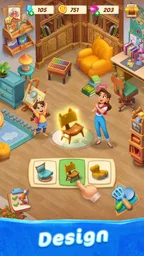
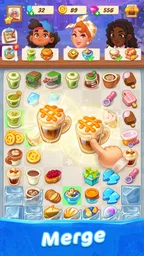
Whisper Castle: Merge & Story is a free puzzle game from Microfun Limited. Its central loop is easy to grasp: combine matching items, use the results to make progress, and follow what the castle reveals as it is rebuilt. The approachable setup makes it easy to begin without learning a long list of rules first.
A useful way to play is to treat each visit as a short work session. Look over the available items, decide which combinations seem to support your current goal, then merge with that goal in mind. That sounds obvious, but it helps avoid the common merge-game habit of combining everything as soon as possible. Keeping a little space and delaying a merge can leave you more options when a specific request or objective comes up.
The story gives the activity a personal frame: progress is not only about clearing a board, but about seeing a place become whole and finding out what is behind its mystery. I find that especially helpful when a puzzle game’s basic actions could otherwise start to feel repetitive. The narrative supplies a reason to keep going, though players who want a story-heavy adventure with little resource management may still find the merging itself takes center stage.
In an everyday setting, this is the sort of game I would open during a quiet break, make a few deliberate combinations, and leave when I had reached a natural stopping point. It suits players who enjoy gradual progress and small decisions. It is less suitable if you want a fast, reflex-based puzzle or a clearly defined session with a fixed beginning and ending.
Build a repeatable board habit
For a more organized rhythm, I would start each session by checking what is already on the board rather than tapping through merges at random. Identify the items that are close to combining, notice which spaces are occupied, and work out whether a merge would help a current objective or merely tidy things up. This quick scan makes later choices less impulsive.
A second useful habit is to reserve some room for flexibility. In merge games, a crowded board can turn even simple decisions into awkward ones: you may have items ready to combine but nowhere convenient to place the result. When the board begins to feel tight, prioritize combinations that genuinely reduce clutter or advance what you are working toward. Avoid treating every possible merge as equally valuable.
There is also a trade-off between immediate neatness and future choice. Combining a pair may clear space, but keeping items separate can preserve options if you are unsure which objective to pursue next. I would not hoard everything indefinitely; that creates its own congestion. Instead, make a deliberate choice: keep items when they could support more than one next step, and combine them when the result has a clear purpose.
Check the controls before settling into a routine
I would take a moment to look through the game’s available settings before making it part of a regular break. That is practical rather than a claim that a particular control or accessibility option is present: knowing what the game actually lets you adjust can make its presentation more comfortable, while avoiding assumptions based on other merge titles. If you prefer quiet play, check the sound controls; if you play in short bursts, note whether the interface gives you a convenient way to pause or leave a session.
It is also worth checking the device requirements before installing. The current version is 1.19.0, and the listed minimum operating system is Android 8.0. The game is rated for Everyone, so its age classification is broad, but parents should still make their own decision about whether the style of play and in-app spending are suitable for a child.
The game is free to start, with optional in-app purchases ranging from $0.99 to $99.99 per item. I would keep that in mind before handing a device to a younger player or setting a casual spending habit. A sensible approach is to decide in advance whether you want to spend at all; the presence of a purchase option does not mean a puzzle session needs to become a shopping decision.
Use patience as a shortcut
The fastest-feeling approach is not necessarily to merge as often as possible. It is to avoid creating work for yourself. When a combination does not advance the castle or reduce a genuine bottleneck, pause and reassess. A few seconds spent considering the board can be more useful than a chain of hurried actions that leaves awkward leftovers.
For a repeatable routine, I would focus on one practical aim at a time: make space, complete a useful combination, or move the castle’s progress forward. Switching goals every few moves makes it harder to judge which items are worth keeping. This is a general planning technique for the game’s merge loop, not a claim about a hidden shortcut or special feature.
Another small improvement is to stop before frustration sets in. If the board no longer offers an obvious useful move, a brief break can be better than forcing combinations just to keep tapping. Returning with fresh eyes often makes the next sensible action clearer. That approach is especially helpful for players who use puzzle games to unwind rather than to chase an uninterrupted streak.
These habits also show where the game differs from common alternatives. A conventional match puzzle usually asks you to solve a compact board through immediate pattern recognition. Whisper Castle instead makes combining items part of a longer progression, so patience and managing available space matter more than quick visual reactions. If you enjoy watching a project develop over time, that structure is appealing; if you prefer a self-contained puzzle that resets cleanly after each round, a classic match game may be a better fit.
What the story adds—and what it cannot replace
The castle setting gives each step a broader purpose, and the mystery provides a reason to care about what comes next. That framing is a real strength for players who like narrative motivation alongside simple puzzle actions. It also gives the game a different mood from a purely score-focused puzzler, where the main reward is often just beating a previous result.
Still, the story is paired with a merge loop, not a separate adventure game. Anyone choosing it mainly for elaborate dialogue, exploration, or complex character choices should keep that distinction in mind. The puzzle actions remain the core of play, and the story works best as context for the gradual restoration rather than a replacement for it.
The game’s popularity is encouraging but not a guarantee of personal fit: it has a 4.9 average from around 10,000 ratings, with more than 1 million installs and 401 written reviews. I would read those figures as a sign that many players have responded well, not as proof that every player will enjoy the pace. The most useful question is whether you like making incremental progress and managing a board over multiple visits.
Where the limits show
Merge puzzles can become repetitive when the satisfaction of combining items wears off, and Whisper Castle’s appeal depends on whether the castle objective and mystery keep that loop meaningful for you. Players who want constant novelty or a sharp increase in puzzle difficulty may find the gradual structure less engaging. Likewise, if you dislike board organization, the need to think about space can feel like friction rather than strategy.
There is a practical limit to the “just one more move” approach, too. Because progress is built from connected actions, it can be tempting to keep playing simply because the next small step feels close. I recommend deciding on a stopping point before starting a short break. That makes the game easier to enjoy casually and helps keep optional purchases from becoming an impulsive response to wanting progress faster.
It is not my first recommendation for someone who wants a competitive puzzle, a rapid arcade challenge, or a game with no purchase prompts at all. A traditional logic puzzle is a better choice for a focused brainteaser, while a match-based game is better for quick rounds built around immediate pattern spotting. Whisper Castle occupies a slower middle ground: merge-focused progress with a setting and mystery to pull you onward.
My take on mastering the rhythm
Whisper Castle: Merge & Story works best when I play thoughtfully: scan the board, keep useful options open, merge with a purpose, and stop when the next action feels forced. Those habits make its simple central idea more satisfying without requiring complicated tactics. The game is an easy recommendation for anyone who likes calm puzzle progress tied to a clear setting, especially if they enjoy returning to a project and seeing it gradually change.
I would skip it if I were looking for brisk rounds, demanding logic problems, or a story that takes priority over the puzzle. For the right player, though, the appeal is in the balance between a modest decision on the board and a larger sense of rebuilding. With its Everyone rating, free entry, and optional purchases, it is accessible to try; the best way to judge it is to see whether that slower, purposeful merge routine feels relaxing rather than repetitive.
What we like
- Merging items gives each puzzle a clear sense of progress.
- Story chapters provide a reason to keep playing.
- The castle theme creates a cozy atmosphere.
- Short play sessions suit casual gaming.
- New areas offer goals beyond basic merging.
What could be better
- Energy limits can interrupt longer play sessions.
- Waiting for energy may slow story progress.
- Some upgrades require repeated merging.
- Later areas may demand more time or resources.
- Frequent play can make tasks feel repetitive.







