

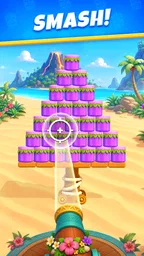

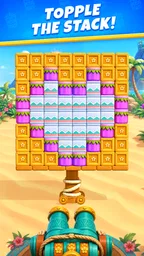
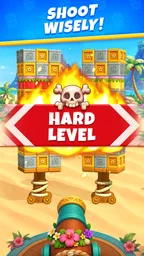


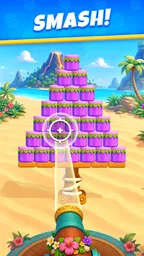
Tiki Smash! review
 Analysis by Appsdrops
I like puzzle games that make me pause before acting rather than simply matching pieces at speed, and Tiki Smash looks aimed at that more deliberate mood. It is a free puzzle game from PeopleFun, built around physics and blocks, so its appeal is the small problem-solving moments: work out what to move, consider what might fall, then see whether the plan holds up. That basic idea can be satisfying in a short break, though physics puzzles can also be less forgiving than they first appear.
Getting oriented when a puzzle feels unclear
The store’s short description calls it “Tiki Smash!”, but that phrase alone does not explain how a level behaves. The useful way to approach a physics-and-block puzzle is to treat each attempt as a small experiment. Before making a move, look at the arrangement and ask what seems stable, what might shift, and which change is likely to affect the rest of the scene. That habit is more valuable than rushing through actions.
When a puzzle does not go as expected, resist repeating the same move immediately. Notice what actually changed: did a block move farther than you thought, did another piece become unstable, or did the result simply fail to meet the goal? Even without assuming a particular control scheme or level feature, this kind of observation helps separate a bad plan from a misunderstood interaction. It also makes retries feel like learning rather than guesswork.
Physics puzzles can be tricky because the visible arrangement may not tell the whole story. A move that looks harmless can affect several pieces, while a small adjustment might be enough to change the outcome. I would approach each stage with one clear intention at a time. If a sequence is going wrong, simplify the next attempt instead of changing several decisions at once; that gives you a better chance of seeing which choice mattered.
Small checks before you start
For a smoother first session, make sure your device is running a compatible version of its operating system. Tiki Smash requires version 7.1 or later, and the current game version is 0.10.305. If the game will not install or launch, checking compatibility and making sure the installation has completed are sensible first steps. Those checks are more useful than assuming a puzzle itself is broken when you have not yet reached one.
The game is rated Everyone, which makes its age classification broad, but that does not necessarily mean every player will enjoy its style. The key question is whether they like thinking through physical interactions and trying again when an outcome surprises them. If you are choosing a game for someone else, I would explain that it is a puzzle experience rather than a promise of fast action or a story-driven adventure.
It is also worth deciding how you feel about optional spending before settling into a free game. Tiki Smash is free to download, with in-app purchases ranging from $0.99 to $99.99 per item. That wide span is a reason to check purchase prompts carefully, particularly if a child will use the device or if you prefer a strict no-spend setup. I would not treat the free download as proof that every later option is free.
A recovery routine for frustrating levels
My practical rule for a difficult stage would be to pause, identify the result you want, and make one deliberate change. After the attempt, compare what happened with what you expected. This is a useful workflow in any physics puzzle, but it matters especially when blocks interact: changing several things at once can make it hard to understand why the scene behaved differently.
If a level seems stuck, take a short break before restarting. Returning with fresh attention often makes it easier to spot an obvious relationship between pieces that was lost in repeated attempts. I would also avoid tapping quickly just to get past a frustrating moment. In a game built around physical outcomes, a rushed action can obscure whether the issue was timing, placement, or the original plan.
Keep the distinction between a failed attempt and a technical problem clear. If the game is responsive and the scene changes, the puzzle may simply be testing a different approach than the one you expected. If the app freezes or closes, first reopen it and check whether other apps are competing for the device’s attention. These are general troubleshooting steps, not a claim that Tiki Smash has a particular recovery or save feature.
When the trouble may be outside the game
Not every installation or performance problem points to a fault in the puzzle itself. A device below the minimum operating-system requirement may not be a suitable match, while an interrupted download can leave an app in an incomplete state. I would check those basics before trying repeated reinstalls. If the game is already installed but behaves inconsistently, closing it and starting a fresh session is a reasonable first test.
It also helps to consider the setting in which you play. A brief interruption can break concentration, and physics puzzles reward attention to cause and effect. If you are playing during a commute or while juggling other tasks, a level that needs a few careful attempts may feel more irritating than it would in a quiet moment. That is not a flaw in the game so much as a mismatch between its thoughtful pace and a distracted setting.
For purchase or installation questions, use the app store’s own account and support tools rather than relying on guesses about how a transaction works. Since the game includes paid items, check the displayed purchase details before confirming anything. This is particularly helpful when another person shares the device: clear account settings and supervision can prevent an accidental purchase from becoming a surprise.
How it compares with familiar puzzle choices
Compared with a typical match-and-clear puzzle, a physics-and-block game asks you to think about movement and consequences, not just which pieces fit a pattern. That can make each decision feel more tangible, but it can also make outcomes harder to predict. If you prefer puzzles with a fixed, easily read sequence, a conventional logic grid or tile-matching game may be a better fit. If you enjoy testing an idea and watching the arrangement respond, Tiki Smash has a more appealing premise.
It also differs from action games that reward quick reactions. Here, patience and observation are likely to be more useful than speed. That makes it a plausible choice for a short mental reset, provided you are comfortable with the possibility that a quick session might include a retry. I would not pick it for someone who wants a clearly explained narrative, competitive play, or an experience that can be enjoyed without paying attention to the puzzle in front of them.
The game has an average rating of 4.8 from around 6.5 thousand ratings, alongside roughly 933 written reviews and over 500 thousand installs. Those figures suggest that many players have tried it and responded positively, but they cannot tell you whether its particular style suits you. I would put more weight on the central question: do you find it enjoyable to reason about blocks and physical outcomes, even when your first idea fails?
Who is likely to enjoy it
I can see Tiki Smash working well for someone who likes compact puzzles and does not mind learning through trial and error. It may suit a quiet coffee break, a few minutes between errands, or a relaxed evening when you want a problem to focus on without committing to a long session. A useful personal test is whether you enjoy explaining to yourself why an attempt failed. If that reflection feels satisfying, the game’s premise is probably a good match.
It is less suitable for players who dislike retries, want every rule spelled out before acting, or need a game that remains engaging while they are distracted. It may also not be the best choice if you are looking for a completely purchase-free environment without checking how in-app options are handled. The right expectation is a free-to-download puzzle with optional purchases, not a guarantee that every part of the experience is free of spending prompts.
My practical verdict
PeopleFun’s Tiki Smash! has a clear, appealing angle: use puzzle-solving instincts to make sense of blocks and physics, then adjust when a plan does not work. I would recommend giving it a try if you like careful experimentation more than speed and are happy to learn from failed attempts. The strongest practical tip is to change one thing at a time; it makes a confusing result easier to understand and a successful solution more satisfying.
My reservation is that this kind of puzzle can feel opaque when the interaction does not behave as expected, especially if you are playing while distracted. I would skip it if retries quickly become annoying or if you prefer a tightly guided puzzle experience. For everyone else, the free download makes it an easy way to see whether its physics-based approach clicks, as long as you keep an eye on purchase prompts and check your device’s compatibility first.
For me, the deciding factor is not the headline rating but the pleasure of testing a theory and seeing what the blocks do. If that small cycle of observation, action, and adjustment sounds rewarding, Tiki Smash! is worth a look. If you want predictable, instantly readable puzzles, another style will likely feel more comfortable.
What we like
- Quick rounds make it easy to play in short sessions.
- Simple controls are easy for new players to learn.
- Bright visuals give the game a playful arcade feel.
- Unlockable content adds a reason to keep playing.
- The basic gameplay is easy to understand without a tutorial.
What could be better
- Repeated runs can start to feel predictable.
- Progress may depend on collecting enough in-game rewards.
- Fast action can make precise movement challenging.
- Some players may find the visual effects distracting.
- The game offers limited depth for players seeking a long campaign.







