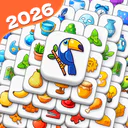


Tap Tile! review
 Analysis by Appsdrops
Tap Tile! is a puzzle game built around a simple invitation: tap tiles, make matches, and clear the board. That straightforward premise makes it easy to understand at a glance, while the familiar tile-matching format gives each move a small decision to consider. I like games that let me get started without a long explanation, and this one’s central idea is refreshingly direct: choose three tiles, work toward clearing the playfield, then decide whether I’m ready for another round.
One tap starts the puzzle
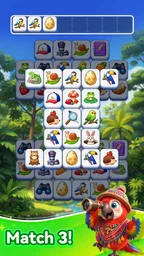
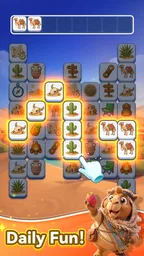
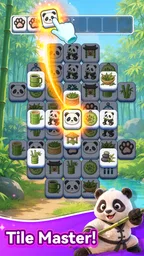
The first action is the whole point. You tap tiles to form a group of three, with the aim of clearing the board. There’s no need to learn a complicated control scheme before you can begin; the interaction is simply about looking at the available tiles and choosing what to tap. That keeps the focus on the puzzle itself rather than on menus or button combinations.
That simplicity doesn’t mean every choice feels automatic. A tile that looks like an easy pick can affect what remains available for later matches, so I find myself pausing to scan the board instead of tapping without thinking. The basic rule is quick to grasp, but the satisfying part comes from trying to make sensible selections and watching the board change as the pieces are cleared.
As a tile match puzzle game, Tap Tile! is easy to recommend to anyone who enjoys clear objectives and familiar mechanics. Its store description sums up the intended experience neatly: tap three tiles, clear the board, and give your brain a bit of exercise. I’d describe the appeal as a mix of casual play and light planning, rather than a game that asks you to master a stack of rules before the fun begins.
A clear goal keeps each move grounded
The goal gives every tap a useful context. I’m not just selecting tiles because they are there; I’m looking for a way to build matches and move closer to an empty board. That simple sense of progress helps the game feel approachable. Even when I take a moment to think, I know what I’m working toward, and that makes it easy to settle into a puzzle without needing a big commitment.
The design also suits short visits. A match-and-clear concept is naturally easy to pick up when I have a spare moment, yet it still gives me a reason to pay attention. I can focus on the visible choices, make a selection, and see how it affects the board. It’s a tidy loop that makes sense for a casual mobile game: the action is immediate, the objective is visible, and progress comes from decisions I can understand.
Feedback that makes progress feel satisfying
In a tile-matching game, feedback matters because each move should feel connected to the result. Tap Tile! places that relationship at the center of its play: I choose tiles, aim to complete a group of three, and work toward clearing what remains. The reward is easy to read in the changing board. A successful match means there are fewer tiles in the way, and that visible progress gives the next choice a little more purpose.
I enjoy how the rhythm can alternate between quick taps and brief planning. When I spot a useful group, I can act right away. When the available choices need more thought, I can scan the board and consider which selection seems most helpful. That back-and-forth is a good fit for a casual brain-training game: the interaction stays light, while the player still has a reason to look carefully and think ahead.
The game’s promise of brain training is best understood in that modest, everyday sense. It encourages attention to the board and consideration of tile choices, rather than presenting itself as a formal test. I find that framing more appealing than an overcomplicated challenge. The puzzle asks me to stay engaged with what I can see, and each clear helps me feel that my decisions are moving the round along.
Small rewards support the next decision
Clearing tiles is a simple reward, but it works because it is tied directly to the objective. I can see the result of a successful choice instead of having to interpret an unrelated score or system. That visible change makes the board feel active: each match reduces what remains and gives me a fresh situation to read. The pleasure is not only in completing a group; it is also in seeing the puzzle become more manageable.
This kind of feedback can make a game feel relaxing without making it entirely passive. I can take a casual approach, but the board still asks me to notice what is available and choose with some care. That balance is one of the strongest parts of the concept. The experience is easy to enter, yet the small decisions give each round enough texture to keep tapping from feeling entirely mindless.
For players searching for an easy-to-learn matching game, the three-tile rule is a useful starting point. It gives the puzzle a clear structure and makes the goal understandable even to someone who has never tried this particular game. I wouldn’t expect a complicated strategy lesson from it; the draw is the combination of accessible rules, visible progress, and the chance to make a better choice on the next tap.
Why the next round feels inviting
Once the board is cleared, the central task reaches a natural stopping point. That gives a session a satisfying shape: start with a board, make choices, form groups of three, and work toward finishing the puzzle. A clear endpoint matters for a casual game because it lets me decide when I’ve had enough. I can enjoy a round as a complete little activity instead of feeling that I must keep going indefinitely.
At the same time, the loop makes another session easy to imagine. The rules don’t demand a lengthy warm-up, and the basic pleasure comes from repeating a familiar action with a fresh board to consider. I can return for the same simple reason I began: I want to see how the next set of choices plays out and enjoy the moment when the remaining tiles are cleared. That makes the game well suited to players who like a straightforward puzzle they can revisit.
The reset is part of the appeal, not a complication. When one puzzle ends, the core idea remains easy to remember: look at the tiles, tap to build a group of three, and clear the board. That repeatable structure is welcoming for newcomers and convenient for experienced puzzle fans who want something uncomplicated. It gives the game a natural pick-up-and-play quality without requiring me to keep track of a sprawling set of systems.
A relaxed fit for everyday play
Tap Tile! is free to play, and its age rating is Everyone. Those details make it approachable for a broad audience looking for a light puzzle, while the basic gameplay remains the main reason to try it. The game is developed by Nebula Studio, and it has drawn a substantial audience: it has over ten million installs, with an average rating of 4.8 from around 340,000 ratings. Those figures point to strong interest, but the clearest way to judge its appeal is still to consider whether the tap-three-and-clear loop sounds enjoyable to you.
The game was released on April 15, 2026, and its current version is 1.7.4. It supports devices running Android 7.1 or later. For someone browsing the puzzle section of an app store, those practical details help place it alongside other casual options, but they don’t change the core experience: simple tile selection, a visible goal, and progress measured by how much of the board remains.
I’d especially point it out to players who want a relaxing puzzle game that is easy to understand and doesn’t rely on a complicated pitch. The appeal is in how quickly the action makes sense and how naturally one decision leads to the next. If you enjoy scanning a board, choosing a few tiles, and watching a clear objective take shape, the game’s central loop has a pleasant, uncomplicated pull.
My verdict on the loop
What works best here is the connection between action, feedback, reward, and reset. I tap tiles to create groups of three; the board changes as matches are cleared; that visible progress feels rewarding; and completing the puzzle gives me a clean reason to start again. The cycle is easy to explain, but it also gives the game its identity. There’s little friction between wanting to play and making the first move.
Tap Tile! is a solid choice for anyone after an accessible tile-matching puzzle with a clear goal and a relaxed pace. It doesn’t need to disguise its premise: the pleasure comes from looking, choosing, matching, and clearing. I appreciate that directness. The game gives casual players a simple way to spend a few minutes while still encouraging enough attention to make each selection feel like a decision.
My overall impression is that this is a good fit for fans of simple puzzle games for mobile who enjoy repeatable rounds and visible progress. Its three-tile mechanic is easy to grasp, the board-clearing objective keeps the play focused, and the completed puzzle offers a natural stopping point before another session begins. If that tidy rhythm sounds like your kind of downtime, Tap Tile! is an inviting game to add to your puzzle shortlist.
What we like
- Easy-to-learn matching rules make it approachable for new players.
- Short rounds suit quick breaks throughout the day.
- Tile clearing offers satisfying visual feedback.
- Increasing difficulty provides a steady challenge.
- The touch controls feel natural on mobile screens.
What could be better
- Later levels can feel repetitive.
- A mistake may end a promising run quickly.
- Some puzzles require careful planning rather than fast moves.
- Progress can feel slow for players seeking variety.
- Small tiles may be harder to tap on compact screens.







