
Match Factory! review
 Analysis by Appsdrops
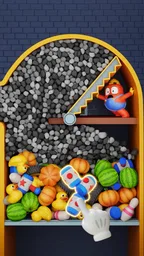
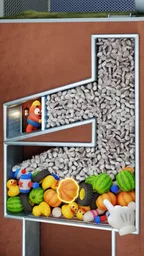
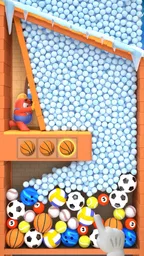
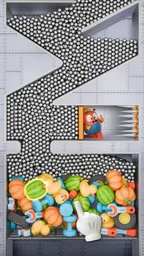
I like puzzle games that give me something clear to do in the few minutes between other tasks, and Match Factory! is built around that kind of quick, focused play. It is a three-dimensional matching game from Peak, with a simple premise: look over a busy arrangement of objects and find matching items. The appeal is less about learning a complicated rule set and more about scanning carefully, making a choice, and keeping your attention on the board.
How a typical round feels
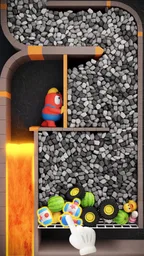
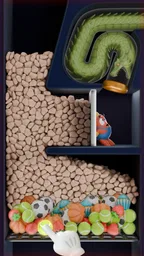
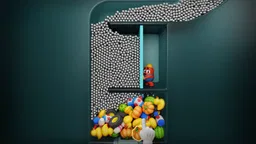
The basic rhythm is easy to understand. I examine the scattered objects, identify a set that belongs together, and try to make useful matches without losing track of what remains. Because the pieces are presented in 3D rather than as a flat grid of identical tiles, I find myself checking shape, color, and position together. That visual search is the core challenge, and it gives the game a different feel from familiar tile-matching puzzles.
That simplicity makes it approachable, but it does not make every board effortless. A quick glance can miss an object partly obscured by the surrounding arrangement, and choosing a promising match is not always the same as choosing the most helpful one. I get better results when I pause long enough to scan the whole scene before tapping. The game rewards attention more than frantic speed, at least in the way I approach it.
For a realistic everyday use, it works well as a short break while waiting for a ride or taking a pause between chores. I can start with no lengthy tutorial or story to remember, focus on the objects in front of me, and put the game down when I am finished. That makes it a natural fit for casual sessions. If I want a deep narrative, long-term planning, or a puzzle that I can solve with pencil-and-paper logic, I would reach for something else.
The strongest habit is to scan before you match. Rather than tapping the first apparent trio, I look for the objects that are easiest to distinguish and note where similar pieces sit in the scene. This small routine cuts down on careless choices and helps me keep a mental picture of the board. It is especially useful when several objects share a similar color or silhouette.
Make the scene easier to read
The 3D presentation is both the game’s identity and its main source of friction. It gives the board a tangible, crowded quality, but visual depth can make a quick scan less reliable than it would be in a simple flat layout. When I lose track, I stop and inspect one area at a time instead of sweeping my eyes across everything at once. I also try to compare object outlines, not just colors; that is a more dependable way to distinguish lookalikes.
It is worth checking the available settings before settling into a routine. I would look for options that affect sound, display, or other aspects of play and choose what suits the place where I usually play. I am not claiming that a particular control or accessibility option is present; the practical point is to review the settings the installed version actually offers rather than assuming the default arrangement is ideal. A quieter setup can make a waiting-room session less intrusive, while a comfortable display is more useful than rushing through a visually busy board.
One trade-off I notice with object-focused puzzles is that familiar surroundings can make a session feel easier to read, while interruptions make it harder to hold the board in mind. If I am likely to be interrupted, I avoid starting when I only have a few seconds to spare. A brief but uninterrupted pause is often more satisfying than trying to play while switching constantly between the game and messages.
Patterns that make play more deliberate
Experienced play here is less about a secret shortcut than about repeatable habits. I scan in sections, match the clearest items first, and then reassess the remaining arrangement instead of sticking to my first impression. After a match changes what is visible, I take another look rather than assuming the next useful group will be where I expected. That reset matters: each choice can change the visual information available, so a fresh scan is more reliable than relying on a memorized route.
Another useful practice is to avoid chasing a match simply because it is easy to spot. If several groups are available, I consider which one will leave the scene easier to read. A visually obvious choice can be a good move when I am unsure, but it is not automatically the best one if it leaves a harder cluster to untangle. This is a modest kind of planning, not a complex strategy system, and it suits the game’s accessible design.
I also recommend treating mistakes as information. When I repeatedly overlook a particular kind of object, I make a point of checking its shape and position on the next scan. That is more useful than tapping faster. The game’s appeal comes from improving how I notice and sort the objects, so slowing down briefly can make a session feel more skillful rather than less productive.
Compared with standard match-three games, this asks me to interpret a cluttered 3D scene instead of swapping pieces on a regular board. Compared with classic pair-matching games, it puts more emphasis on finding groups in a shared arrangement than on remembering a sequence of hidden cards. Those differences are meaningful: people who enjoy visual search may find the object hunt refreshing, while players who prefer tidy grids, predictable movement, or a strong memory challenge may prefer the usual alternatives.
What to expect over time
The game is free to download and is rated Everyone, so it is easy to try as a casual puzzle rather than a purchase decision up front. It has a 4.7 average from around 732,000 ratings, and more than 10 million installs. Those figures suggest it has found a broad audience, but they do not tell me whether its particular style will suit you. The deciding factor is whether you enjoy scanning detailed arrangements and making small, visual decisions.
There are in-app purchases, with items priced from $0.99 to $199.99. I would treat those as optional spending rather than part of the basic reason to try the game, and I would check purchase controls on a device used by a child. The Everyone age rating makes the game broadly accessible, but that does not remove the need to be thoughtful about spending. If you want a puzzle you can enjoy without buying anything, the sensible approach is to start free and decide for yourself whether any optional purchase adds enough value.
Peak released it on December 21, 2023, and version 1.80.74 is the current version. It requires Android 7.1 or later. That gives Android users a practical compatibility check before installing; iPhone and iPad users should check the requirements shown for their device in the app store. I would not choose it for a device that struggles with visually layered games, or for someone who finds small differences between similar objects frustrating.
Where the challenge has limits
Match Factory! is deliberately easy to enter, and that is also its limitation. Its central loop stays focused on searching and matching, so anyone looking for a broad collection of puzzle modes or a complex campaign may find the experience narrower than expected. Repeating the same kind of visual task can be relaxing, but it can also feel familiar once the novelty of the 3D presentation wears off.
There is also a difference between a satisfying challenge and visual overload. If a crowded scene makes you feel impatient, or if you prefer puzzles with one clearly defined logical path, this may not be your best choice. A conventional grid-based game is easier to parse at a glance; a word or number puzzle is a better fit when you want reasoning to matter more than visual recognition. I would recommend this one specifically to people who enjoy looking closely and sorting objects, not to every puzzle fan by default.
For younger players, the simple matching premise is accessible, but I would still guide them through the purchase settings and help them understand that optional in-app items cost money. For adults, the same straightforward structure is useful when you want a low-commitment distraction rather than a game that asks you to remember a long sequence of goals. In both cases, the best experience comes from treating each board as a small visual exercise, not a race.
Who I would recommend it to
My verdict is that Match Factory! is a good choice if you enjoy object-spotting puzzles and want a game that is easy to pick up in short bursts. I especially like its fit for a commute, a quiet break, or a few minutes of downtime when I want to focus on one clear task. The best way to get more from it is to scan deliberately, reassess after each match, and check the available settings before deciding on a comfortable setup.
I would skip it if you want a deep story, demanding long-range strategy, or a clean board where every piece is immediately visible. Its layered 3D scenes are part of the charm, but also the reason some players may find it fiddly. For the right person, that visual search is satisfying enough to carry the experience; for someone who prefers logic grids or classic match-three swaps, another puzzle style will be a better fit. Overall, I see it as an approachable, polished-feeling option for focused casual play, with a clear identity and limits worth knowing before you settle in.
What we like
- Colorful visuals make each level easy to scan.
- Short rounds fit well into quick play sessions.
- Finding objects provides a satisfying puzzle challenge.
- New stages offer a steady sense of progression.
- The familiar match-three format is easy to learn.
What could be better
- Later levels can become difficult without careful planning.
- Limited moves may make some stages frustrating.
- Lives can restrict how long you play in one sitting.
- Boosters may be needed to clear tougher puzzles.
- Frequent visual effects may feel busy to some players.







