
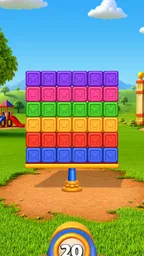
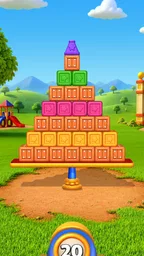
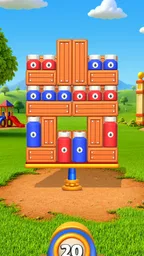
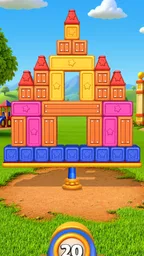
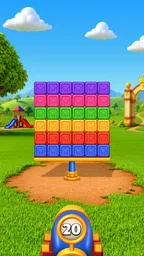
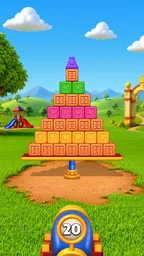
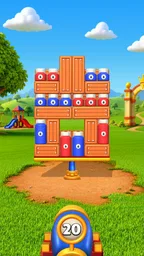

Knock Out review
 Analysis by Appsdrops
I can see why Knock Out would catch someone’s eye during a short break: its premise promises a quick puzzle-game distraction, and it is free to start. The harder question is whether that first burst of appeal turns into a game I would still reach for after the novelty wears off. My answer is cautiously positive, with an important caveat: it suits players looking for an easy-to-pick-up pastime, not anyone expecting a deep, feature-rich puzzle experience.
Why the first sessions are appealing
As a puzzle game from Combo Game, Knock Out is built around an immediately understandable idea: knock out the challenge in front of you. The store’s brief “Knock Out” description gives little detail, so I would approach it as a straightforward casual game rather than assume it has elaborate modes or a long campaign. That simplicity is a real advantage when I have only a few minutes and don’t want to learn a complicated ruleset before playing.
The opening appeal of a compact puzzle is often its low commitment. I can imagine opening it while waiting for a coffee, during a commute break, or between household tasks, then putting the phone away without needing to remember a lengthy narrative or manage a roster of characters. For that use, the best quality is not endless complexity; it is a clear challenge that lets me focus briefly and move on.
The game has a 4.7 average from around 10,000 ratings, and it has passed one million installs. Those figures suggest that it has found an audience, though they do not tell me whether its particular style will suit someone who prefers strategic depth. I would treat them as a useful sign of broad appeal, not a guarantee that every session will stay fresh.
A good fit for small pockets of time
For a realistic everyday test, picture a short wait at an appointment. A casual puzzle can make that gap feel occupied without demanding a full evening or a quiet room. I would use Knock Out in that kind of slot if I wanted a small mental task rather than a feed to scroll through. The practical tip is to try it in a brief session first: that reveals whether its rhythm feels satisfying in the time you actually have, instead of judging it after a long play stretch.
This also helps set expectations. A game that works well for waiting-room minutes may not be the right choice for a dedicated game night. If I want layered planning, a substantial story, or a strong sense of progression, I would compare it with puzzle games that explicitly foreground those elements. Here, the appeal is closer to an accessible, pick-up-and-play diversion.
How to judge its value beyond the opening
The first sessions of any simple puzzle can feel rewarding because the basic idea is still new. The more useful test is whether I want to return once I understand the general rhythm. I would pay attention to whether each play still makes me think, whether I feel satisfied when I stop, and whether opening the game becomes a choice rather than an automatic habit. Those are more meaningful signs of lasting value than simply spending a long time in the first sitting.
One helpful way to avoid confusing novelty with staying power is to keep the game in rotation with other short activities. If I reach for it when I genuinely want a puzzle, rather than launching it whenever I unlock my phone, it is adding a specific kind of value. If I find myself opening it without interest and closing it again, that is a sign the early appeal may have run its course.
What month-to-month value depends on
For a casual puzzle, recurring value comes down to whether the central challenge remains enjoyable after the rules feel familiar. I would not expect a simple premise alone to carry months of play. What matters is the quality of the decisions it asks me to make and whether sessions remain rewarding without requiring a large time investment. If those moments continue to feel engaging, the game can earn a place as a dependable short break; if they become routine, it is easy to move on.
The app is free, which makes trying it a low-friction decision. It also offers in-app purchases priced from $0.99 to $119.99 per item, so I would keep the distinction between free access and optional spending in mind. A sensible approach is to play first and decide later whether anything paid would genuinely improve your own experience. I would not spend simply because a purchase is presented at a moment of impatience; a casual puzzle should still be enjoyable without turning every session into a reason to buy.
That price range is broad enough to make deliberate checking worthwhile. Before confirming any purchase, I would look carefully at the amount shown in the app store and consider whether the benefit is something I will use repeatedly. In particular, I would avoid treating a one-off urge to keep playing as proof that a paid item is good value. The strongest reason to keep this game installed should be the puzzle itself, not the pressure to spend.
Use it as a habit, not an obligation
I find casual games work best when they have a clear job in my day. For Knock Out, that job could be filling short gaps with a focused puzzle. I would avoid making it a routine that must be maintained every day; missing a session should not feel like losing progress in a demanding hobby. That low-pressure relationship is one way a simple mobile game can remain pleasant even if I only play occasionally.
Another practical approach is to set a natural stopping point before opening it, such as playing only while a particular wait lasts. This keeps the game in the role of a quick diversion and helps me notice whether I actually want another round. If I regularly continue only because I am chasing a vague sense of completion, I would pause and ask whether the sessions are still fun on their own.
With version 2.5.0, the game has an established version number, but I would not treat that alone as evidence of a specific update schedule or a promise of new material. For long-term value, I would judge what I can actually play and how it feels to return, rather than make a plan based on assumptions about future changes. That is especially sensible for a lightweight game, where enjoyment should not depend on imagined features.
Maintenance and the small frictions to consider
The setup burden appears modest in the practical sense that this is a free puzzle game intended for a broad audience. It is rated for Everyone and lists Android 7.0 as its minimum operating-system requirement. That makes compatibility a straightforward first check: if your device runs an older version, confirm it can install the game before setting aside time for it. The age rating also makes it more suitable for a general audience than a game aimed at adults, though families should still decide what is appropriate for their own children.
There is not much value in treating a casual game like a project that needs constant upkeep. I would install it, try a few short sessions, and then decide whether it deserves space on my home screen. If I stop opening it, removing it is a reasonable choice rather than a failure to stick with a habit. That is a useful standard for any small mobile diversion: the game should earn its place by being enjoyable now, not by the time I have already invested.
One possible friction is the mismatch between a light, simple game and the presence of optional purchases. A player who prefers completely purchase-free experiences may find that uncomfortable even if they never buy anything. I would make a personal rule before starting: either ignore all optional spending or set a limit that feels comfortable. That prevents an otherwise relaxing puzzle from becoming a source of small, repeated decisions about money.
When the novelty may fade
The main risk for a puzzle with an uncomplicated pitch is repetition. Once I understand the core interaction, I need enough variation in the challenge itself to stay interested. I would watch for a particular kind of fatigue: when I can predict how a session will feel before starting and no longer look forward to solving anything. If that happens, taking a break is more useful than forcing daily play in the hope that the same loop will suddenly feel new.
Another source of fatigue is choosing the wrong comparison. Someone coming from a deep logic puzzler may find a casual game too light, while someone who wants a quiet, low-effort distraction may appreciate precisely that simplicity. I would not recommend it as a substitute for a puzzle game built around complex deduction, a long progression arc, or substantial variety. Those are different needs, and a more demanding alternative would be a better use of time for a player who wants sustained mental challenge.
Likewise, if you are looking for a game that rewards a long uninterrupted session, this may not be the right first choice. Its appeal is more naturally judged in small visits than in marathon play. Trying to stretch a brief-session game into an all-evening activity can make its limitations more noticeable and turn a pleasant idea into a repetitive one.
Who should keep it installed?
I would recommend giving it a try if you like accessible puzzles, want something free to sample, and are happy to decide for yourself whether the core challenge holds up. Its 1.5K reviews give potential players more commentary to consult than a rating alone, while the broad Everyone age label may suit people looking for a less mature theme. I would still read recent player feedback if a particular issue matters to you, rather than assuming that a high average settles every question.
I would steer away if you need a clearly defined long-term progression, detailed strategic systems, or a puzzle experience that keeps expanding in complexity. The same goes for anyone who finds optional purchases distracting or who prefers games with no spending prompts at all. In those cases, a more focused logic game, a story-led puzzle, or an entirely offline activity may fit better, depending on whether you value depth, narrative, or a completely screen-free break.
For me, the lasting-space test is simple: does this give me a pleasant, focused few minutes when I want them? Knock Out has the right broad shape for that role, and its free entry makes a trial easy. I would keep it installed only while the puzzles still feel satisfying, not because of its rating, its download count, or the expectation that I ought to play regularly. That makes it a reasonable casual choice, with its long-term value resting on whether its simple challenge continues to earn your attention.
What we like
- Quick matches make it easy to play in short sessions.
- Simple controls are accessible to new players.
- The boxing theme gives fights a clear identity.
- Winning rounds can make progression feel rewarding.
- The core gameplay is easy to understand.
What could be better
- Repeated fights may become monotonous over time.
- Early matches can feel challenging for beginners.
- Progress may require patience between upgrades.
- The experience depends on a stable internet connection.
- Some players may find the combat mechanics too simple.







