Jigsaw Drop: Solitaire Puzzle review
 Analysis by Appsdrops
Some puzzle games ask me to race a clock or keep a streak alive; Jigsaw Drop: Solitaire Puzzle sounds more appealing when I want a quieter kind of focus. Its premise points toward picture matching and smooth, deliberate moves, a combination that can make a brief break feel satisfying without turning it into a demanding session. I’d consider it for moments when I want to pay attention to a small visual task, not compete or study a complicated rule set.
It is a free puzzle game from Runyou, rated for Everyone, and its audience numbers suggest it has found plenty of players: it has over five million installs and a 4.7 average from around 261,000 ratings. Those figures are useful context, but they cannot tell me whether the puzzle style suits me personally. I’d treat them as a reason to take a closer look, not as proof that every session will be enjoyable.
What the picture-puzzle idea offers
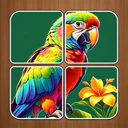
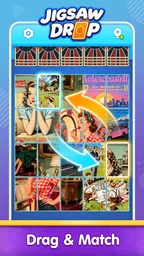
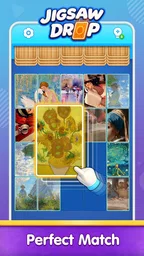
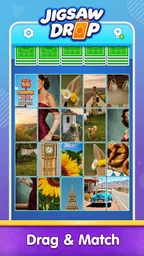
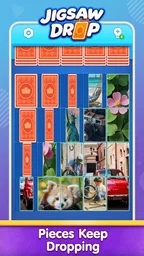
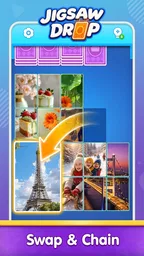
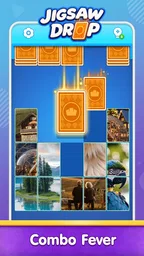
The title combines two familiar ideas: assembling or matching images and the patient rhythm associated with solitaire. That gives the game a different feel from a traditional jigsaw app, where I expect to drag many loose pieces into a larger picture, or a standard card solitaire game, where the main challenge is planning a sequence. Here, the central appeal is visual matching paired with controlled moves. I would choose it when I want a puzzle that feels more tactile than a word game but less involved than a sprawling logic challenge.
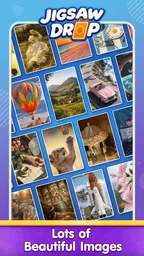
The most useful way to approach a picture-based puzzle is to look for structure before acting. I’d first scan for strong color blocks, recognizable outlines, or repeated visual patterns, then make a move once I have a reason for it. That small habit helps keep a relaxing game from turning into random tapping. It is especially handy when an image contains several similar-looking areas: spotting a distinctive feature early can make the rest of the board easier to read.
The strongest fit is a short, self-paced puzzle break. I can imagine opening it while waiting for a meal, sitting on a commute, or taking a few minutes away from a screen-heavy task. In those situations, a visual puzzle gives my attention something concrete to settle on. It is less suitable when I need to keep checking messages or listen closely to someone, since matching pictures still asks me to observe details and remember what I have already considered.
A calmer alternative, with a different kind of focus
Compared with conventional jigsaws, a drop-and-match format can feel more immediate: I am thinking about the next useful move rather than spending a long stretch sorting a large pile of pieces. Compared with a card solitaire game, the image itself becomes part of the reasoning, so visual attention matters more than memorizing ranks and suits. Neither approach is automatically better. If I want a long, methodical build, a full jigsaw is likely the better choice; if I want a familiar card puzzle with established planning patterns, ordinary solitaire may feel more predictable.
That difference also shapes who should skip it. Players who mainly want deep strategic systems, elaborate story, or direct competition may find a gentle picture puzzle too narrow. Likewise, someone who dislikes visual matching or has trouble distinguishing details in small images may prefer a number or word puzzle. I would not choose this game as a substitute for every kind of puzzle; its appeal is precisely that it focuses on a compact, image-led activity.
Progress without turning a break into a test
The word “solitaire” can bring to mind a fixed solo challenge, but I would not assume that the title alone explains every rule or progression detail. What matters to me is whether each session gives enough feedback to make a move feel considered. A satisfying puzzle lets me see why a choice helped, while a frustrating one can make every move feel like guesswork. When starting, I’d pay attention to how the game presents the picture and the available moves rather than trying to play quickly.
A practical tactic is to pause before a move that seems obvious and check whether another visible match would leave a clearer board. This is a small adjustment, but it can reduce the feeling of being stuck in a visual puzzle: a move that makes immediate progress is not always the move that makes the next decision easier. I’d also take a brief screen break if I began overlooking details. Returning with fresh eyes is often more useful than repeatedly tapping at a pattern that has stopped making sense.
For a relaxed player, progress should feel like a reason to continue rather than a demand to keep going. I prefer puzzle games that let me stop after a satisfying round without feeling that I have failed a daily obligation. The store description presents the experience as relaxing, but a description cannot guarantee how any particular player will respond. If I found the pacing stressful, I would treat that as a sign to play in shorter sessions—or to pick a puzzle with no pressure cues at all.
Spending, fairness, and what a rating can tell me
The game is free to download, which makes it easy to try without paying upfront. That is the clearest purchase fact I can use when judging whether it is worth a first look. Free access does not, by itself, answer whether there are optional purchases, ads, or other spending prompts, so I would not infer a monetization model from the price alone. Anyone who wants to avoid unexpected spending should check the app store’s purchase details and their device’s purchase controls before playing.
For the same reason, I cannot fairly claim that paid options provide an advantage or that the game is fully free of purchase pressure. Those details matter to a player deciding whether the experience feels even-handed, but guessing would be misleading. My practical advice is simple: treat the free download as a chance to test the core puzzle feel, and make any later spending decision only after checking what is actually offered on your device.
The 4.7 average and large number of ratings are encouraging signs of broad satisfaction, but they do not reveal how reviews are distributed or what individual players praise. A rating can help me decide whether to investigate a game; it cannot tell me whether its images, pace, or interface will work for my habits. I would use the game’s first sessions as the more relevant test: do I understand my choices, and do I enjoy the time I spend making them?
Details I would check before settling in
Jigsaw Drop is currently listed at version 1.1.6 and requires Android 7.0 or later. It was released on May 9, 2026, so the release date is worth checking against the date you read this review, especially if you are comparing its age with long-established puzzle titles. These facts help with compatibility and context, but they do not establish how often updates arrive or how the game behaves on a particular phone.
I would also consider screen size and visual comfort before making it my regular puzzle. Picture matching depends on being able to inspect details, so a small display, glare, or a hurried setting may make the same puzzle less pleasant than it would be at home. If the game feels hard to read, I would first try a calmer environment and adjust the device’s display settings where possible. That is more useful than assuming the puzzle itself is too difficult after one distracted attempt.
There are a few everyday questions I would answer by trying it rather than guessing. If I have only a minute, I would see whether I can stop comfortably between puzzles. If I prefer to play offline or want to know how progress is handled across devices, I would check those details in the app and its store information before relying on them. And if spending is a concern, I would inspect purchase controls first. Those checks are sensible for any free game, but they matter particularly when I want a light puzzle to stay light.
Who I’d recommend it to
I’d recommend Jigsaw Drop: Solitaire Puzzle to someone who likes pictures, appreciates unhurried decisions, and wants a modest mental reset rather than a demanding campaign. The Everyone age rating also makes it a broadly approachable choice for households, though an age label is not a promise that every child will enjoy the visual challenge or that adults will find it substantial. I would introduce it as a casual puzzle option and let the player decide whether the matching style clicks.
It is a weaker choice for anyone who wants detailed competitive rankings, a robust long-term strategy layer, or a conventional jigsaw with free placement of many pieces. I would also steer away from it if picture-based tasks feel tiring or if I need a game that can be played without looking at the screen. Choosing the right puzzle is mostly about matching the demands of the game to the moment: visual attention is a pleasure when I have a little space for it, and a nuisance when I do not.
My trust verdict
Runyou’s puzzle has a clear, approachable identity: picture matching shaped into a solo activity, with a relaxed tone rather than an obvious emphasis on competition. Its free price, Everyone rating, and strong audience response make it easy to consider, while the Android requirement and current version give practical context for a download decision. I find the concept most convincing as a brief, focused diversion, not as a replacement for deep strategy games or expansive jigsaw collections.
My recommendation is measured: try it if you enjoy visual puzzles and want a calm way to occupy a short break, but judge it by the feel of its actual moves rather than its rating alone. Check purchase details if spending matters to you, and use a comfortable screen setting so the pictures remain easy to inspect. If the matching rhythm feels satisfying, it may become an appealing little routine; if you want richer systems or more freedom over how a puzzle is assembled, a different puzzle style will serve you better.
What we like
- Combines familiar solitaire rules with a refreshing jigsaw twist
- Short rounds make it easy to play in spare moments
- Simple controls are approachable for new puzzle players
- Gradually increasing challenges keep progress engaging
- A relaxing option for players who enjoy card puzzles
What could be better
- Some levels may feel repetitive after extended play
- Later puzzles can require careful planning
- Mistakes may force players to rethink their card placement
- The hybrid rules may take time to understand
- Frequent play may depend on access to new level content







