





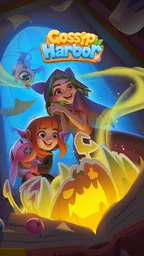


Gossip Harbor: Merge & Story review
 Analysis by Appsdrops
There is a particular kind of satisfaction in turning a messy board into something useful, and Gossip Harbor: Merge & Story builds its appeal around that simple pleasure. Set on Brimwave Beach, this free puzzle game pairs merging with restoring and designing, while a fiery mystery gives the activity a story to follow. I found its central idea easy to understand: combine items, make progress, and watch that progress connect with the wider beachside setting.
One puzzle loop, tied to a place and a mystery
The standout capability is the way merging sits alongside restoration and design. Rather than presenting its puzzles as an isolated sequence, the game frames them as part of bringing Brimwave Beach back to life. That gives each puzzle a clear context: the board is where I work toward useful results, and the setting gives those results a purpose beyond clearing space.
The store summary also points to a fiery mystery, which gives the story a question to carry forward. That combination matters. A merge puzzle can be enjoyable for its own rhythm, but a setting and an unfolding mystery can make the next bit of progress feel connected to a larger journey. The game’s identity comes from combining those ingredients rather than asking players to focus on only one.
In practical terms, the appeal is easy to picture even before a long play session: I can spend a short stretch solving a puzzle, then return to the broader goal of restoring and designing. That makes Gossip Harbor a natural fit for players who enjoy casual puzzles with a narrative backdrop. The setting isn’t just a name on the screen; it is the theme that links puzzle-solving to the feeling of making a place better.
How merging gives progress a visible purpose
Merging is the activity at the heart of the game’s pitch. Its basic attraction is immediately accessible: work with items on a puzzle board and combine them as part of making progress. The satisfaction comes from seeing separate pieces contribute to a more useful result, rather than simply treating every move as an abstract score or a cleared row.
That connection to restoration changes how the loop feels. When a puzzle task is tied to a place the player is helping to renew, there is a sense of direction alongside the small rewards of solving the board. Designing adds another creative angle to that broader goal. The result is a game that promises both the orderly pleasure of combining items and the imaginative appeal of shaping a beachside setting.
For me, that is the most compelling part of the concept: a familiar puzzle action becomes a way to move through a story world. Players who like seeing one activity feed into another may find that especially appealing. Instead of asking whether merging is enjoyable in isolation, the more useful question is whether it feels rewarding when it supports restoration, design, and curiosity about the mystery.
The story element also gives the game a reason to keep its setting in view. Brimwave Beach supplies a recognizable backdrop, while the fiery mystery suggests that there is more going on than a simple renovation project. That contrast—restoring a place while following a dramatic question—can add momentum to the otherwise relaxed, puzzle-focused premise.
What a session can feel like
A good way to approach the game is as a series of small steps. I can focus on the merge puzzle in front of me, make progress toward the wider restoration theme, and let the story provide a thread between sessions. That structure suits casual play because it gives attention a clear target without requiring the player to approach the game like a high-pressure competition.
The appeal is not only the act of combining pieces. It is also the sense that those puzzle decisions belong to a larger project. Restoration offers a practical reason to keep working, while design suggests that the beach can become more than its starting point. The mystery, meanwhile, supplies a narrative hook for anyone who wants a reason to wonder what comes next.
That mix can make the game feel welcoming to different kinds of puzzle fans. Someone who mainly enjoys the board can focus on the merge activity. Someone more interested in settings and stories can appreciate the beach and its mystery. And a player who likes both can move between the puzzle and its broader purpose without needing the game to be a pure story experience or a purely abstract challenge.
Best suited to relaxed, goal-oriented play
The strongest scenario for this game is a relaxed break when I want a puzzle with a little context. Its combination of merging, restoration, and design sounds well suited to players who enjoy making incremental progress. The beach setting gives that progress a theme, and the mystery adds a bit of narrative curiosity without changing the game’s core identity as a puzzle experience.
It may also suit players who like to return to a game over time. A restoration premise naturally lends itself to thinking about progress as something that builds, rather than as one isolated puzzle to finish and forget. The story can help maintain interest between those moments, while the merge-focused activity provides a clear way to engage whenever I open the game.
That said, the premise is most attractive if the combination itself sounds appealing. Players who want a puzzle with a visible setting and a reason to keep making progress may find the design inviting. Those who prefer a narrowly focused logic challenge, with no restoration theme or story framing, may be less drawn to its broader approach.
The tradeoffs behind the cozy premise
The same blend that gives the game its character also shapes expectations. This is not presented simply as a standalone brainteaser: the pitch includes merging, restoring, designing, and a mystery. That variety may be a plus for players who like several kinds of motivation, but anyone looking only for tightly focused puzzle-solving should consider whether the beach and story elements are part of the experience they want.
There is also a practical consideration around optional spending. The game is free to play, with in-app purchases ranging from $0.99 to $99.99 per item. That is worth knowing before starting, especially for players who prefer to keep entertainment spending predictable. The presence of purchases does not change the core appeal of the merge-and-restore concept, but it is a sensible part of deciding whether the game fits your habits.
The available version is 4.10.5, and the game requires Android 7.0 or later on Android. It is rated for Everyone, so its listed age classification is broad. These details help set expectations for compatibility and audience, while the central experience remains a casual puzzle built around the beach, its restoration, and the mystery woven into the setting.
Its scale is notable too: Gossip Harbor: Merge & Story has more than 50 million installs, a 4.4 average from around 728,000 ratings, and roughly 24,000 written reviews. Those figures suggest that the game has found a substantial audience, though the more important question for any individual player is still whether its particular mix of puzzle-solving and story is appealing.
Who is likely to enjoy it most?
I would point this game toward players who like casual merge puzzles with a reason to keep going beyond the board. If restoration projects appeal to you, the beach setting gives the puzzle activity an easy-to-follow purpose. If you enjoy a mystery running alongside a relaxed game, the fiery storyline offers another thread to follow. The combination is the selling point, not any single element on its own.
It also seems a good match for people who appreciate steady, goal-oriented play. The idea of improving a place can make small steps feel meaningful, and designing gives that idea a creative dimension. Players who want constant action or a highly demanding puzzle format may want a different style of game; this one’s attraction is its accessible premise and the way its activities fit together.
Microfun Limited is the developer, and the game is free to download. For a player who enjoys puzzles with a setting, a restoration theme, and a story hook, that makes it an easy title to consider. I would keep the purchase options in mind, but the basic concept is clear enough to judge: solve merge puzzles as part of bringing Brimwave Beach back to life.
A charming idea with a clear center
What stays with me is the way the game gives merging a destination. The puzzle board is not merely a place to make combinations; it belongs to a larger effort to restore and design a beachside location, with a mystery adding a reason to stay curious. That is a strong foundation for casual play because it connects a simple, repeatable activity to a world the player can care about.
Gossip Harbor is worth a look if you want a relaxed puzzle game that mixes item merging with restoration and storytelling. Its appeal will depend on whether that combination feels more inviting than a puzzle-only experience, but for players who enjoy gradual progress and a charming setting, the premise has an easy, approachable pull. I’d recommend giving it a try if Brimwave Beach sounds like the sort of place you’d enjoy helping to rebuild.
What we like
- Merging items is easy to learn and satisfying to master.
- The story adds context to renovation tasks.
- Short levels make it convenient for quick play sessions.
- New areas provide a steady sense of progress.
- The colorful artwork gives the game a polished look.
What could be better
- Energy limits can interrupt longer play sessions.
- Some upgrades require many repeated merges.
- Waiting for energy may slow story progress.
- Optional purchases can speed up progression.
- The board can become crowded with items.







