


Goods Rush! 3D Sort Puzzle review
 Analysis by Appsdrops
I like puzzle games that make sense before I have time to get comfortable, and Goods Rush! 3D Sort Puzzle has an appealingly immediate premise: take a crowded assortment of goods and work out how to arrange them on shelves. It is a casual sorting game from Playdayy, built around a simple kind of satisfaction—the small relief of turning a cluttered display into an orderly one. I can see it fitting into a spare moment while waiting for a coffee or winding down between other tasks, rather than demanding a long stretch of focused play.
The name sounds like a breezy match-and-sort diversion, but the lasting appeal depends on whether you enjoy noticing patterns and making tidy decisions. In my view, its strongest audience is anyone who finds order-making relaxing and wants a puzzle with a clear visual goal. If you prefer layered strategy, a story to follow, or a new kind of challenge in every round, the basic sorting idea may feel narrow sooner than you would like.
Easy to understand, satisfying to arrange
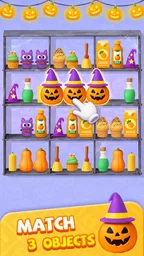
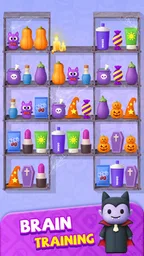
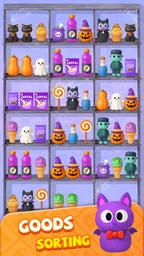
The game’s central activity is easy to picture: organize goods on shelves, then keep sorting until the arrangement feels right. That clarity is valuable on a phone. I don’t need to remember a plot or study a complicated control scheme before starting; the visual puzzle itself is the invitation. The three-dimensional presentation also gives the sorting theme a more tangible feel than a flat list or grid, making the goods and shelves the focus of the experience.
That kind of straightforwardness has a useful trade-off. It makes the game welcoming when I have only a little attention to spare, but it also puts pressure on the sorting decisions to stay interesting. There is no elaborate premise here to carry a slow stretch. The enjoyment comes from recognizing what belongs where and seeing the scene become more organized, so players who enjoy that mental reset are more likely to connect with it than those who need constant mechanical surprises.
Goods Rush! is listed as a puzzle game, and that description feels more useful than treating it as a reflex challenge. I would approach each board as a small visual problem, not a race that requires intense concentration from the outset. A practical tip is to pause for a moment and scan the whole shelf arrangement before moving goods. Even in a casual sorter, acting on the first obvious match can make the remaining layout harder to read; a quick overview helps me choose a cleaner order of operations.
A good fit for the gaps in your day
The game’s strongest everyday use case is a short break with a little more purpose than scrolling. Imagine sitting in a waiting room, with enough time for a quick distraction but not enough to start a long campaign. A shelf-sorting puzzle gives that moment a simple beginning and an understandable goal. I can focus on the goods in front of me, make progress, and then put the phone away without needing to keep track of a complicated chain of events.
It can also suit someone who enjoys calming, visible progress after a busy day. Sorting objects has a built-in sense of completion: disorder becomes order, and the result is easy to read. That does not mean the game is automatically soothing for everyone. If a level’s arrangement makes you feel stuck, the same act of organizing can become irritating rather than relaxing. I’d recommend treating it as a low-pressure puzzle, not as a guaranteed way to switch off whatever is on your mind.
For a more deliberate session, I would play when I can give the screen a few minutes of attention rather than trying to sort while distracted by several other things. The visual puzzle is simple to grasp, but careful placement still benefits from looking at the full arrangement. This is one of the less obvious trade-offs of its casual style: it asks little of you in terms of rules, yet it can still be easier to make sensible decisions when you are not glancing at the game every few seconds.
Short rounds and the question of stopping
Goods Rush! is designed around an activity that naturally breaks into small decisions. That makes it easier to fit into an irregular day than a game whose progress depends on following a lengthy story or coordinating with other players. If a spare moment appears, I can engage with the sorting task itself rather than first reconstructing where I left off. For people who regularly play in brief bursts, that kind of immediate readability matters as much as the puzzle idea.
There is a useful way to keep those sessions from turning into aimless tapping: set a small personal stopping point before opening the game. For example, I might play until I have completed the current sorting task, then decide whether I genuinely want another. The point is not that the game imposes a particular session length; it is that a clear, repeatable activity can make it easy to keep going without noticing how much time has passed. A self-chosen endpoint keeps the experience intentional.
Interruptions are a particular concern for phone games. A call, a message, or reaching the front of a queue can cut a session short. A visual sorting puzzle is easier to return to than a fast action sequence in one important sense: the board’s arrangement can help me recover my train of thought. Still, I would avoid making a crucial placement while already expecting to be interrupted. Taking a quick look at the overall layout before stepping away is a simple habit that makes returning less frustrating.
I would not assume that every player will find an interrupted session effortless. Whether a specific moment is easy to resume depends on the game’s presentation and the state of the puzzle, and a partially arranged shelf can require a fresh scan. My practical advice is to treat a return as a chance to reassess rather than blindly continue the previous plan. That small reset is often better than trying to remember every move, particularly if you have been away from the screen for a while.
When sorting stays satisfying—and when it gets repetitive
Sorting games live or die by the pleasure of their core loop. Here, the appeal is the contrast between an untidy display and a more organized one. I find that kind of feedback inherently readable: the task does not need a lot of explanation to make progress feel visible. The 3D look gives the shelves a physical presence, which helps distinguish the experience from basic color-matching or number puzzles, even though all of them can occupy the same casual-game slot on a phone.
The limitation is just as clear. Goods and shelves can provide a pleasant theme, but the theme alone cannot make the underlying decision-making feel fresh forever. If you mainly enjoy the first few minutes of learning a new system, the repeated act of arranging goods may lose its pull once it becomes familiar. I would choose this over a conventional match-three game when I want to focus on placement and order rather than chasing a chain of matching pieces. I would choose a broader puzzle collection if I wanted several distinct mechanics in one app.
A useful personal test is to notice what you enjoy most: spotting an arrangement, making each placement, or seeing the finished shelf. If the satisfying part is the process of organizing, the core loop has room to stay pleasant across casual visits. If you care mainly about unlocking a new mechanic or discovering a story beat, repetition will probably become more noticeable. That distinction helps set expectations before the game’s simple premise starts to feel like a promise of endless novelty.
Another practical approach is to avoid treating every session as a score chase. The game is a better fit for a relaxed reset than for someone looking for a competitive benchmark. I would play it when I want a focused, modest task and switch to a more varied puzzle when I notice myself making moves without thinking. Recognizing that point is not a criticism of the game; it is a way to use its particular strength without asking it to be something else.
What the price and audience mean in practice
The game is free to download, with optional in-app purchases listed from $0.99 to $99.99 per item. That broad range is worth keeping in mind before spending. I would start by deciding whether the basic sorting loop is enjoyable on its own, then consider purchases only if I have a clear reason to make one. A free download does not mean every optional item is necessary, and there is no reason to spend simply because an offer appears during a casual session.
It is rated for Everyone, which makes it broadly suitable in terms of age classification, but that is not a promise that every child will enjoy the same amount of repetition or that every family will want in-app purchasing available. If a younger player uses the device, I would review the device’s purchase settings with them before handing over the game. That is a sensible precaution for any free-to-download game with paid items, and especially useful when a child is exploring a puzzle independently.
The game has a 4.7 average from around 240,000 ratings, and it has passed one million installs. Those figures suggest that the straightforward sorting concept has found a substantial audience, but they cannot tell me whether its rhythm suits a particular player. I would put more weight on the question of whether shelf organization feels satisfying to you. Its listed release date is January 6, 2026, and version 1.0.38 is the current version; it requires Android 7.0 or later.
My casual verdict
I would recommend Goods Rush! 3D Sort Puzzle to a friend who likes tidy visual puzzles, wants something understandable at a glance, and tends to play in short, self-contained stretches. Its best quality is the direct connection between the task and the reward: arrange the goods, make the shelves feel orderly, and enjoy a small moment of completion. That makes it a more natural choice for a waiting-room break or a quiet pause than a game that needs a long warm-up.
I would steer a friend toward a different option if they want a deep strategy game, a campaign with narrative momentum, or a constant stream of distinct puzzle rules. The sorting theme can be appealing, but it cannot remove the risk of repetition when the central activity is familiar. I would also be cautious about playing when I am too distracted to inspect the shelves properly, since a quick glance at the whole arrangement can make the difference between a satisfying decision and a move I immediately regret.
For me, the right expectation is not “a puzzle that keeps reinventing itself,” but “a clear, compact sorting diversion that is easy to understand and pleasant when I want a small task.” Playdayy’s game has a specific appeal, and that is enough when I am in the mood for it. If orderly shelves and low-pressure decisions sound relaxing rather than repetitive, this is an easy one to try; if novelty is your main requirement, I would look elsewhere.
What we like
- Quick rounds make it easy to play in short breaks.
- The 3D shelf scenes add depth to the sorting puzzles.
- Matching items gives each level a clear objective.
- The controls are simple to learn with touch input.
- New layouts help keep later puzzles from feeling repetitive.
What could be better
- Some levels may feel too easy for experienced puzzle fans.
- The 3D view can make small items harder to identify.
- Timed challenges may feel stressful to relaxed players.
- Progress can depend on watching ads or using power-ups.
- The sorting rules may become repetitive over long sessions.







