
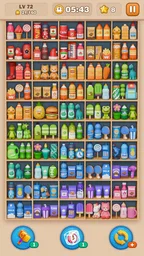
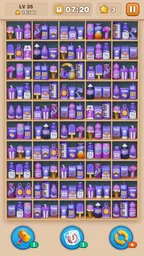
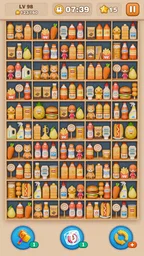
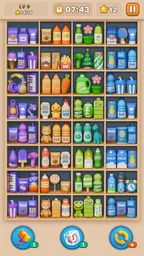

Goods Puzzle: 3D Sorting Games review
 Analysis by Appsdrops
The first time I tried Goods Puzzle: 3D Sorting Games, its appeal was easy to understand: it turns a familiar sorting idea into a small, tactile-feeling puzzle session. I could pick it up for a brief break without needing to learn a complicated rule set, and the 3D presentation gives the objects more visual character than a plain grid of tiles. The question for me is not whether it can fill a spare moment—it can—but whether that simple pleasure stays satisfying after the novelty wears off.
Why the first sessions work
This is a free puzzle game from Guru Puzzle Game, built around sorting goods and matching items. Its basic appeal is immediate: look at the arrangement, identify what belongs together, and make progress through a compact puzzle. That makes it approachable even if you do not usually play mobile games. The age rating is Everyone, which fits the uncomplicated, non-intimidating premise.
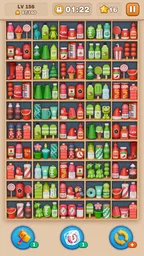
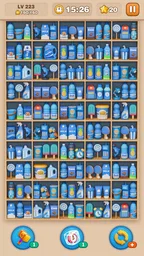
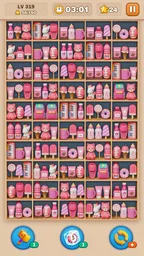
The 3D objects help the activity feel more like arranging things on a shelf than solving an abstract color grid. That distinction matters if you have grown tired of standard match-three boards, where the same rows and power-up patterns can start to blur together. Here, the visual task gives your attention a different job: scan the objects, decide what to sort, and keep track of how your choices affect the remaining layout.
I found it best suited to short, low-pressure gaps: waiting for a meal, taking a break between chores, or winding down when I want something more active than scrolling but less demanding than a strategy game. The rules are easy to grasp, so the game does not ask me to reserve a long block of time just to get started. That convenience is a real strength, although it also means the puzzles are not a substitute for a game built around deep planning or a long narrative.
There is a useful way to approach each board: scan the whole arrangement before making the first move instead of immediately acting on the most obvious match. In a sorting puzzle, a tempting choice can hide what you need to expose next. Taking a moment to note which items are easiest to reach and which combinations may open space makes the play feel more deliberate. It is a small habit, but it can reduce the sense that success depends on hurried tapping.
What keeps the routine enjoyable
After the introductory charm, the game’s value depends on whether sorting remains a pleasant mental reset. For me, it works when I treat it as a brief change of focus rather than a challenge I must keep progressing through. The satisfying part is the repeated act of bringing order to a crowded scene. If that loop appeals to you, the game can fit naturally into a daily routine without requiring a big commitment.
It is also a better match for players who enjoy visual organization than for those who want every puzzle to demand a fresh deduction. The core activity stays recognizable, which makes returning easy, but that consistency can become a limitation. If you expect dramatic changes in mechanics from session to session, the simple sorting premise may feel too familiar. I would think of it as a dependable casual pastime, not a constantly evolving puzzle campaign.
A practical tip is to stop when the activity stops feeling calming. Because the basic loop is so easy to resume, it is tempting to keep playing just because another short session seems harmless. I get more out of it when I use a natural pause—after finishing a puzzle or when I notice I am making moves without looking carefully—as a cue to put the phone down. That keeps a relaxing game from turning into repetitive tapping.
Goods Puzzle has drawn a 4.9 average from around 511,000 ratings, and it has passed 10 million installs. Those figures suggest that the straightforward format has found a broad audience, but popularity alone does not tell me whether it will suit a particular player. The more useful test is whether you enjoy object-sorting puzzles enough to return when the 3D presentation no longer feels new.
Where the appeal can wear thin
The same clarity that makes the game approachable can also make its limits apparent. If you mainly enjoy match-three games for chain reactions, elaborate board tactics, or a strong sense of escalating complexity, this sorting-focused experience may not give you the same payoff. It shares a casual puzzle audience with match-three titles, but the satisfaction comes more from organizing visible items than from planning a sequence of swaps across a board.
That difference is worth considering before you settle in for a longer stretch. I would choose a traditional match-three game when I want more emphasis on board combinations, and a deeper logic puzzle when I want a tougher problem that rewards extended concentration. Goods Puzzle sits between those moods: more hands-on than a very passive casual game, but intentionally easy to approach compared with demanding brainteasers.
Repetition is the main source of fatigue I would watch for. When the central task remains sorting and matching, a player who is sensitive to repeated patterns may find that the first-week novelty fades quickly. The solution is not to force longer sessions; it is to use the game in the setting it handles best. A few focused minutes can feel complete, whereas playing well past the point of enjoyment can make the same mechanic seem monotonous.
Another trade-off is that the game is free to start but includes in-app purchases, with items ranging from $0.99 to $99.99 each. I would keep that in mind if you prefer games with no optional spending at all, or if you share a device with someone who might make purchases. The presence of purchases does not change the basic appeal of sorting, but it is sensible to review purchase controls on the device before handing a game to a child.
Keeping it on your device
For maintenance, there is little to manage beyond keeping the game installed and deciding when it deserves your attention. Its current version is 4.13.0, and it runs on Android 7.0 or later. If you are considering it for an older Android phone, checking the operating-system requirement first can save an unsuccessful install attempt. The game is also free to download, so trying the core experience does not require an upfront purchase.
I would not keep it solely because it is easy to open. A useful test after the first week is to notice whether you reach for it because you enjoy the sorting itself, or only because it is already on your screen. If you still find the visual arranging satisfying during an ordinary break, it has earned a modest place in your app collection. If you repeatedly quit from boredom, deleting it costs you nothing beyond removing a familiar shortcut.
For families, the Everyone rating makes the game easier to consider as a broadly accessible option, but that should not be confused with a guarantee that every child will enjoy it. The simple premise is a good fit for someone who likes matching and organizing; a child who prefers action, characters, or a story may lose interest. I would also make the purchase settings clear before sharing the device, since optional purchases are part of the app.
My long-term verdict
Goods Puzzle: 3D Sorting Games earns its space when you want a light, visually clear puzzle that is simple to return to and easy to leave after a short session. I like its focus on sorting rather than relying on the usual match-three feel, and I can see it working well as a small everyday reset. Its strongest quality is also its boundary: the central activity is approachable and consistent, but that same consistency may not hold the attention of players who need frequent changes or deeper strategic layers.
I would recommend it to casual puzzle fans, people who enjoy organizing objects, and anyone looking for a low-friction way to occupy a short pause. I would skip it if you want a substantial logic challenge, a narrative to follow, or a game whose mechanics change substantially as you play. For me, its lasting value comes from using it in moderation: when a quick sorting session still feels pleasant, it is worth keeping; when the routine becomes automatic, there are better ways to spend that break.
What we like
- The 3D shelves make item matching easy to understand.
- Short levels suit quick play sessions.
- Sorting mechanics feel satisfying as shelves fill up.
- The game offers a relaxing alternative to fast-paced puzzles.
- Touch controls make selecting and moving items straightforward.
What could be better
- Later levels may feel repetitive.
- Timed challenges can add pressure to a relaxing game.
- Some stages require careful item placement.
- Progress may depend on watching ads or using boosters.
- The 3D visuals can make small items harder to spot.







