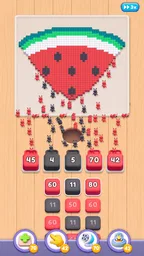
Food Hunt: Pixel Puzzle review
 Analysis by Appsdrops
Food Hunt: Pixel Puzzle makes a simple promise: guide ants toward food by working through colors. That gives it a clearer identity than a generic tile-matching game, but the idea also sets a specific expectation. I’d recommend it to people who enjoy small visual puzzles and want something they can pick up for a short break, rather than players looking for a deep strategy game or a story-led adventure.
Color is the hook, not a guarantee of depth
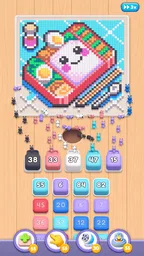
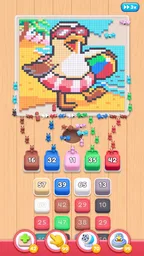
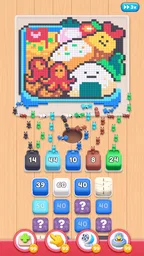
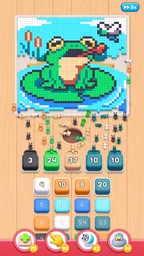
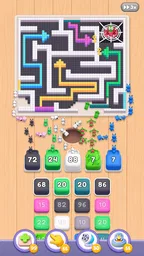
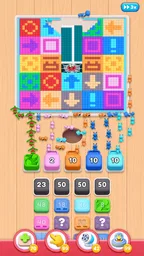
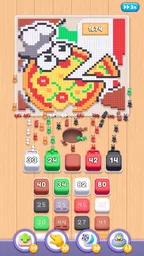
At its core, this is a puzzle game built around food, ants, and color. That theme is easy to grasp, and the title, Food Hunt: Pixel Puzzle, signals a compact, visual experience rather than a sprawling campaign. The appeal is in the contrast between a familiar goal—getting ants to food—and a puzzle structure organized around one color at a time.
That focus matters. In many casual puzzles, the board is busy with several objectives competing for attention. Here, the color-led premise suggests a more deliberate kind of visual sorting: notice what matters, make a choice, then see whether the board moves toward the outcome you want. For players who like puzzles that reward looking before acting, that can be more satisfying than tapping quickly just to keep a chain going.
I also like that the theme gives the central task a little personality. Ants gathering food is more memorable than an abstract collection of colored shapes, even when the underlying pleasure is still pattern recognition and planning. The concept is easy to explain to a friend, which is a real strength for a game meant to fit into everyday downtime.
Where the concept earns its place
The strongest reason to try it is the combination of a recognizable puzzle language and a distinct framing. If you already enjoy noticing color relationships, the ant-and-food setup gives that familiar mental activity a small, coherent goal. It can suit a coffee break, a quiet moment between tasks, or a short wait when you want to focus on something more engaging than scrolling.
A useful way to approach a color-focused puzzle is to pause before each move and identify what the current color is asking you to prioritize. I’d treat each decision as a small planning step rather than rush through it: check which visible pieces or routes seem relevant, then choose the move that appears to preserve the most options. This habit is valuable in games where a careless choice can make a later arrangement harder, and it helps turn a simple-looking board into a more thoughtful exercise.
Another practical tip is to use the game as a reset, not as a task to finish at all costs. When a puzzle stops feeling clear, a brief pause can help you return with fresher eyes. That’s especially useful for color puzzles, where staring at the same arrangement can make the obvious pattern harder to see. I wouldn’t assume that every level is meant to be solved at speed; the more appealing rhythm is to observe, act, and reassess.
A small game is not the same as a shallow one
There’s a trade-off in this kind of design. A clean, color-driven objective can be welcoming, but it also places a lot of weight on the puzzles themselves. If you need a strong narrative, a large cast of characters, or a long-term world to explore, the central premise may feel too slight. The game’s identity is compact by design, and that will be a plus for some players and a limitation for others.
It’s also worth being realistic about what a visual puzzle can offer. The theme may make the task pleasant, but anyone who dislikes color-based pattern work is unlikely to be won over simply by the ants. Players who prefer word puzzles, physics challenges, or complex resource planning may find a different category more rewarding. This is best approached for its particular color-and-food premise, not as an all-purpose puzzle collection.
As a free game, it is easy to try without making an upfront purchase. The trade-off to keep in mind is that it includes in-app purchases, ranging from $0.99 to $99.99 per item. I’d be comfortable recommending it as a free download for a casual player, but I would advise checking purchase prompts carefully and deciding in advance whether you want to spend. The range makes it sensible to treat optional spending as a personal choice, not as part of the basic reason to install it.
Who is most likely to enjoy it?
I’d put this on the shortlist for people who like short, visually legible challenges and enjoy working out a board before making a move. It also suits players who want a low-commitment game they can return to between other activities, rather than one that demands a long session. The age rating is Everyone, so its audience is broad, though younger players may still benefit from an adult helping them understand any in-app purchase prompts.
It may be especially appealing if you’ve grown tired of puzzle games that rely on a constant stream of effects or increasingly crowded boards. Food Hunt’s one-color-at-a-time framing gives it a more focused hook. That doesn’t prove every puzzle will feel fresh, but it does provide a clear reason to choose it over a standard match-and-clear alternative: the pleasure comes from attending to color and the ants’ route to food, not just chasing a flashy cascade.
On the other hand, I’d skip it if your favorite puzzle games are about elaborate logic grids, wordplay, or mastering a large system over many hours. I’d also look elsewhere if you need a game to explain its mechanics through a substantial story. The appeal here is directness. If that sounds too modest, a richer puzzle adventure or a more varied collection is likely a better fit.
How it compares with familiar puzzle choices
Compared with match-three games, the central appeal here is not simply making adjacent pieces disappear for a chain reaction. The color-by-color premise gives you a more specific visual problem to consider. Compared with logic games, it sounds more approachable and immediate, but it may not provide the same sense of solving a layered deduction. That makes it a useful middle ground for someone who wants to think a little without turning a break into a full study session.
For an everyday example, imagine opening it while waiting for a train or letting a kettle boil. I’d choose a level when I have enough attention to look at a board, but not enough time for a long narrative chapter. If I’m distracted, I’d avoid making quick moves just to keep busy; the color focus is likely to be more enjoyable when I can give it a few moments of attention. That simple distinction can help you decide whether it belongs in your quick-break rotation.
One more useful trade-off is that a focused visual theme can make the game easier to understand at a glance, yet less varied than a puzzle app that switches between several mechanics. If you like consistency, that can be comforting: you know what kind of thinking you’re returning to. If you need frequent changes of pace, the same consistency may eventually feel repetitive. I’d judge it by whether the color-and-ant premise keeps your attention, rather than expecting it to reinvent the puzzle genre.
What the store numbers suggest
Food Hunt: Pixel Puzzle is made by EVERFUN and has an average rating of 4.5 from around 199,000 ratings, with roughly 998 written reviews. It has passed 5 million installs, a sign that the concept has reached a substantial audience. I’d take that popularity as evidence that the game is easy for many people to approach, not as a guarantee that its particular puzzle style will suit everyone.
The game is free to download, is rated Everyone, and runs on operating systems from version 10 onward. Its current version is 0.58, and it was released on May 13, 2026. Those details make it easier to judge whether it is a practical fit for your device and household, while the purchase range is worth bearing in mind if you prefer games with no optional spending at all.
My verdict: a focused pick for visual puzzle fans
My overall take is positive, with a clear caveat: Food Hunt works best when you want a small, color-centered challenge and don’t expect it to be a deep puzzle epic. The ants and food give the game a distinct personality, while the one-color framing suggests a more considered pace than frantic tapping. Its main weakness is also part of its identity: a focused premise may not offer enough variety for players who want a broad set of modes or a more involved world.
I’d recommend giving it a try if you enjoy spotting patterns, prefer bite-sized play, and want a puzzle that feels approachable without being entirely mindless. I’d steer you elsewhere if you want narrative depth, a broad mix of puzzle mechanics, or a game you can study for a long time. For the right person, this is a pleasant, specific way to turn a few spare minutes into a small exercise in observation—and that is a more honest reason to install it than expecting it to be everything at once.
What we like
- Pixel art gives the puzzle boards a distinctive look.
- Short levels make it easy to play in brief sessions.
- Food-themed designs add a cheerful touch to each puzzle.
- The rules are simple to understand for new players.
- Puzzle levels can offer a satisfying sense of progress.
What could be better
- Some puzzles may feel repetitive after extended play.
- Later levels may require more patience to solve.
- Small pixel details can be hard to distinguish on phones.
- Players seeking a story may find the experience limited.
- Puzzle difficulty may not suit every casual player.







