

Fish Sort Puzzle review
 Analysis by Appsdrops
I like puzzle games that make sense before I’ve even settled into a chair, and Fish Sort Puzzle is built around that kind of quick appeal. Its fish-and-sorting premise gives the game an approachable, colorful identity, while the puzzle format asks for a little attention rather than a long stretch of concentration. I’d reach for it during a quiet break or while waiting for something, not when I’m looking for a story-rich game to occupy an evening.
That distinction matters. A short-session puzzle can feel rewarding when its rules are easy to grasp and a single attempt is satisfying; it can also become forgettable if every round feels like the last. My overall impression is that this game is aimed at people who enjoy arranging and matching things at an unhurried pace. Whether it holds your interest depends less on its cute fish and more on how much you enjoy repeating a focused sorting task.
Easy to pick up, with a clear puzzle identity
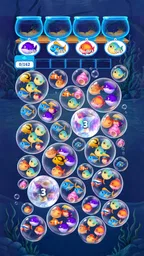
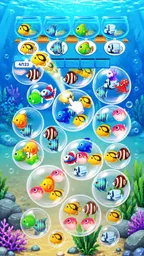
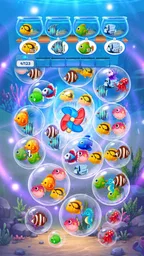
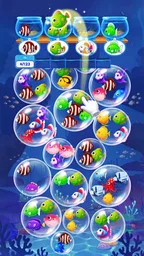
Fish Sort Puzzle is a free puzzle game from Shycheese, rated for Everyone. Its central appeal is easy to understand: fish provide the theme, and sorting is the activity. That combination is friendlier than a dense logic game with layers of rules, so I can see it working well for casual players who want a simple mental task without needing to learn a complicated system first.
The game’s audience response is strong: it has a 4.8 average from around 112,000 ratings, alongside roughly 1,100 written reviews and over 5 million installs. Those figures suggest it has reached plenty of puzzle fans, but they don’t tell me whether its rhythm will suit you. The useful question is whether you like tidy, repeatable challenges. If you prefer puzzles that keep introducing new mechanics or build toward a larger narrative, the basic fish-sorting idea may not be enough by itself.
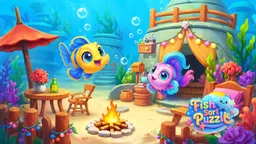
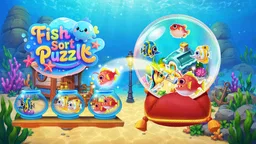
I also appreciate that its theme gives the sorting premise a softer feel than a stark arrangement puzzle. That can make it easier to recommend to someone who likes animal-themed games but isn’t necessarily seeking a demanding strategy experience. Still, the theme should be treated as an invitation, not a promise of depth: the main attraction remains the puzzle activity, rather than a broader simulation or fish-collecting adventure.
Why the short-session format works
The best way to approach a sorting puzzle is to give each move a moment of thought instead of tapping quickly just to make the board change. I find that especially useful in games with a clear visual goal: pausing briefly to inspect what is already grouped and what still needs attention can turn a casual sequence of moves into a satisfying little planning exercise. That habit also makes it easier to tell whether the puzzle itself is enjoyable, rather than relying on rapid progress for its appeal.
For an everyday example, imagine opening the game during a few minutes between errands. You can focus on the arrangement in front of you, play while your attention is available, and put the phone away when you need to move on. That is a natural fit for a puzzle game whose appeal is immediate and self-contained. I would not choose it for a commute where I need to watch announcements or make frequent decisions, but it makes sense for a calm wait when a small distraction is welcome.
A helpful personal rule is to stop after a puzzle feels complete rather than continuing simply because the game is open. That keeps the experience refreshing and makes it easier to return later. It’s a small choice, but it matters with games built around repeated tasks: a pleasant five-minute break can become dull if I push past the point where I’m still enjoying the sorting.
Pausing without losing the point of play
Short games often fit into interrupted parts of the day, but interruption tolerance is not the same as guaranteed progress. If I know I may need to put my phone down at any moment, I would avoid starting when I’m already distracted and instead begin when I can give the puzzle enough attention to understand my current plan. That way, returning after a pause feels less like reconstructing a complicated strategy and more like picking up a simple visual task.
For the same reason, I’d use it as a deliberate break rather than as background entertainment. A sorting puzzle is most satisfying when I can notice how the pieces fit together. If I’m switching between messages, a conversation, and the game every few seconds, the central pleasure of arranging things is easy to lose. Players who need a game that remains engaging with almost no attention may be better served by an idle experience or a very lightweight arcade diversion.
When you return after an interruption, take a second to scan the board before making another move. That quick reset is a practical way to avoid acting on a half-remembered plan. It’s not a special feature claim; it’s simply a useful approach for any visual sorting challenge, and it helps keep the game relaxing instead of turning a small interruption into frustration.
Replay value depends on your appetite for repetition
There is a particular pleasure in sorting: a messy arrangement becomes easier to read as pieces fall into order. That small sense of progress can make a short puzzle feel worthwhile even without a larger story surrounding it. For me, the trade-off is that the same basic activity can lose its novelty if I want every session to introduce a fresh kind of problem. Fish Sort Puzzle is best approached as a repeatable casual pastime, not as a puzzle campaign I’d expect to keep surprising me indefinitely.
One way to keep repeated play from feeling automatic is to focus on clean decisions rather than speed. Before moving anything, look for the choice that preserves the most flexibility. This simple planning habit is useful in sorting games because a move that looks convenient in the moment can narrow your options later. I’d treat each attempt as a small exercise in reading the board, not a race to tap through it.
That also gives the game a clear limit. If you enjoy the calming routine of arranging colorful pieces, repetition can be part of the comfort. If you mainly play puzzle games for escalating difficulty, elaborate chains of logic, or a new twist in every round, you may prefer a title designed around those elements. I’d choose Fish Sort Puzzle for an easygoing reset, not as my only puzzle game.
What to expect before installing
The game is free to download, with in-app purchases listed from $1.99 to $99.99 per item. That range is worth knowing before you install, especially if you’re choosing a game for a child or prefer to keep spending tightly controlled. I’d check the purchase settings on the device in advance if that matters to you. The free entry point makes it easy to try, but it doesn’t mean every optional purchase will suit every player’s budget.
Its current version is 2.0111, and the minimum operating system is Android 7.0. Those details are practical checks before downloading: make sure your device meets the requirement, and remember that the listed platform requirement is specifically Android. The age rating is Everyone, which makes the presentation broadly accessible, although parents should still make their own choices about purchases and screen time.
When comparing it with the usual alternatives, I’d put it closer to a straightforward sorting puzzle than to a match-three game built around cascading effects, or a large logic puzzler that expects sustained planning. That means it may be a better choice when I want a neat, approachable task than when I’m after dramatic surprises or a deep challenge. If your favorite puzzle games reward experimentation and long-term mastery, look for one with more varied mechanics; if you simply like putting things in order, this is the more natural fit.
My casual verdict
I’d recommend Fish Sort Puzzle to someone who enjoys visual order, cute animal themes, and puzzle sessions that can fit around ordinary breaks. The strongest reason to try it is its clear, low-pressure premise: I can understand the kind of experience it offers without needing to commit to a long play session. Its broad popularity and 4.8 average are encouraging, but I’d still judge it by whether the sorting itself feels satisfying to you.
I’d skip it if repetition quickly wears you down, if you want a strong narrative, or if you need puzzles that demand extended concentration and continually add new systems. It also isn’t my first pick when I know I’ll be interrupted every few seconds, since even a simple board is more enjoyable when I can give it a little attention. Those are not flaws for everyone; they’re the boundaries of a casual sorting game.
For me, the right expectation is a small, tidy puzzle break rather than a major new gaming obsession. If you like the quiet satisfaction of making a visual arrangement feel orderly, give it a try and see whether that loop stays pleasant after the novelty of the fish wears off. If you want greater variety, keep it alongside a more demanding puzzle game instead of expecting it to fill that role. Its appeal is the simple pleasure of sorting, best enjoyed in short bursts and on your own terms.
What we like
- Simple sorting rules make the game easy to pick up.
- Colorful fish and aquatic visuals give each level a cheerful look.
- Short stages work well for quick play sessions.
- Increasing difficulty provides a steady challenge.
- The familiar puzzle format suits players of many ages.
What could be better
- Later levels can require several attempts to solve.
- Repeated sorting mechanics may feel monotonous over time.
- Some stages offer little room for experimentation.
- Progress may depend on watching ads or making purchases.
- The game may be less appealing to players who prefer action.







