





Find Hidden Objects - Spot It! review
 Analysis by Appsdrops
Find Hidden Objects - Spot It! is best understood as a small, focused puzzle for people who enjoy slowing down and scanning a busy picture for details. I like that its appeal is immediate: there is no complicated rule set to learn before you can begin looking. Its central idea can make a quiet break feel pleasantly absorbing, though it also means the experience depends heavily on whether you enjoy visual searching in the first place. If you want a puzzle that rewards patience and careful attention rather than speed or strategy, it is an easy one to consider.
Why the simple search works
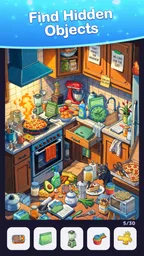
Made by Yolo Game Studios, this free puzzle game asks you to locate hidden objects in illustrated scenes. That clear premise is its strongest point. I can understand what I am meant to do at a glance, then settle into examining the image rather than navigating layers of instructions. The challenge comes from noticing a shape that blends into its surroundings, spotting a small detail among larger ones, or checking an area that my eyes initially skipped.
That kind of play fits short, low-pressure sessions. I would reach for it while waiting for an appointment or taking a break between tasks, when I want something more engaging than scrolling but do not want to commit to a long game. It also suits a relaxed evening: the basic activity gives the mind one clear job without asking for quick reflexes or a lengthy concentration span. The pleasure is in the gradual shift from “I can’t see it” to recognizing the object in plain sight.
The game has a 4.9 average from around 446,000 ratings, and it has passed 10 million installs. Those figures suggest that its direct, familiar puzzle idea has found a large audience. They do not mean every player will enjoy searching scenes, of course; the game’s particular strength is also its limitation. It stays close to the hidden-object format rather than trying to be a broad collection of unrelated puzzle types.
A useful way to approach each scene
I find hidden-object puzzles more satisfying when I search methodically instead of sweeping my eyes over the whole image again and again. A practical routine is to divide the scene into rough zones—top, middle, bottom, then left and right—and inspect each area before moving on. It reduces the feeling that the whole picture is one overwhelming visual mess, and it helps prevent repeatedly checking the same obvious details.
It is also worth changing what you look for. If an object is hard to recognize by its outline, search for its likely color, texture, or relationship to nearby items. A small object may be partly obscured or visually similar to its surroundings, so scanning for a distinctive edge can work better than trying to picture the whole item at once. This is not a shortcut built into the game; it is a way to make your attention more deliberate and keep the puzzle enjoyable.
For a shared session, I would take turns calling out a part of the picture to inspect rather than having everyone point at once. That makes the search more cooperative and gives younger players room to contribute without turning it into a race. The game is rated Everyone, which makes it a plausible choice for family downtime, although the fun will still depend on each person’s interest in picture puzzles and ability to distinguish small visual details.
Where the format can feel limiting
The same simplicity that makes the game welcoming can leave experienced puzzle fans wanting more variety. If your favorite games involve deduction, branching decisions, spatial manipulation, or a story that develops between challenges, a straightforward object hunt may not hold your attention for long. The satisfaction is concentrated in observation; players who want several different mental skills tested in one session may be better served by a broader puzzle game.
Visual searching can also become tiring. Staring at a detailed scene for too long makes it easier to overlook the very object you are trying to find, so a short pause can be more useful than continuing to scan while frustrated. I would treat a stubborn item as a cue to shift focus briefly, then return with fresh eyes. That advice matters especially when playing on a small screen, where tiny details may take more effort to inspect than they would on a larger display.
There is another practical trade-off: a game built around close looking is not ideal for every setting. A moving commute, bright glare, or a quick glance between interruptions can make it harder to appreciate the pictures. If I only have a few seconds, a word puzzle or a simple match-style game may fit better. This one works best when I can give a scene a little uninterrupted attention, even if the session itself is brief.
Who is likely to enjoy it
I would recommend it to people who like picture books, visual riddles, and the small reward of noticing what others miss. It is particularly suited to casual players who want an uncomplicated activity they can pick up without remembering a complicated system. Parents looking for a calm shared puzzle may also find the premise approachable, while anyone who enjoys testing their observation skills can use it as a focused alternative to more frantic mobile games.
It is less suitable for players who need constant novelty, competitive pressure, or a strong narrative reason to continue. If you usually abandon games when the main action repeats, the core search loop may wear thin rather than become comforting. I would also steer someone toward a larger-screen option if they find small visual details uncomfortable to inspect on a phone. Those are not flaws that can be solved by approaching the game differently; they are genuine questions of taste and viewing comfort.
For a first try, I suggest playing when you are rested rather than using it as a test of patience at the end of a tiring day. Start by scanning in sections, and pause if your eyes begin to blur the scene together. That makes the experience more pleasant and gives you a fair sense of whether the central mechanic clicks. The game is free to download, but it includes in-app purchases priced from $1.99 to $99.99 per item, so I would keep an eye on purchase prompts and make sure spending controls suit whoever will be playing.
Practical details before you install
Find Hidden Objects - Spot It! is available at no upfront cost and is listed for devices running Android 8.0 or later. Its current version is 3.51, and the game’s content rating is Everyone. It was released on January 19, 2024. The large audience and strong average rating make it easy to see why people try it, but the best test is still whether you enjoy patiently examining illustrations rather than looking for a more varied puzzle structure.
When comparing it with other games in the hidden-object category, I would focus less on broad promises and more on the basic experience you want. Some alternatives may be better if you are seeking a strong story, a wider range of mechanics, or a more competitive pace. This title’s clearest appeal is its direct visual hunt: it gets to the point and lets the search itself provide the challenge. That makes it a sensible choice for a calm break, not necessarily an all-purpose game to keep every type of player entertained.
My overall view is positive but specific. Yolo Game Studios has a puzzle with an accessible premise and a comfortable place in a casual gaming routine, provided you enjoy careful looking. I would recommend giving it a try if finding small details in a crowded scene sounds satisfying, and skipping it if repetitive observation quickly frustrates you. For the right player, it turns a few spare minutes into a focused little exercise; for everyone else, its narrow premise is a clear signal to choose a different kind of puzzle.
What we like
- Easy-to-learn rules make it welcoming for casual players.
- Short rounds fit neatly into small breaks.
- Finding items can help sharpen visual attention.
- A broad range of scenes keeps the search varied.
- No internet connection may be needed for basic play.
What could be better
- Small objects can be hard to spot on phone screens.
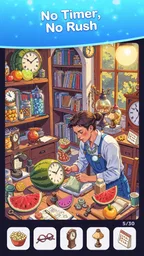
- Timed challenges may feel stressful to some players.
- Repeated scenes can make later rounds feel familiar.
- Ads may interrupt play depending on the version.
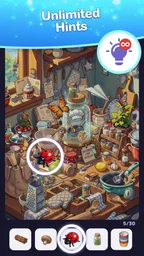
- Some levels may require hints when items are obscure.







