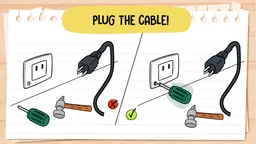
Brain Test: Tricky Puzzles review
 Analysis by Appsdrops
I think Brain Test: Tricky Puzzles is at its best when you treat it as a playful challenge to your assumptions, not as a formal IQ test. It is a free trivia game from Unico Studio built around brain teasers, with a comic, deliberately mischievous tone. I’d recommend it to someone who enjoys pausing over a puzzle, trying an unexpected answer, and laughing when the obvious approach turns out to be wrong.
What the game is like now
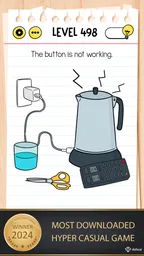
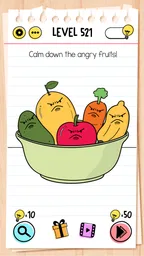
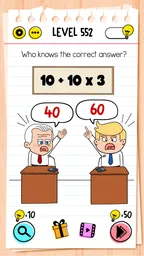
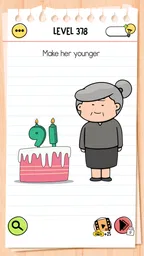
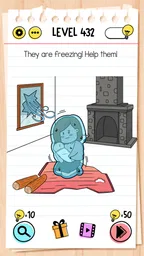
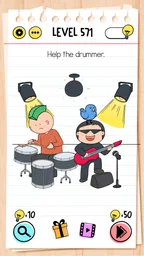
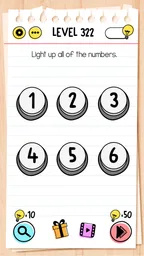
The appeal is easy to understand: a puzzle presents a small problem, and you have to work out what it is really asking. That often means looking beyond the most literal interpretation. The game’s trickiness is part of its identity, so patience and willingness to experiment matter as much as general knowledge.
That makes it different from a conventional trivia quiz. A typical quiz rewards recalling facts quickly; this one is more about noticing a detail, questioning an assumption, or considering an answer that initially seems silly. If you like lateral-thinking riddles, the format can make a spare few minutes feel surprisingly absorbing.
The game is listed in the trivia category, though I would describe its experience more specifically as a collection of playful brain puzzles than a standard question-and-answer contest. Its store summary frames it as an IQ test, but I would not use it to judge intelligence. A puzzle’s solution reflects how you interpret that particular prompt, not a meaningful measure of your overall ability.
Its reach suggests that this style has found a broad audience: it has over 100 million installs, with a 4.7 average from around 10 million ratings. Those figures are useful context for its popularity, but they do not tell you whether the humor or puzzle style will suit you. The more practical question is whether you enjoy being nudged toward a less obvious way of thinking.
A good fit for short, low-pressure breaks
I can see this working well during a commute, while waiting for food, or in a quiet moment between tasks. A single puzzle gives you a compact goal, so you do not have to set aside a long stretch of time to get something out of it. It also lends itself to passing the phone to a friend or family member and seeing whether they interpret the same prompt differently.
That shared-play use is more appealing than treating it as a serious competition. Instead of rushing to prove who is cleverest, you can compare guesses and explain what detail changed your mind. The humor can soften the frustration when an answer feels unintuitive, although it will not make every puzzle satisfying to every player.
For a parent looking for a casual game to try with a child, the content rating is Everyone, and the accessible premise makes it easy to understand what the game is asking you to do. I would still treat it as a shared activity rather than assuming every riddle will land equally well for every age. Some people love misdirection; others find it annoying when a solution depends on reading a prompt in a very particular way.
How I’d approach the puzzles
My most useful tip is to read each prompt twice before committing to the first sensible answer. On the second pass, ask what assumption you have made: are you taking a word too literally, overlooking an object in the scene, or treating a playful instruction as if it were a normal quiz question? That small pause can make the experience feel less like random guessing.
If you get stuck, change the kind of thinking you are using rather than repeating the same answer. A question that seems to ask for knowledge may actually hinge on observation or interpretation. I would also avoid tapping rapidly through possible responses without considering why they might fit; that can turn a clever puzzle into trial and error, which is less rewarding and teaches you little about the game’s logic.
When you are playing with someone else, take turns explaining your reasoning before revealing an answer. The disagreement is often more entertaining than the solution, and hearing another interpretation can help you notice how the wording steered you. This is a particularly good way to make a short session feel social without needing a separate multiplayer setup.
Where it differs from ordinary trivia
Compared with a general-knowledge quiz, Brain Test is a better choice when you want playful interpretation rather than a test of what you remember from school or news. Compared with a pure logic-puzzle collection, its comic framing makes it feel lighter, but that same looseness can be a drawback if you want strict rules and a single solution that follows formal logic.
That distinction matters when deciding what to download. If you enjoy wordplay, visual clues, and the occasional answer that makes you say, “I should have thought of that,” this is a natural fit. If you prefer factual quizzes with clearly defined subjects, timed rounds, or a transparent scoring measure, a conventional trivia app will likely be more satisfying.
I also would not choose it as a substitute for a structured brain-training program. The fun comes from individual riddles and their twists, not from establishing a baseline or tracking a formal learning plan. Think of it as entertainment that encourages flexible thinking, not as a diagnostic tool or a guarantee that your memory or reasoning skills will improve.
Popularity, access, and everyday trade-offs
The game is free to download, which makes it easy to try without committing to a purchase. It does offer in-app purchases, with listed items ranging from $0.99 to $7.99. If you are installing it for a child or simply want to avoid accidental spending, it is sensible to review purchase controls on the device before handing over the phone.
It is rated for Everyone and requires Android 7.0 or later on Android. That gives many Android users a straightforward compatibility check before installing. The game was released on November 21, 2019, so it has been around long enough to build a large audience, though a release date alone does not tell you how any particular feature or puzzle set has changed since launch.
One trade-off with a puzzle collection built around surprise is that the first encounter is usually the most enjoyable. Once you know a solution, replaying that same riddle cannot recreate the moment of discovery. If you like to revisit games for mastery or steadily rising difficulty, that may matter more to you than it would to someone who simply wants a fresh distraction whenever they open it.
What has and has not been established about its evolution
The confirmed release history gives a clear starting point: Brain Test arrived on November 21, 2019. The current facts also identify Unico Studio as its developer and show that the game remains available as a free download with optional purchases. That establishes its basic position today, but it does not establish a particular sequence of updates, new modes, or design changes.
For an existing player, that means I would separate what is known from what one might hope to see. The puzzle-focused identity and broad availability are clear; a specific change to the interface, a new feature, or a revised progression system should not be assumed without direct confirmation. If you already enjoy its style, it makes sense to judge it by the puzzles you can currently play rather than by expectations about future additions.
There is also a practical difference between ongoing access and ongoing novelty. A game can remain popular while individual riddles lose their surprise for someone who has completed them. If you are returning after a break, decide whether you want the same kind of playful misdirection again; do not assume that time away necessarily means the experience has transformed.
Who may want to skip it
I would steer clear if you find trick questions irritating, especially when a solution depends on interpreting a prompt in a way you did not anticipate. The same design choice that makes a riddle delightful for one player can feel arbitrary to another. It is also not the best pick for someone looking for serious competition, a reliable measure of IQ, or a topic-focused quiz that rewards detailed knowledge.
Players who want every answer to follow a formal chain of logic may prefer a traditional puzzle game. And if you dislike optional purchases in free games, consider whether you are comfortable with a free download that includes paid items. The listed price range is clear, but whether those purchases feel worthwhile will depend on how you play and what you expect from the experience.
My recommendation
I recommend Brain Test: Tricky Puzzles as a casual choice for people who enjoy being surprised by their own assumptions. It works especially well as a short solo break or as a light conversation starter with someone nearby. Go in expecting funny, unconventional riddles rather than an authoritative IQ test, and give each prompt a moment of thought before guessing.
The main question to watch as you decide is whether the game’s kind of misdirection stays enjoyable for you. If you like examining a clue from more than one angle, its established puzzle identity may be exactly what you want. If you need strict logic, factual trivia, or evidence of a particular recent overhaul, a different game may be a better match. For a free, accessible brain-teaser experience from Unico Studio, though, it is an easy one to try and judge on its own playful terms.
What we like
- Puzzles reward creative thinking rather than relying only on trivia.
- Short levels make it easy to play in brief sessions.
- Hints help when a puzzle feels unusually tricky.
- A wide variety of challenges keeps the game from feeling repetitive.
- The simple controls work well on phones and tablets.
What could be better
- Some solutions depend on unexpected wordplay or visual tricks.
- Hints may be limited unless you watch ads or make purchases.
- Frequent ads can interrupt the flow between puzzles.
- Later levels can feel inconsistent in difficulty.
- Some puzzles may require tapping around to guess the intended action.







