




QuizzLand. Quiz & Trivia game review
 Analysis by Appsdrops
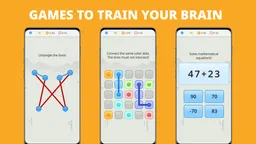
I like trivia games that give me a reason to think rather than simply reward quick tapping. QuizzLand’s strongest appeal is its mix of quiz questions and logic-focused brain training: it turns spare minutes into small tests of recall and reasoning. In my experience, that makes it an easy game to pick up while waiting for a bus or taking a short break, without needing to plan a long session.
Questions that invite a second thought
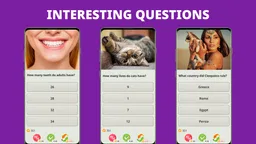
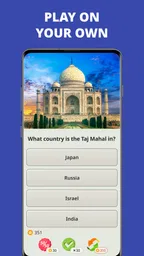
QuizzLand is a free trivia game from Quiz & Trivia Games by Mno Go Apps. Its central draw is straightforward: answer questions, engage your memory, and work through prompts that are meant to exercise logic as well as general knowledge. That combination matters. A purely factual quiz can feel like a test of what I happened to memorize; adding reasoning gives me a chance to work toward an answer even when the fact itself is unfamiliar.
The game sits in the trivia category, but it is a better fit for people who enjoy thinking through questions than for anyone looking for a deep simulation, a story campaign, or a social competition. I find it most satisfying when I pause briefly to compare the choices instead of treating every question as a race. The value is in the small mental detour: noticing a clue, ruling out an implausible option, and seeing whether my first instinct holds up.
That focus also makes the game approachable across different levels of knowledge. A question I know immediately can keep the pace lively; a less familiar one can still be interesting if its wording or options offer something to reason about. It does not turn every question into a puzzle, so players who want sustained, difficult logic challenges may find the trivia element too prominent. But as a light blend of quiz and brain exercise, the idea works well.
How the quiz feels in an ordinary session
I would use QuizzLand in short bursts rather than save it for a long, uninterrupted evening. A few questions can fit into the gap before an appointment or the quiet stretch of a commute. That low-commitment rhythm is one of its practical strengths: I can open a trivia game, focus for a little while, and stop when the moment is over instead of needing to remember a complicated plot or manage a long match.
For a more useful session, I recommend resisting the urge to tap the first plausible answer. Read the whole question, scan every option, then identify what the prompt is actually asking. In trivia, a familiar word can make an answer feel right even when it only matches part of the question. Taking that extra beat makes the game more like a brain workout and less like a reflex test.
Another good habit is to treat missed answers as a cue to examine how you arrived at your choice. Was the wording misleading, did you rely on a half-remembered fact, or did you overlook a clue in the alternatives? That small review turns a wrong answer into something more useful than a score change. It is especially helpful if you play because you enjoy learning, not only because you want to get everything right.
QuizzLand is also a reasonable choice when you want a shared, low-pressure activity. I can imagine passing a question around among friends or family and letting everyone explain their reasoning before choosing. That works best when the group enjoys different kinds of general-knowledge questions and no one minds getting an answer wrong. If your group wants a dedicated party game with team rules and a host-led format, a purpose-built social quiz will likely suit the occasion better.
A small daily routine works better than cramming
The game’s brain-training angle is easiest to enjoy as a habit, not as a promise of instant improvement. I would play a short round when I have a spare moment and aim to stay curious about the questions, rather than treating a session as proof that my memory or intelligence has changed. Trivia can prompt recall and encourage careful thinking, but a game should be approached as entertainment with a mental edge, not as a substitute for structured study or professional assessment.
For example, if I have ten quiet minutes before dinner, I can open the game, answer a handful of questions, and stop without feeling that I have left a larger task unfinished. If a question catches my interest, I can make a mental note to look into the subject later. This is a more realistic use than expecting a mobile quiz to deliver a complete lesson: the game gives me prompts and a reason to think, while deeper learning may require follow-up elsewhere.
That distinction is useful for parents too. The content rating is Everyone, so the game is positioned for a broad audience, but I would still treat it as a shared activity if a younger player gets stuck or asks about an unfamiliar topic. Working through a question together can make it more engaging than simply handing over a device, and it lets an adult help explain why an answer makes sense.
Where it stands beside other trivia games
Compared with a conventional trivia app built mainly around categories, timed rounds, or head-to-head contests, QuizzLand puts more emphasis on the individual act of solving a question. That makes it a better match for solo breaks and casual brain exercise than for players whose main motivation is beating friends. It also differs from a dedicated logic-puzzle game: the quiz format keeps general knowledge at the center, so the experience is broader but less focused on one sustained puzzle type.
If I wanted to memorize material for an exam, I would choose a study tool with deliberate topic coverage, progress tracking suited to revision, and a way to revisit specific weak areas. If I wanted to sharpen a particular skill through increasingly complex puzzles, I would look for a game built around that skill. QuizzLand occupies the middle ground: it gives me a varied set of questions and a light reasoning challenge, which is enjoyable but not a replacement for either specialist option.
It is also worth being honest about the limits of the format. Trivia depends on the questions a player encounters, and a short session may feel uneven: some prompts will be familiar, while others may lean on knowledge I do not have. Anyone who dislikes being tested on broad facts, or who gets frustrated by an occasional guess, may find the experience less relaxing than a word game or a puzzle with clear rules and a single self-contained solution.
What to know before installing
The game is free to download, with in-app purchases priced from $0.79 to $22.99 per item. I would start with the free experience and decide whether the regular play style suits me before spending anything. The presence of purchases is worth keeping in mind, particularly if a child will be using the device; setting appropriate purchase controls on the device is a sensible precaution for any game that offers paid items.
Its broad reach is notable: QuizzLand has more than 100 million installs, an average rating of 4.8 from around two million ratings, and roughly 35,000 written reviews. Those figures suggest that it has found a large audience, but they do not tell me whether its question style will match a particular player’s taste. I would use them as context, not as a guarantee that every session will be equally engaging.
The game was released on February 14, 2018, and its current version is 3.18.007. It requires Android 7.1 or later. That makes the minimum system requirement useful to check before installing on an older Android device. The game is rated Everyone, which supports its casual, broad-audience positioning, while the actual enjoyment still depends on whether the player likes quiz questions and the possibility of getting some wrong.
Who will get the most out of it
I would recommend QuizzLand to someone who likes general-knowledge quizzes but wants a little more thought involved than quick-fire guessing. It suits curious players, people filling short breaks, and families who enjoy discussing answers together. It can also be a pleasant change for anyone who wants a small daily mental diversion without committing to a long session or learning a complicated set of controls.
I would skip it if I were looking for a serious study companion, a tightly structured logic course, or a multiplayer game centered on competition. It may also be a poor fit for someone who wants every question to be within their existing knowledge or finds uncertain answers stressful. In those cases, a focused learning app, a dedicated puzzle game, or a cooperative party quiz would better match the goal.
Overall, I see QuizzLand as a handy, low-pressure way to make idle minutes more thoughtful. Its best feature is not that it promises to transform the player, but that it nudges me to slow down, read carefully, and reason through a question. If that kind of small challenge sounds enjoyable, the free entry point makes it easy to try; just approach its brain-training theme as a fun prompt to think, rather than a substitute for deeper learning.
What we like
- Questions cover a wide range of general knowledge topics.
- Explanations reveal useful facts after each answer.
- Solo play works well for short breaks.
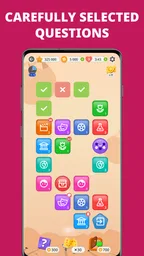
- A map gives progression a clear sense of direction.
- Hints can help when a question proves difficult.
What could be better
- Some questions may feel familiar to experienced trivia fans.
- Hints can make the challenge less satisfying.
- Progress through the map may feel repetitive over time.
- Ads can interrupt the flow of play.
- A steady internet connection may be needed for some features.







