




Guess Their Answer - IQ Games review
 Analysis by Appsdrops
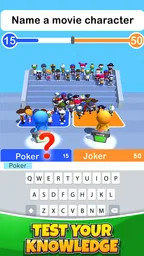
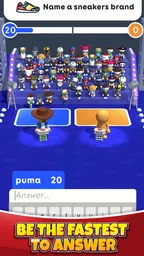
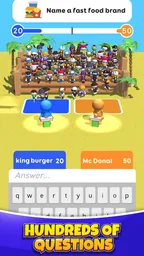
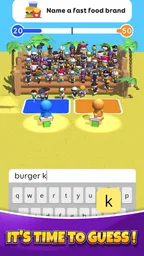
I like trivia games that let a group start playing without a long explanation, and Guess Their Answer has an appealingly simple premise: make a guess, then see whether it matches what other people are likely to say. It is a casual trivia game from TapNation, built around quick challenges rather than deep study. That makes it easy to pick up during a break or pass around among friends, though the experience is more about playful instincts than proving who knows the most facts.
What kind of trivia it rewards
Many trivia games ask for one correct answer. Guess Their Answer takes a different route, inviting players to predict a popular response. That shift changes the skill involved: you are not only recalling information, but thinking about how a broad group might interpret a prompt. A sensible or technically correct answer may not be the one that fits the game’s expectation, which is part of its charm and sometimes its frustration.
The game also includes “This or That” choices and IQ-style challenges, so it is not limited to one question format. I would treat those as variations on short, accessible play rather than expect a comprehensive brain-training course. The appeal is the quick decision: read a prompt, form an answer, and move on. It suits people who enjoy light mental challenges but do not want to settle in for a long quiz session.
The key thing to know is that guessing what people tend to answer can matter more than being objectively right. If you enjoy social guessing games, that distinction makes each question more interesting. If you prefer carefully sourced facts, unambiguous answers, or a quiz that rewards specialist knowledge, a conventional trivia app may be a better fit.
A good fit for spare moments and shared play
I can picture using it while waiting for food, during a quiet stretch of a commute, or as a low-effort game to bring out when friends are together. A prompt can give people something to debate even before anyone submits an answer: “Would most people pick this, or that?” That brief conversation is a strength because it turns a solo screen activity into a small social moment without requiring everyone to learn complicated rules.
There is a useful way to play with a group: ask everyone to commit to an answer before discussing it. Otherwise, the most confident person can steer the room, and the game becomes a test of persuasion rather than instinct. For a fairer comparison, have players choose privately or write down their guesses first. That is a practical adjustment, not a special feature, but it helps preserve the fun of discovering who best anticipates the crowd.
Progress feels more like a nudge than a serious test
The quick-challenge format encourages another round, but I would not approach it as a high-stakes measure of intelligence. A result can depend on interpreting the wording in the same way as the expected audience. If a question feels subjective, I find it more useful to treat a surprising outcome as a conversation starter than as proof that one player is smarter than another.
That also affects how I would use the game with children or mixed-age groups. Its Everyone content rating makes it broadly approachable, and the simple premise is easy to explain. Still, “everyone” does not mean every prompt will suit every player equally: familiarity with common expressions and everyday preferences can shape how naturally a person answers. I would play alongside younger children and help them understand that the goal is to anticipate popular choices, not always to find a single factual truth.
If you are looking for a structured learning routine, this is not the role I would give it. It can provide a light mental diversion, but a dedicated educational quiz is more appropriate when you want subject coverage, explanations, or a deliberate study plan. Guess Their Answer works best when the goal is a few lively rounds, not measurable academic progress.
Fairness depends on the question, not just the player
Because the premise relies on popular answers, fairness is a little different here than in a standard knowledge quiz. A player can understand the prompt and still miss the expected response because their own habits or cultural references differ from those of the imagined majority. That is not necessarily a flaw in a crowd-guessing game, but it is worth keeping in mind before treating scores as a clean ranking of skill.
When a question seems debatable, I would separate two things: whether my answer makes sense, and whether I expect many other people to give it. That small mental switch can make the game feel more coherent. It also helps explain why a confident answer can fail: the challenge is prediction, not simply defending the answer you personally prefer.
For a friendly competition, I would keep the mood informal and avoid using a short run of results to declare an overall winner. The game is better at creating quick surprises than establishing a rigorous league table. If your group wants strict scoring, transparent answer criteria, and a clear way to settle disagreements, a traditional quiz with factual questions will likely feel fairer.
Free to start, with purchases to consider
Guess Their Answer is free to download, while in-app purchases are listed at $0.99 to $7.99 per item. That gives you a straightforward starting point, but it is sensible to check purchase prompts before tapping through if you want to keep play free. I would not assume that spending is required to enjoy the basic idea, nor would I assume that purchases change competitive balance; the available purchase details do not establish what each item does.
The game has an average rating of 4.4 from around 562,000 ratings, with roughly 6,300 written reviews and over 50 million installs. Those figures suggest it has reached a large audience, but popularity alone cannot tell you whether its question style matches your taste. I would use the free entry point to decide whether the crowd-guessing format feels entertaining before considering any optional spending.
For a parent, the practical question is less about the broad age label and more about how the game is used on a device. If a child will play, it is worth checking the app store’s purchase controls and the device’s settings together. That is a sensible precaution for any free game with in-app purchases, not a claim about a particular purchase flow here.
What I would check before making it a regular game
The game is published by TapNation, and its current version is 5.2.3. It requires Android 7.0 or later. If you are choosing between devices, check that requirement before downloading; a phone running an older Android release may not be compatible. The game was released on January 29, 2021, so it has been available long enough to build a substantial audience, though that does not by itself reveal how frequently its content changes.
One point I would keep open is how much variety you will personally find in repeated sessions. A broad collection of prompt styles can make a casual game feel fresh, but the specific mix that appears in play is what matters to an individual. I would try several short sessions rather than judge it from one round. If the prompts keep producing arguments and unexpected answers, that is a sign the format is working for you; if they feel repetitive or too dependent on guessing an invisible majority, it may not hold your attention.
I would also avoid buying anything on the assumption that it provides a particular advantage, adds a certain type of content, or removes a specific inconvenience. The listed price range tells you that purchases are available, but not what each item contains. If a purchase option appears, read its description in the app store or on the purchase screen before deciding. That is the most grounded way to judge value without relying on guesses.
Who should choose it—and who should pass
I would recommend Guess Their Answer - IQ Games to someone who wants a light trivia game that can prompt a quick chat, especially if they enjoy predicting common opinions as much as recalling facts. It is an easy choice for informal group play, short breaks, and people who like a mix of crowd-style guesses, binary choices, and simple brain teasers.
I would steer away from it if your priority is a serious knowledge challenge, detailed explanations, a dependable study tool, or competition where every answer has an indisputable basis. Those needs are better served by a conventional quiz app or a subject-focused learning game. The distinction is not about one style being better overall; it is about whether you want to know the answer or predict what other people would say.
My trust verdict is measured but positive: the game has a clear, approachable premise, a free starting point, and a large audience, while the purchase range is visible enough to make cautious browsing sensible. I would install it for casual rounds, keep spending decisions tied to what an item actually offers, and treat the score as entertainment rather than a measure of intelligence. If that sounds like the kind of low-pressure challenge you want, it is worth trying; if you need precision and depth, choose a more traditional trivia experience instead.
What we like
- Quick rounds make it easy to play in short breaks.
- Simple controls are easy for new players to understand.
- Guessing popular answers adds a social party-game feel.
- A broad range of prompts can keep sessions feeling varied.
- The game encourages creative thinking and quick recall.
What could be better
- Some answers may feel subjective or unexpectedly marked wrong.
- Later levels may repeat familiar question patterns.
- Ads can interrupt the flow of play.
- Progress may feel slow when answers are difficult to predict.
- The game is less enjoyable without an internet connection.







