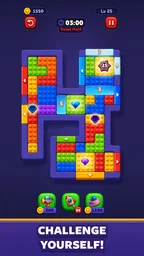
Block Out! - Color Sort Puzzle review
 Analysis by Appsdrops
I like puzzle games that let me settle into a small challenge without turning every spare minute into a commitment. Block Out! - Color Sort Puzzle looks built for that kind of session: it is a color-focused block puzzle from Grand Games A.Ş., and its short “Block Out!” pitch suggests a straightforward goal rather than a story-heavy experience. My main advice is to approach it as a compact brain teaser, not as a sprawling puzzle campaign. The appeal is the satisfying work of arranging and clearing blocks; the trade-off is that anyone craving lots of variety or a deep progression system may want something broader.
How the puzzle feels in short sessions
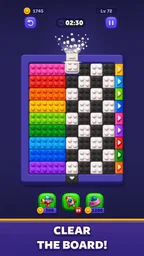
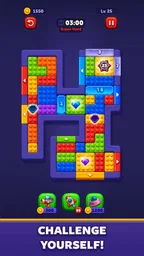
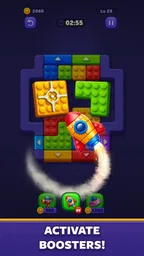
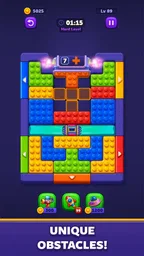
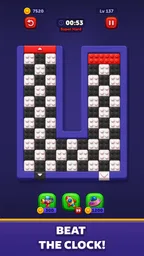
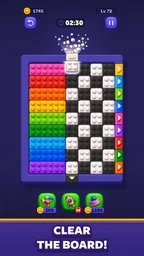
The central attraction is the combination of color sorting and block placement. That gives each move two things to think about: where a piece can fit and how its color affects the board. I find that pairing more engaging than a basic “fill a row” puzzle, because a seemingly convenient placement can also make later sorting awkward. You are encouraged to look beyond the next move, even when the overall idea is easy to understand.
That makes it a natural choice for a short break. I would use it while waiting for a drink, between household tasks, or during a quiet commute when I have a few minutes and can give the board some attention. The puzzle format is easy to pick up without needing to remember a plot or a long chain of objectives. If you tend to play in brief bursts, that simplicity is a genuine strength.
There is a useful distinction between “simple to start” and “effortless to play.” Sorting and placement can demand careful attention once the board gets less forgiving. I would not treat it as an automatic, one-handed distraction in every situation: if you are trying to follow a conversation or watch for a stop, it is easy to lose track of the choices in front of you. It suits a little focused downtime better than a task you can ignore whenever you like.
What to expect from the pace
The game’s premise points toward a quick mental loop: inspect the available blocks, consider how their colors interact with the existing arrangement, then decide where they belong. That can feel brisk when the board offers obvious placements. It can also slow down when you pause to avoid trapping yourself. I see that pause as part of the puzzle rather than a flaw; the best move is not always the one that clears space immediately.
I would not choose it if I wanted a highly varied collection of puzzle modes or a new mechanic around every corner. Its identity is the color-block challenge, and players who enjoy refining one kind of decision may find that focused approach relaxing. Those who lose interest when a game returns to the same basic task should be more cautious. The question is less whether the rules are complicated and more whether you enjoy repeatedly making small, consequential placement choices.
One practical tip is to resist filling every tempting open space as soon as it appears. I find it more useful to scan the board for placements that preserve options, especially when several colors or shapes are competing for room. Clearing something now may feel rewarding, but keeping a flexible area can be more valuable if the next pieces do not cooperate. That “save room for uncertainty” habit is a small adjustment that makes this particular style of puzzle feel more deliberate.
When a session gets intense
The moments that demand the most attention are not necessarily the longest ones. A crowded board can turn a casual placement into a choice between taking a modest gain now and protecting space for a better sequence later. If you tend to play quickly, try taking a brief visual pause before committing. Looking at the whole board rather than only the next available opening can help prevent a move that solves one problem while creating a tighter one elsewhere.
This is also where the game’s focused design can divide players. I enjoy a puzzle that asks me to plan, but repeated close calls can feel more like pressure than relaxation if I am already tired. It is a good match for someone who likes to improve through better decisions. It is less appealing if the ideal mobile game for you is a forgiving toy that never makes you reconsider a move.
For a realistic everyday use, imagine having a short wait before an appointment. I would start a round only if I had enough time to concentrate on the board, rather than opening it while rushing through messages. If I needed to stop suddenly, I would want to be comfortable leaving the session and returning later; the exact recovery behavior can depend on the app and device, so I would not plan an important uninterrupted stretch around it without first trying a brief session. That is a sensible first-use check for any puzzle you intend to play in fragments.
Reliability and interruptions
I judge a mobile puzzle partly by whether it feels dependable during ordinary use: does it respond to input, remain usable through a short session, and fit naturally into a stop-and-start routine? The available details establish the game’s identity and compatibility, but they do not justify claims about measured loading speed, crashes, battery use, or how a round is restored after closing. I would rather be clear about that than promise smoothness I cannot substantiate.
For a cautious first session, open the game when you have a few uninterrupted minutes and see how it behaves on your own device. Notice whether the controls feel comfortable, whether the board is easy to read, and whether you can pause your attention without losing your place. That quick trial is more useful than assuming a puzzle will behave exactly like another game on your phone. It also helps you decide whether it is a good fit for quick breaks or better saved for a longer sit-down.
There is a broader reliability trade-off here: a puzzle can be mentally lightweight in concept while still requiring your attention at a critical moment. If you are likely to be interrupted, do not begin when you have only seconds to spare. I would treat a round as a small activity rather than as something guaranteed to survive every interruption unchanged. That expectation keeps the game’s role realistic and avoids frustration caused by assuming more about recovery than is established.
Device fit, cost, and audience
The game is rated for Everyone and is free to install, which makes it easy to try without an upfront purchase. It does offer in-app purchases, with items ranging from $0.99 to $99.99, so I would check the purchase prompts carefully and set device-level spending controls if children may use the phone. Free access is a useful starting point, but it does not mean every optional purchase is equally small. For a casual puzzle, I would begin by seeing whether the core experience is enjoyable before spending anything.
It has a 4.6 average from around 30,000 ratings, and more than a million installs. Those figures suggest that plenty of players have tried it, but they cannot tell me whether its exact pace or style will suit you. The developer is Grand Games A.Ş., and the current version is 1293. It was released on September 8, 2026, and requires Android 8.0 or later. If you use an older device or a different platform, check the relevant app store’s compatibility information before deciding.
I cannot responsibly translate those compatibility details into a guarantee about speed on every supported phone. A device meeting the minimum operating-system requirement does not tell you how much spare memory it has, how quickly it loads, or how long its battery will last during play. If your phone is older or already struggles with other apps, try a short session first rather than assuming the game will feel equally responsive. On a newer device, it may be an easy addition, but the actual experience still depends on the handset and its current condition.
Compared with familiar block-placement puzzles, this one’s color-sorting emphasis gives the choices a second layer. A plain spatial puzzle may be preferable if you want to focus only on fitting shapes into gaps; a match-style game may be a better fit if you prefer obvious chains of color matches and a more immediate visual payoff. Here, I would expect the enjoyment to come from balancing the board and making placements that keep future choices open. That difference is worth considering before installing it, because the broad label “puzzle” covers very different kinds of play.
Who I would recommend it to
I would recommend Block Out! - Color Sort Puzzle to players who enjoy tidy, visually guided challenges and like thinking a move or two ahead. It could suit someone who wants a small mental reset after work, or a puzzle fan who prefers concentrating on one clear idea instead of learning a large set of rules. Its broad age rating also makes it approachable for a family device, provided an adult keeps an eye on optional purchases and checks that the game’s pace suits the child.
I would skip it if you need a rich narrative, a large assortment of puzzle types, or a game that keeps demanding very little attention. I would also look elsewhere if color sorting itself does not appeal to you; that is central to the game’s identity, not a decorative detail. Someone who wants a more purely spatial challenge may be happier with a conventional block puzzle, while a player seeking a gentler, less strategic pastime may prefer a more forgiving casual game.
My overall view is that this is a focused option for people who like combining color awareness with careful block placement. Its most useful strength is that the idea is approachable while still leaving room to make better or worse decisions; its main limitation is that the same central loop may not offer enough variety for players who tire of repetition. I would install it for short, attentive sessions, try a few boards before considering any purchase, and judge its responsiveness on my own phone. If that sounds like the kind of puzzle break you want, it is an easy one to try; if you want a broader game or guaranteed hands-off play, another style will serve you better.
What we like
- Simple controls make the sorting mechanics easy to learn.
- Short levels suit quick play sessions.
- Colorful visuals make blocks easy to distinguish.
- The core puzzle can be played without a fast reaction time.
- Progressive challenges offer a clear sense of advancement.
What could be better
- Later levels may feel repetitive for some players.
- Limited mechanics can reduce variety over time.
- Color-based puzzles may be difficult for some color-blind players.
- Mistakes can require restarting a level.
- Ads may interrupt play depending on the version.







