



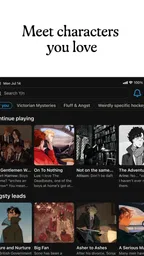
Y/n review
 Analysis by Appsdrops
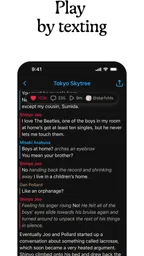
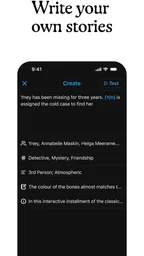
I read Y/n as an invitation to step into a story rather than a conventional reference app, and that distinction matters before you download it. Its “play your story” premise suggests a reading experience built around the person taking part, not simply a shelf of books to browse. If you enjoy fiction that feels personal and want something to dip into during spare moments, it may be appealing. If you are looking for a traditional ebook library, research tool, or a clearly documented interactive game, I would compare it with those options before deciding.
A story-focused app with a personal point of view
Y/n sits in the Books & Reference category, though its short description is simply “Y/n,” and that gives very little away to someone encountering it for the first time. The name is commonly used as a reader-insert placeholder in fiction, so the app’s framing points toward stories where you can imagine yourself in the central role. I would approach it as a way to engage with that kind of fiction, not as a general-purpose reading reference.
That personal angle is the most distinctive part of the pitch. A regular novel asks you to follow a character; reader-insert storytelling asks you to supply some of the character yourself. That can make a familiar fictional setup feel more involving, especially when you want an easy escape rather than a demanding book. The trade-off is that this style will not suit everyone. Readers who prefer a fully developed protagonist, a tightly controlled literary voice, or a self-contained plot may find the device distracting.
The app is free to install, while in-app purchases range from $4.99 to $14.99 per item. I would treat the free download as a chance to judge the writing and the overall reading experience before spending anything. The purchase range makes it especially sensible to decide what you value first: a story’s premise, its writing style, and how much time you are likely to spend with it. A low-friction start is useful, but it does not by itself tell you whether a paid item will feel worthwhile.
Emittance Inc. is the developer, and the app has a 4.3 average from around 1.9 thousand ratings, with 100 thousand or more installs. Those figures indicate that it has found an audience, but they cannot tell me whether its particular stories match your tastes. I put more weight on whether you enjoy reader-insert fiction and whether the app’s presentation makes it comfortable to return to. The Teen age rating is also a practical cue for families: it is not a promise that every story will suit every reader, so younger users should choose content with care.
How it fits into an ordinary reading routine
The strongest use case is a short break when you want fiction that feels more participatory than scrolling through a feed. For instance, on a commute or while waiting for an appointment, you could open the app, settle into a story, and pick it up again later. That kind of reading works best when the app makes it easy to remember where you were and when the writing gives you a reason to return. I would test those basics during the free portion rather than assuming the experience will match a conventional ebook reader.
A useful personal check is to read a small amount in two different moods: once when you have a few quiet minutes and once when you are tired and want something effortless. Reader-insert fiction can feel immersive when you are ready to imagine yourself in the scene, but less natural when you want to follow a story without participating mentally. If the second session feels like work, that is a good sign that this is a niche reading preference rather than your everyday book app.
What the version and release history can tell us
The app was released on November 21, 2025, and its current version is 1.3.46. That establishes a relatively recent starting point and a current version number, but it does not prove what changed between releases. I would not infer a new feature, a redesign, or a particular content update from the version alone. It is better to treat the current build as the version to evaluate now, rather than relying on assumptions about how earlier builds behaved.
For someone already using it, that distinction is important. An updated version number can mean the product is being maintained, but the number itself says nothing about whether a favorite story, reading flow, or purchase experience has changed. If you are returning after a break, check the app’s current presentation and your own saved place in a story before deciding that the experience is exactly as you remember it. That is a practical habit for any story app, especially one where continuity matters more than a long list of tools.
For a new reader, the release and version details are less important than the question of whether the app’s core idea is right for you. The early version number may suggest an experience that is still developing, but it is not evidence of missing or unfinished features. I would judge what is in front of me: the writing, how clearly stories are presented, and whether reading feels comfortable on my device. Expectations about future changes should stay separate from that current assessment.
Where it differs from ordinary reading alternatives
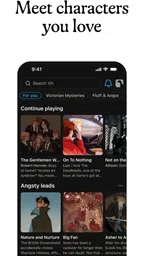
Compared with a standard ebook reader, Y/n appears to put a specific kind of fiction and reader involvement at the center rather than serving as a neutral place for books from many sources. That focus can be a benefit if you already seek reader-insert stories; you are not asking a broad library app to understand a niche preference. But if you mainly want to bring your own books, organize a large personal collection, or read reference material, a conventional ebook app is likely the more useful choice.
It also differs from a typical choice-driven game. The premise invites personal participation, but I would not assume that every story has branching paths, game-like decisions, or multiple endings. If those mechanics are what you want, look for an interactive fiction app that explicitly presents them. Here, the safer expectation is a story-led reading experience whose appeal comes from imagining yourself in the role, not from assuming a particular gameplay system.
That comparison offers a simple way to decide. Choose Y/n when the reader-insert angle itself sounds enjoyable and you want fiction organized around that feeling. Choose a general ebook reader for breadth and book management, or interactive fiction built around explicit decisions when you want your choices to alter the plot. These are different kinds of attention, and none is automatically better; the right fit depends on whether you want to imagine, browse, or actively steer events.
Practical ways to judge the experience before paying
Because the app is free to install but offers paid items, I would separate “Is this a comfortable app to read in?” from “Is this particular content worth buying?” First, spend enough time with the free experience to see whether the writing voice works for you. Then consider a purchase only if a story’s premise holds your attention and you can picture returning to it. This avoids treating the existence of in-app purchases as a reason to spend before you know whether the format suits you.
Pay attention to the kind of character you are being asked to imagine. In reader-insert fiction, the central role can feel open enough for some readers and oddly vague for others. If you find yourself constantly rewriting the imagined character in your head, that may be part of the appeal—or a sign you would rather read a novel with a defined protagonist. This is a more useful test than judging the app by its category alone.
For a shared device or a younger reader, I would also make content choice part of the routine. The Teen rating gives a broad age signal, but it is still worth checking that a specific story is appropriate for the person reading it. That is not unique to this app: category labels and age guidance help set expectations, while individual preferences and family standards still matter.
The limitations I would keep in mind
The biggest limitation is that the app’s brief description leaves a first-time visitor with little practical guidance about the reading experience. A reader may need to open it and explore before understanding whether its stories match their interests. That is manageable if you are curious and comfortable evaluating fiction as you go, but less convenient if you want to compare a large catalog quickly or know exactly what kind of interaction a title offers before starting.
The reader-insert approach is also inherently narrower than a broad book collection. It can be engaging precisely because it has a particular point of view, yet that same focus may make the app a poor fit for someone who reads across genres and wants one dependable home for everything. I would not replace a general reading app with it unless this style is a regular part of what you seek.
There is also a spending decision to make. Individual purchases can be reasonable when a story is a strong match, but the listed range—from $4.99 to $14.99 per item—means it is worth being selective. I would avoid buying out of curiosity alone if you have not established that you like the writing and the role-playing premise. A free start is most useful when you treat it as a trial of taste, not as a guarantee that every paid story will land equally well.
Who I would recommend it to
I would recommend Y/n to readers who already enjoy imagining themselves inside fiction and want a dedicated place to explore that style. It is also a reasonable option for someone looking for a story to read in short sessions, provided the writing encourages them to return. The app’s 4.3 average and audience of over 100 thousand installs show that other users have found a reason to try it, though your own response to the storytelling format should carry more weight than popularity.
I would skip it, or at least keep it as a secondary app, if you want a large general-purpose library, reference material, or a clearly defined interactive game with explicit choices. I would also be cautious if you dislike stories that leave room for you to supply the main character’s identity. Those readers may be happier with a traditional novel, while people who want plot control may prefer a dedicated interactive fiction title.
My verdict and what I would watch next
My overall view is that Y/n has a clear appeal, but it is an appeal built around a particular reading habit rather than a universal need. I like the idea of opening a story that asks me to occupy the central role, and the free installation makes it easy to decide whether that works in practice. At the same time, the short description does little to set detailed expectations, so the best way to judge it is by trying the reading experience and paying attention to how its stories make you feel.
As the app develops, I would watch for clearer ways to understand what each story offers and whether returning readers can comfortably continue where they left off. Those are the kinds of changes that would make the experience easier to assess without changing its central identity. They are things to look for, not features I would assume are already present. For now, version 1.3.46 is the build to judge on its own merits.
If reader-insert fiction is already your thing, I think it is worth giving the free app a careful try before deciding whether any individual purchase is right for you. If it is not, there is no need to force the fit: an ebook reader or a more explicitly choice-based story app will probably serve you better. The best reason to choose Y/n is that you want to imagine yourself in the story; the best reason to pass is that you would rather read, browse, or play in a different way.
What we like
- Supports a range of Android and iOS devices.
- A simple interface can make basic navigation straightforward.
- Can be downloaded through official app stores.
- May receive updates that improve compatibility.
- Useful for users who enjoy exploring new apps.
What could be better
- The name alone does not reveal the app's purpose.
- Features may vary between Android and iOS.
- Some functions may require an internet connection.
- Availability can depend on your country or device.
- Check permissions and privacy details before installing.





