



WebNovel review
 Analysis by Appsdrops
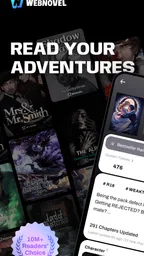
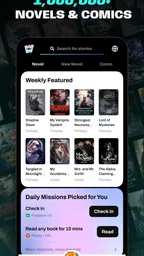
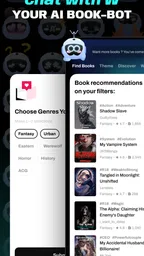
When I want to read a serialized story in short stretches rather than settle in with a full-length book, WebNovel is the kind of app I reach for. It brings novels and comics together in a reading-focused space, with Solo Leveling among the titles named in its store summary. That mix can make it easier to find something new, but it also means the experience is shaped by ongoing series, chapter-by-chapter reading, and in-app spending—not just by the story itself.
From a spare moment to a reading habit
The app makes the most sense when I start with a specific reading need: a commute, a lunch break, or a few quiet minutes before bed. Instead of browsing a general library of finished books, I can use WebNovel to explore serial fiction and comics, then follow a story in smaller instalments. For readers who enjoy returning to a world over time, that rhythm is part of the appeal.
WebNovel is a free Books & Reference app from Cloudary. It has a 4.0 average from around 453,000 ratings, and more than 10 million installs. Those figures suggest a large audience, though they do not tell me whether a particular series will suit my taste. The useful test is whether its selection and chapter format match the way I actually like to read.
I would begin by looking for a genre or premise I already enjoy, rather than opening the app expecting every recommendation to land. With serial fiction, a compelling opening matters, but so does the prospect of spending time with a story across many chapters. I try a few instalments before committing emotionally or financially. That small habit helps me judge the writing and pacing before a series becomes part of my routine.
Choosing a story without rushing the commitment
For a first session, I would treat browsing as sampling, not shopping. A title’s premise can draw me in, but a short trial tells me more: whether the dialogue feels natural to me, whether the chapters end at satisfying points, and whether the story is moving at a pace I like. Comics offer a different entry point when I want visual storytelling rather than a long block of prose.
This distinction matters when deciding between WebNovel and a conventional ebook reader. A standard ebook app is often better for someone who already owns finished books and wants to read them from beginning to end. WebNovel is more suited to readers who are happy to discover serial stories and keep up with chapters. If I want a single, complete novel with a clear endpoint, a dedicated ebook library may feel more straightforward.
I also wouldn’t assume that every story is equally polished or suited to every reader. A broad serial catalogue can be exciting, but browsing brings some uncertainty: I may need to sample several works before finding one that holds my attention. My practical approach is to keep the first choice low-pressure and move on if the voice or pacing does not work for me.
A practical chapter-by-chapter routine
Once I find a story, I read in manageable sessions. On a weekday commute, for example, I might read a chapter while waiting for a train, stop at a natural break, and return later when I have another pocket of time. That is a better fit for serialized fiction than trying to race through a long book in one sitting. It also makes the app useful for readers whose schedules are irregular.
One non-obvious benefit of this format is that a chapter can act as a deliberate stopping point. I can decide in advance to read one instalment, rather than losing track of time in an open-ended book. The trade-off is that serial pacing can leave me wanting the next part just when I need to put my phone away. If cliffhangers make it hard to stop, I’d set a personal limit before opening a story.
Another useful habit is to separate “I like this story” from “I want to pay to continue right now.” A gripping scene can make an immediate purchase feel tempting, but pausing to check the cost and decide whether I want to keep reading is a more comfortable way to stay in control. In-app purchases range from $0.99 to $299.99 per item, so the free starting point should not be mistaken for a guarantee that every reading path remains free.
When reading moves between formats and budgets
The presence of both novels and comics gives WebNovel a different feel from a text-only reading app. If I am not in the mood for prose, a comic can offer a more visual way into a story. If I prefer to imagine scenes for myself, a novel may be a better match. Switching formats can keep the app useful across different moods, though the two formats do not necessarily serve the same reading habits.
For a reader considering a paid continuation, I would make the decision title by title. First, sample enough of the work to know that I enjoy its writing and rhythm. Then consider how often I expect to read it and whether the available purchase suits my budget. That approach is more reliable than spending because a series has already become a daily habit. The app is free to install, but paid items are part of its model.
That pricing structure is the main point I would explain to a friend before recommending it. Someone who only wants free, complete books may find the possibility of paid chapters frustrating. Someone comfortable choosing when to spend, and who values ongoing series, may see the same setup as a reasonable way to continue with selected stories. I would not download it assuming a subscription or a specific payment arrangement; I’d check the options shown for the story I want.
What happens when a story catches on
When a series becomes part of my routine, the app’s value shifts from discovery to continuity. I want to be able to return to the story and pick up the reading flow without turning each visit into another search for something new. That is where a dedicated serial-reading app can feel more natural than a general bookstore: the unit of progress is often the next chapter, not a book I finish and put aside.
There is also a handoff from the app to my own attention. A story may be easy to open, but I still need to choose when to stop, whether to continue, and whether a purchase makes sense. I find that distinction important: convenience is not the same as control. A short reading window and a budget check make the experience more intentional, especially when a cliffhanger is pushing me toward one more instalment.
For a household or shared device, I would be mindful that WebNovel carries a Teen content rating. That makes it important to consider the actual story, not just the app’s general audience label, when choosing what a younger reader should read. The app’s overall rating is not a substitute for a parent or reader checking whether a particular title is appropriate.
Where the flow can break
The most likely friction is not opening a story; it is deciding whether the next step is worth paying for. The in-app purchase range is broad, and a reader who follows several series could find it harder to keep spending predictable. I would choose one or two stories to follow closely and review purchases as I go, rather than treating every interesting title as an automatic commitment.
Serial pacing is another possible mismatch. A reader who wants a carefully bounded story may dislike waiting for the next instalment or stopping at a suspenseful point. A completed ebook from a conventional library is a better choice when I want a self-contained reading session with a definite ending. WebNovel is strongest when I enjoy ongoing stories enough to accept their episodic structure.
Discovery can take patience, too. A large audience does not guarantee that the first recommendation or title I open will be right for me. I’d sample more than one story, pay attention to how the chapters feel rather than judging only by a premise, and avoid spending until I’m confident. That is a practical way to reduce the risk of paying to continue something I was only briefly curious about.
The app is available free, and its current version is 8.24.3. It was released on April 6, 2017, and requires Android 8.0 or later. I’d treat those details as useful when checking whether it fits a device, while focusing my actual decision on reading style and spending habits. The 4.0 average gives a broad sense of user response, but my own experience will depend far more on the stories I choose.
Who I would recommend it to
I’d recommend WebNovel to someone who enjoys serialized fiction, wants both novels and comics in one reading destination, and likes sampling stories in short sessions. It can suit a daily routine built around a commute or small breaks, especially if returning to an ongoing story is more appealing than finishing a whole book at once. Readers who are comfortable making occasional purchase decisions may get the most from that format.
I’d steer someone toward a traditional ebook reader instead if they mainly want finished books, predictable one-time purchases, or a library centered on titles they already own. I’d also suggest caution to anyone who finds cliffhangers difficult to resist or who wants to avoid in-app spending entirely. Those are not small preferences: they shape whether the chapter-by-chapter model feels inviting or irritating.
My overall view is that WebNovel is worth trying when the serial format itself sounds appealing, not simply because it has a large audience. Start with a story that genuinely interests you, read enough to judge its pacing, and decide on a spending limit before a cliffhanger makes that choice for you. If the app helps you turn spare moments into enjoyable reading, it earns a place on your device; if you want complete books with no purchase decisions along the way, another reading app will probably be a better fit.
What we like
- Adjustable reading settings make long sessions easier on the eyes.
- Offline downloads let you read selected chapters without an internet connection.
- A broad catalog offers stories across many popular genres.
- Regular chapter updates help ongoing stories stay engaging.
- Reading progress syncs across supported devices.
What could be better
- Many stories require paid coins to unlock later chapters.
- Free access may involve ads or limited daily rewards.
- Some novels have uneven editing or translation quality.
- New chapters can take time to appear for ongoing stories.
- The large catalog can make finding strong stories difficult.





