





Venmo review
 Analysis by Appsdrops
Venmo is easiest to understand as a way to move money between people without turning a casual expense into a formal transaction. I find that focus more useful than the app’s playful image: the real appeal is being able to settle a shared cost while the details are still fresh. As a finance app developed by Venmo, it is aimed at everyday exchanges, not at replacing every part of a bank account.
The useful idea is simple: make paying someone back feel like a quick part of the conversation, rather than a separate chore. That makes Venmo a natural fit for friends, roommates, and other people who regularly share expenses. It is less compelling if your main need is broader money management or a single place for all your financial tasks.
Why person-to-person payments are the point
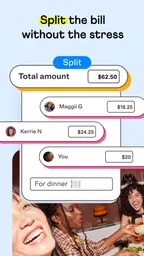
The app’s value comes from narrowing the job. When a group splits dinner, one person can cover the bill and the others can settle their portions afterward. The same pattern works for shared groceries, a ride, or a small household expense. Instead of letting a minor debt linger until someone remembers, you can address it at the moment it comes up.
That convenience matters most when the people involved already know one another. Venmo is not, in my view, a substitute for carefully checking who you are paying. A familiar name or a casual message should not make you rush through a money transfer. I treat the recipient and the amount as details worth checking before I commit, especially when several people in a group have similar names.
The app has been around since May 17, 2010, and its long-standing place in social payments is reflected in its reach: it has more than 50 million installs. It holds an average rating of 4.0 from around 928,000 ratings. Those figures suggest broad familiarity, but they do not guarantee that the experience will suit every person or every payment routine.
How a small shared expense becomes easier to settle
Imagine that I pick up takeout for a few friends. The awkward part usually is not the arithmetic; it is remembering who owes what and bringing it up later. A person-to-person payment app reduces that gap between paying the restaurant and settling with the group. I can ask for the relevant amount while the meal is still being discussed, rather than relying on a vague promise to pay me back.
For roommates, the same habit can help with recurring informal costs. If one person buys shared supplies, the group can settle that purchase separately instead of waiting for a larger monthly calculation. This approach is best for small, clearly understood amounts. For rent, utilities, or another important bill, I would still keep a clear record of what each person owes and when it is due rather than treating a casual payment history as the whole system.
A practical tip is to agree on the amount before sending or requesting money. A quick message such as “your share of the groceries” is more useful than a bare number, particularly when several purchases happen close together. Clear descriptions also help both sides recognize a payment later. I would not rely on a short note to replace a proper household budget, but it can prevent everyday reimbursements from becoming confusing.
Another useful habit is to settle each expense as its own event instead of combining unrelated costs. If a friend owes me for lunch and I owe them for tickets, it may be tempting to net the two amounts mentally. That can work between close friends, but it is easy to lose track. Separate, clearly described transactions make the exchange easier to review and reduce the chance that one person remembers a different total.
Where the social feel helps—and where it calls for care
Venmo’s identity is more casual than the image many people have of a traditional banking app. That can make an ordinary reimbursement feel less stiff, especially among friends who already use it. The social tone, however, is not the same thing as a safety feature. I would keep my attention on the recipient and payment details rather than assuming that a familiar-looking interaction is automatically correct.
Money and social habits can also mix in uncomfortable ways. Some people are happy to make small exchanges part of their everyday digital routine; others would rather keep financial activity strictly private and separate from social interaction. If that distinction matters to you, take time to review the app’s current settings and decide what you are comfortable sharing. I would not choose a payment app solely because its style seems friendly.
Before relying on any payment app for a time-sensitive expense, I would also establish what the other person actually uses. A convenient service is only convenient when both sides can complete the exchange in a way that works for them. If a friend prefers a bank transfer or another established method, insisting on Venmo can add an unnecessary step instead of removing friction.
The tradeoffs compared with a bank transfer or cash
Compared with cash, Venmo is useful when people are not together or when nobody has the right change. It can make a small repayment easier to remember and document. Cash still has a clear advantage for an immediate face-to-face exchange when both people want to finish the matter on the spot, without opening an app or checking a recipient.
Compared with sending money through a bank, the appeal is the informal, person-to-person feel. A bank transfer may be a better fit when you want to handle payments as part of your usual banking routine, or when the people involved already rely on the same bank’s tools. Venmo’s focused convenience does not automatically make it the best choice for larger obligations, formal arrangements, or exchanges with someone you do not know.
I would also avoid treating a quick transfer as a substitute for planning. An app can help you reimburse a friend, but it does not decide whether an expense fits your budget or remind everyone to contribute fairly. For shared household finances, a spreadsheet or dedicated budgeting routine may be more useful alongside a payment app. The payment handles the exchange; the group still needs to agree on the rules.
One tradeoff of any fast payment routine is that speed can encourage carelessness. A few seconds saved are not worth sending money to the wrong person or entering the wrong amount. My recommendation is to slow down for the final check, even if the rest of the interaction feels casual. For a substantial or consequential payment, I would use a method and process that provide the level of certainty the situation deserves.
Who is likely to get the most from it
Venmo is a strong candidate for people who regularly split everyday costs with friends or roommates and want a straightforward way to settle up. It is especially handy for groups that already communicate casually and can agree on amounts without turning every purchase into a formal accounting exercise. If you often end up covering small shared expenses, having a familiar payment routine can make it easier to ask for reimbursement promptly.
It is less suited to someone who rarely needs to pay other people, prefers to handle every transfer through a bank, or wants a broad personal-finance tool rather than a focused payment app. I would also hesitate to recommend it as the only method for a household that needs detailed tracking, formal deadlines, and a shared view of ongoing bills. In those cases, use a budgeting system for the planning and choose the payment method that all participants can use comfortably.
The app is free and rated for Everyone. Its current version is 26.26.0, and it supports devices running version 8.0 or later of its required operating system. Those details make it approachable for many users, but the best test is still whether the people you pay and get paid by are willing to use it.
Overall, I see Venmo as a practical answer to one familiar problem: small debts between people can be easy to forget and awkward to raise. Its strongest use is settling those costs while everyone remembers what they are for. With 365,000 reviews and a long history in this category, it is a well-established option, but popularity is not a reason to skip ordinary care. I would choose it for friendly, routine reimbursements, keep descriptions clear, check each recipient, and use a more structured approach whenever the money or agreement calls for one.
What we like
- Payments to friends are quick and easy to split.
- A social feed helps track shared payments.
- Bank transfers are available for moving funds.
- Users can pay eligible merchants with Venmo.
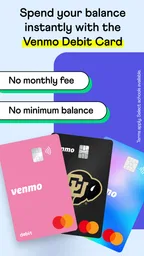
- A debit card offers access to the Venmo balance.
What could be better
- Some transfers and services may involve fees.
- The social feed can expose payment activity.
- Venmo is primarily available to users in the US.
- Bank transfers may take several business days.
- A Venmo account is required to send or receive payments.





