
USDT Mining, Crypto USDT Miner review
 Analysis by Appsdrops
I understand the appeal of an app that presents crypto mining as something you can try without putting money in upfront. USDT Mining, Crypto USDT Miner is an Events app from Crypto Cloud Farm, built around earning USDT through cloud mining. Its pitch is simple enough to catch your eye during a spare moment, but the useful question is what happens after the initial curiosity wears off. I’d approach it as a low-stakes experiment, not as dependable income or a substitute for a conventional event calendar.
What the first week can—and cannot—tell you
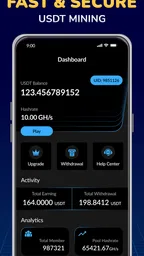
The first few sessions are likely to be the most compelling. You open the app, explore how it presents mining, and get a sense of whether its routine is easy to understand. That quick start can make USDT mining feel more approachable than researching wallets, exchanges, and mining infrastructure on your own. For someone curious about crypto but unwilling to commit funds immediately, that lower barrier is the main attraction.
The store summary describes the experience as requiring no investment, and the app is free to install. That makes it easier to test than a service that asks for money before you have even decided whether you like the process. Still, “free” should not be read as “no decisions to make”: the app offers in-app purchases priced from $14.99 to $69.99 per item. I would ignore those while learning the basic experience and never buy anything on the assumption that it will pay for itself.
A practical first-week approach is to check in only when you would naturally have a spare minute, rather than building your day around the app. Notice what actions the experience asks you to repeat, whether the explanation of USDT and mining makes sense to you, and whether you can easily tell what is an in-app balance versus money you can actually use elsewhere. Those distinctions matter more than the novelty of seeing a crypto-themed screen.
There is also a sensible boundary for a first test: don’t share sensitive wallet credentials or make a purchase just to “unlock” an outcome you have not evaluated. I treat any app-based earning claim as something to inspect carefully, not as proof of a guaranteed return. The app may suit a curious beginner who wants an accessible introduction, but a person expecting predictable cash from casual use should keep expectations firmly in check.
Who will enjoy trying it
I can see the appeal for people who already follow cryptocurrency and want a lightweight way to explore a cloud-mining concept. It may also interest someone who enjoys checking a small app routine as a minor hobby, provided the process itself is enjoyable even when the financial result is modest or uncertain. Its Everyone content rating makes it broadly accessible in age classification, though that does not make crypto decisions appropriate for every user.
It is less suitable if you need a reliable side income, want a professionally transparent investment product, or dislike apps that invite repeated engagement around small rewards. If your main goal is to learn how crypto works, a neutral educational resource may be a better starting point because it can explain wallets, fees, token risks, and custody without centering an earning loop. If your aim is simply to track real-world events, a conventional events calendar is the more direct tool; this app’s category does not change what its core activity is.
Why the habit matters more than the novelty
After the first week, the key test is whether opening the app still feels worthwhile when the newness fades. A recurring mining routine can become a habit, but repetition alone does not create value. I would ask whether each visit gives me something I can understand or use, or whether I am checking mainly because I hope a number has grown. That small distinction can prevent an entertaining experiment from quietly taking up more attention than it deserves.
For an everyday scenario, imagine checking it while waiting for a bus or during a short break. If the session is brief and you are comfortable treating it as a curiosity, that is a reasonable use. If you find yourself interrupting work, repeatedly reopening the app, or feeling pressure to spend to keep progress moving, the trade-off has changed. I would set a personal time limit before the habit forms and review after a week or two whether the app has earned even that small slot.
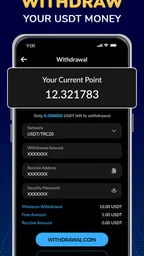
Crypto rewards also need a different kind of patience from points in a shopping or loyalty app. A balance displayed inside an app is not automatically equivalent to cash in a bank account. Before attaching value to it, check what the app says about how rewards are handled and what steps would be involved in using them. If those steps are confusing, that is a reason to pause rather than to assume that a displayed amount is readily withdrawable or guaranteed.
Month-to-month value and sensible comparisons
USDT Mining has a 4.2 average from around 2,600 ratings, with roughly 575 written reviews, and it has passed 500,000 installs. Those figures suggest that plenty of people have tried it, but they cannot tell me whether the app will suit your habits or whether its rewards meet your expectations. I would use other users’ comments as prompts for questions, not as a promise that your own experience will match theirs.
Compared with standard events apps, this is not the option I would choose to find concerts, appointments, or local activities: its appeal is crypto mining, not helping you plan a calendar. Compared with a crypto exchange, it appears aimed at a lighter, more casual experience rather than active buying and selling. And compared with a dedicated learning tool, it puts the earning idea in the foreground, so you may need to seek out independent explanations if you want to understand the wider risks and mechanics.
That difference shapes its lasting value. If you enjoy the mining routine for its own sake, a monthly check-in can help you decide whether it remains a harmless side interest. If the only reason to return is the expectation of meaningful earnings, the app has a much harder test to pass. I would not count on it for bills, savings, or any goal with a deadline; those call for reliable, predictable options rather than an app-based crypto experiment.
One useful way to judge it is to compare attention spent with value received. Keep a simple note of how often you open it and whether you learned anything or enjoyed the session. Do not focus only on the balance shown: include the time, any prompts to purchase, and how clear the process feels. If the routine stays easy and costs nothing, it may remain a small curiosity. If it starts demanding attention or money to feel rewarding, that is a good point to step away.
The maintenance burden and where fatigue sets in
The app’s current version is 28.0, and it runs on Android 8.0 or later. Those details are useful when deciding whether an older phone can install it, but they do not answer the more personal maintenance question: how much attention will you be willing to give it? Any routine that depends on repeatedly checking in can feel effortless at first and tiresome later, especially if the payoff is hard to interpret.
I would keep the app’s role deliberately small. Review its purchase options before tapping through any payment screen, and treat the listed range of $14.99 to $69.99 per item as a real spending decision rather than an optional shortcut. If you do not understand what a purchase changes, skip it. A no-investment starting point is most useful when you preserve that boundary instead of letting curiosity turn into an unplanned spend.
Fatigue can also come from uncertainty. When you cannot tell whether a routine is producing something meaningful, repeated checking becomes a poor substitute for clarity. If you notice yourself opening the app out of fear of missing a reward, or feeling that you must keep up to avoid losing progress, take a break and see whether you actually miss it. An app that fits well should be easy to leave alone without anxiety.
There are users for whom a different option is plainly better. Choose a well-explained educational resource if learning is your priority; choose a standard finance tool if you need clear records and dependable money management; choose a regular events app if you want help arranging activities. I would only keep this one in rotation if its crypto-mining theme itself interests you and you are comfortable with the limitations and uncertainties that come with app-based rewards.
Does it earn a lasting place?
My lasting verdict is cautious rather than dismissive. USDT Mining has a clear niche: it offers a free entry point for people curious about cloud mining, and its basic premise is easy to grasp. Developed by Crypto Cloud Farm, it is available to a broad audience and has attracted a substantial group of installers. Those are reasons to consider a short trial, not evidence that it will become a valuable monthly habit for everyone.
I would give it a week of low-pressure use, avoid purchases, and then ask whether I still enjoy opening it. If the answer is yes and the routine remains a small pastime, keeping it installed may make sense. If you are waiting for dependable income, dislike recurring check-ins, or cannot clearly assess what a reward means in practice, I would remove it and spend that time elsewhere.
In short, this app earns space through curiosity and habit, not through a promise I would build a budget around. The most sensible user is someone who wants to explore a crypto-themed activity without treating it as an investment plan. The people who should skip it are those who need certainty, want hands-off financial returns, or find that small reward loops quickly become a chore. I’d try it with clear limits, then let the experience—not the novelty—decide whether it stays.
What we like
- Simple controls make the mining process easy to understand.
- A beginner-friendly layout helps users find key features quickly.
- Short sessions suit casual use on a phone.
- The crypto theme may appeal to users curious about digital currencies.
- It can provide a low-pressure way to explore mining-style gameplay.
What could be better
- The app does not generate real USDT through phone mining.
- Any rewards may be limited to in-app points or simulated currency.
- USDT withdrawal claims should be checked carefully before use.
- Frequent ads can interrupt the experience.
- Crypto-themed apps may collect data users prefer to keep private.





