







Timeleft: Make New Friends IRL review
 Analysis by Appsdrops
I like the idea behind Timeleft: instead of trying to turn a stack of profile cards into a friendship, it gives you a reason to meet people in person. It is an events app built around sharing a meal, a drink, or coffee with people you do not already know. That makes it a very different proposition from a standard social network. The useful question is not whether it can make strangers instantly feel like friends, but whether its format gives you a comfortable, practical way to start a conversation.
My overall view is cautiously positive. The concept suits people who want to widen their social circle but find open-ended networking awkward. It also asks you to take a more direct step than browsing profiles: you need to be willing to attend and spend time with a small group. If you prefer to choose every interaction in advance, or want a purely online community, this is probably not the right fit.
Meeting people is the point, not the feed
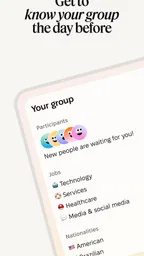
Developed by Timeleft, this free events app has a 4.3 average from around 12,000 ratings, with more than a million installs. Its focus is refreshingly specific: help people move from wanting to meet someone to actually sharing a table. I find that more useful than another app that encourages endless browsing without giving a conversation a natural starting point.
The format also changes what “matching” means. With a swipe-based app, you make repeated snap judgments from profiles and then have to keep a chat alive. Here, the shared event is the opening. You can talk about the meal, the place, or why each person decided to come. That does not guarantee chemistry, but it reduces the pressure to invent a clever first message.
It is best suited to someone who is curious, reasonably comfortable with unfamiliar company, and willing to make room in their schedule. People new to a city may appreciate having a structured reason to go out, while someone with a full social calendar may see it as a low-pressure way to meet people beyond their usual circles. If your priority is dating with tightly defined preferences, a dating app may offer more control over who you encounter.
Trust begins with the real-world step
There is a meaningful difference between browsing an event and showing up to meet strangers. The appeal of Timeleft depends on that offline step, so I would treat the decision to attend as more important than any polished description of the idea. Before committing, read the event details carefully and decide whether the format, timing, and location feel right for you. A social plan should feel manageable, not like an obligation you have to push through.
Trust here is partly about expectations. An organized group meal can make meeting people easier, but it cannot promise that everyone will share your interests or that the evening will turn into lasting friendships. I would approach the event as a chance for a pleasant conversation, not as a guaranteed social outcome. That mindset makes the experience less disappointing if the group is simply polite rather than instantly close.
The app is rated Teen, which is useful context for people checking its age suitability, but it should not be mistaken for a personal safety guarantee. Anyone arranging an in-person meeting should make their own sensible choices: be clear about where they are going, let someone they trust know their plans, and leave if the situation feels uncomfortable. Those precautions are relevant to meeting strangers through any service, not a claim about a particular feature in this app.
What to check before sharing information
Social apps can involve personal details, and events add another layer because your plans may reveal when and where you expect to be. I recommend pausing before entering anything you would not want associated with a social outing. Share what is needed to participate, but avoid adding sensitive details simply because a profile field or conversation makes them seem customary.
When installing an app, I also make a habit of reviewing the permissions requested by the phone and checking the available privacy and account options inside the app. Permissions can vary with the device and operating system, so I do not assume that every user sees the same prompts. If a permission is not needed for what you are trying to do, consider whether you are comfortable granting it; you can revisit relevant settings later through your device.
Likewise, I would look for the current privacy information and account controls in the app before sharing more than basic participation details. A clear understanding of what you are entering and what choices you have is more useful than guessing how a service handles information. If you are uncomfortable with the choices presented, it is reasonable to wait rather than sign up just because an event sounds appealing.
Make the event work for your schedule
A practical tip is to decide on your boundaries before choosing an outing. Think about how long you are willing to be out, what kind of venue you are comfortable with, and how you will get home. This small bit of planning helps because the social part can feel easier when the logistics are already settled. It also gives you a straightforward way to decline an event that does not fit your evening, rather than treating every available opportunity as something you should accept.
For a realistic use case, imagine you have moved for work and your weekdays are mostly spent with colleagues. You want to meet people outside the office, but messaging strangers after work feels like another task. An organized dinner can give you a defined occasion and a shared topic. I would choose a night when I am not rushed, arrive with a couple of easy questions in mind, and focus on learning about the people at the table rather than trying to impress everyone.
Another useful approach is to treat the first outing as a test of the format, not a verdict on your social life. If the conversation is uneven, that may reflect the mix of personalities on one night rather than the app’s whole value. On the other hand, if group dinners are tiring for you, repeating them is unlikely to become enjoyable just because the intention is good. Your energy and preferences matter as much as the concept.
Where it has limits compared with other options
Compared with local event listings, Timeleft is more personal: the goal is not simply to attend a public activity but to share a social occasion with people you do not know. That can be an advantage if you want a built-in conversation setting. A hobby group may be a better choice if you would rather meet people through a shared interest that gives you something to do together, such as a class or a club activity.
Compared with ordinary social or dating apps, the in-person format can reduce the time spent chatting without ever meeting. The trade-off is less control over the exact mix of people and less flexibility once you have committed to a plan. If you prefer to screen extensively before meeting, or need to keep plans spontaneous, a conventional app or a casual public event may suit you better.
There is also an emotional trade-off: a scheduled gathering can make the first move easier, but it cannot remove the uncertainty of meeting new people. Some evenings may feel lively; others may take effort. I would not choose this app expecting every event to produce close friends. I would choose it if the experience itself—getting out, talking, and encountering new perspectives—already sounds worthwhile.
Free to start, with purchases to consider
The app is free to download, and it includes in-app purchases priced from $19.99 to $62.99 per item. That range matters when deciding whether to explore it: downloading is one decision, while paying for anything is another. I would first understand what an event or purchase offers in the app and whether it suits my plans before spending. Do not assume that “free” means every part of participation is free; check the terms shown for the specific option you are considering.
For anyone wondering whether a payment is necessary, the sensible answer is to inspect the available choices in the app rather than infer a complete event price from the download being free. Costs can affect whether an outing feels worthwhile, especially if you are comparing it with meeting people through a free community activity. Set a budget you are comfortable with before selecting a purchase, and do not pay on the assumption that it will guarantee a particular social result.
The app is currently at version 6.25.0 and supports Android 7.0 and later. It was released on December 8, 2023, and carries a Teen age rating. These details help when checking whether it is compatible with a device and appropriate for the person using it; they do not change the more important question of whether you actually enjoy meeting unfamiliar people in a planned group setting.
Who I would recommend it to
I would recommend giving it a look if you are open to conversation, want a reason to leave the house, and find the idea of a shared meal less intimidating than approaching people at random. It is especially plausible for someone whose usual routine offers few chances to meet new faces. Going with realistic expectations, choosing an event that fits your schedule, and keeping your personal boundaries clear are the best ways to make the format feel manageable.
I would skip it if you strongly dislike group meals, need to know and approve every attendee beforehand, or are looking for an online-only way to socialize. It may also be a poor match if the cost of an outing is a concern and the available purchase terms do not fit your budget. In those situations, free community gatherings, interest-based groups, or one-to-one messaging may give you more control.
My cautious verdict is that Timeleft is worth considering when you want the app to help you take a concrete social step, not when you expect it to do the work of friendship for you. Its event-centered approach offers a useful alternative to swiping and open-ended chats, while still asking you to show up, make conversation, and accept some uncertainty. Check the choices and costs before committing, protect your comfort and privacy, and judge the experience by whether the evening feels worthwhile—not by whether every stranger becomes a friend.
What we like
- The quiz helps match people with similar interests and social styles.
- Small group dinners can make meeting new people feel less intimidating.
- The app handles dinner arrangements so guests can focus on conversation.
- Events offer a clear way to meet people beyond existing social circles.
- Post-dinner plans can help keep promising new connections going.
What could be better
- Events may be limited in smaller cities or less active areas.
- Dinner availability depends on compatible group bookings.
- Matching cannot guarantee that every guest will click in person.
- Venue choices and meal costs may vary by location.
- Users may need to share personal details to join an event.





