






The Pour Over review
 Analysis by Appsdrops
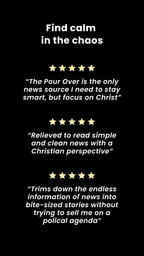
I like The Pour Over best when I treat it as a calm starting point for the news, not as the only place I go to understand a complicated story. Its Christian perspective and stated aim of political neutrality give it a distinct editorial identity, while its compact, digestible approach suits readers who want a regular briefing without falling into an endless scroll. That combination is appealing, but it also calls for a little care: a clear point of view can help frame coverage, yet no single news app should be mistaken for a complete picture.
A focused way into the day’s headlines
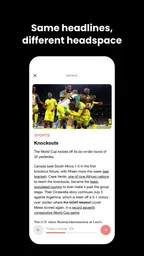
The Pour Over is a free news and magazines app from The Pour Over. In practice, its appeal is less about replacing every newspaper or broadcaster and more about making it easier to check in with current events. I would use it during breakfast, on a commute, or in a short break when I want a guided overview rather than a feed that keeps offering more to read.
The app’s Christian-first approach is central to how it distinguishes itself. That does not automatically make it the right fit for every Christian reader, nor does a claim of political neutrality mean that every choice of story or framing will feel neutral to every person. I see the value in knowing the lens behind a news product: it lets me decide whether that perspective complements the reporting I already follow.
That distinction matters because people often use “neutral” to mean different things. Some want reporting that avoids partisan language; others want a range of viewpoints placed side by side, or a strict separation between reporting and commentary. I would approach The Pour Over as one editorial voice with a recognizable faith orientation, then compare consequential stories with other reputable sources when I need a fuller account.
Why its editorial identity is a strength
A defined perspective can make a briefing feel coherent rather than like a random stack of headlines. The Pour Over’s combination of faith orientation and news coverage gives readers a reason to choose it over a generic aggregator. For someone who wants current events presented in a way that sits comfortably alongside Christian values, that identity may make the habit of keeping up with news feel more approachable.
At the same time, I would not confuse a reassuring tone with a substitute for depth. A concise briefing is useful for learning what deserves attention, but a short account cannot always capture the history, disagreements, or local consequences behind a complicated issue. My practical approach would be to use the app to spot a subject worth following, then read more widely before forming a firm opinion.
That workflow is especially useful when a headline is emotionally charged. I can first get oriented, note what seems important, and resist the impulse to react to a single post or a dramatic notification elsewhere. If a story affects my community, work, or vote, I would then seek reporting with more detail and compare how different outlets describe the same events.
What the app is good for in everyday use
Imagine checking the news before leaving home. You have a few minutes, do not want to open several publications, and would rather not get pulled into a stream of updates. A focused briefing can give that check-in a useful shape: learn what is happening, identify the story that matters most to you, and decide whether it deserves a longer read later.
One non-obvious benefit of that routine is that it can help separate awareness from constant monitoring. I do not need to refresh a news feed all day to stay informed about a broad range of events. A planned check-in with a concise source, followed by deeper reading only when a story calls for it, can be a healthier way to handle news than letting every developing headline interrupt the day.
I would also use it as a conversation prompt rather than as a final authority. If a headline raises a question at dinner or in a group chat, I can use the briefing to identify the topic, then verify the details from fuller coverage before repeating a claim. That small pause is worthwhile: short summaries are convenient, but the very compression that saves time can leave out qualifications.
The app has a 4.9 average from around 536 ratings, with over 10,000 installs. That suggests it has found an audience, though ratings alone cannot tell me whether its editorial voice or level of detail will suit a particular reader. I would weigh those signals less heavily than the question of whether its faith-centered approach matches what I want from a news routine.
The trade-off: perspective and breadth
The clearest limitation is also tied to the app’s identity. Readers who want a strictly secular source, a broad international wire-style feed, or an explicit range of competing political arguments may find this a narrow starting point. Even readers who appreciate Christian framing may want more granular coverage than a digest can provide, particularly for fast-moving stories or subjects where local context changes the meaning.
There is also a judgment call in relying on any publication that describes itself as politically neutral. Neutrality is not something a reader can assess from a label alone; it is something to evaluate through story selection, wording, corrections, and the treatment of disagreement. I would give The Pour Over a fair trial while keeping a second, differently oriented news source in my routine. That is not a knock against the app so much as a sensible safeguard for anyone who cares about being well informed.
Compared with a general news aggregator, The Pour Over offers a more defined editorial identity rather than simply putting many sources into one stream. Compared with reading a newspaper directly, it is better suited to a quick orientation than to sustained reporting. If I already have a favorite publication and want its full articles, this app is unlikely to replace that habit; if my main problem is knowing where to begin, its focused approach is more compelling.
Readers should also be clear about what “free” means here. The app is free to download, while in-app purchases range from $8.99 to $199.99 per item. That is a wide span, so I would check the purchase details in the app store before committing to anything. Someone who only wants to try the basic news experience should distinguish that from optional purchases rather than assume every part of the app has the same cost arrangement.
Who should give it a try
I would recommend The Pour Over to Christians who want a regular news check-in shaped by a faith-conscious editorial identity, and to readers who find conventional news feeds too sprawling. It may also suit someone who is rebuilding a news habit after feeling overwhelmed: a focused source can make it easier to begin with a manageable amount of information rather than trying to catch up on everything at once.
I would be more cautious about recommending it as a sole source to students, researchers, or anyone tracking a complex policy issue. Those readers need to see primary documents, expert analysis, local reporting, and disagreement in context. The app can still be a useful entry point, but it should sit beside sources that offer greater depth or a different perspective.
It is also not my first choice for someone who wants breaking updates every few minutes, comprehensive coverage of a particular region, or a feed tailored to many specialized interests. A dedicated publication or a multi-source aggregator may serve those needs better. Choosing a news app is partly about matching its editorial scope to the job: a digest can make the daily overview easier, but it cannot be all things to every reader.
The Pour Over is rated for Everyone 10+, which makes it broadly accessible to families, though I would still talk through serious news with younger readers rather than assume every topic will be easy to process. News can involve distressing events even when an app is designed for a general audience. For parents, the more useful question is whether the app’s approach provides a good opening for discussion at home.
Practical details and my verdict
The current version is 7.2.11, and it supports Android 7.0 and later. That makes it worth checking against an older phone before downloading, particularly if the device has not been updated in some time. The release date is July 15, 2026. I would also keep the version in mind when comparing advice from older user discussions, since app behavior and presentation can change as software is updated.
What I value most is the clear role The Pour Over can play: it can help me begin the day informed without asking me to spend the morning inside a news feed. What I would not ask it to do is settle every debate, supply every detail, or prove its own neutrality simply by declaring an editorial intention. Its usefulness depends on treating it as a thoughtful first stop and keeping deeper reporting within reach.
My recommendation is to try The Pour Over if you want a concise, Christian-oriented way to check in on current events and are comfortable pairing it with other sources when a story matters. Skip it if you need exhaustive coverage, a deliberately multi-perspective platform, or a purely secular editorial voice. For the right reader, it offers a more intentional alternative to casual headline scrolling; for everyone else, the same focus may feel too limited. That is a fair trade-off, and one I would make only if its point of view genuinely fits my own news habits.
What we like
- Offers concise summaries for readers short on time
- Provides context to help explain why a story matters
- Uses a calm tone that avoids sensationalism
- Covers a range of current events in one place
- Makes daily news reading feel manageable
What could be better
- Its brief coverage may omit important details
- Readers seeking deep analysis may need other sources
- The selection of stories may not match every reader’s interests
- A daily format may feel limiting for breaking news
- Some viewpoints may not reflect the full range of perspectives





