




Super.com-Cash Advance, Travel review
 Analysis by Appsdrops
I would consider Super.com when I want one finance app to connect everyday saving with travel planning and the possibility of a cash advance. That mix is its distinctive idea, but it also makes the decision less straightforward than choosing a dedicated budgeting tool or a travel-only service. In my view, it makes the most sense for someone who will actually use more than one part of the app and is comfortable checking the terms of each financial product before relying on it.
What to weigh before making it your everyday finance app
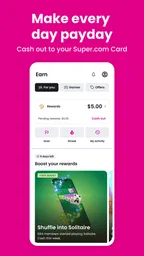
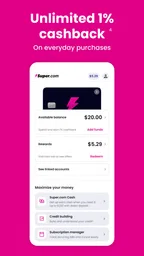
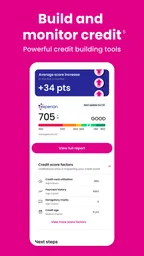
Super.com is a free finance app from Super, the company previously known as SnapTravel. Its focus reaches beyond tracking money: it brings saving, earning, travel, and access to a payday cash advance together. That breadth can be useful, but it does not automatically make it a replacement for a bank account, a detailed budget, or a travel comparison habit. I would decide based on which of those needs I genuinely have, rather than on the appeal of having everything in one place.
The app has a 4.5 average from around 34,000 ratings, with roughly 7,800 written reviews and over a million installs. Those figures suggest that many people have tried it, but they cannot tell me whether a particular offer or advance will suit my circumstances. For a finance product, I would treat the rating as a reason to investigate further, not as a substitute for reading the terms shown in the app.
There are practical checks I would make early. First, I would identify which feature I expect to use most: travel, saving and earning, or a cash advance. Then I would see what the app presents for that use and whether the conditions work for me. A tool that is convenient for occasional travel planning may be less compelling if I mainly need a clear monthly spending overview. Likewise, an advance is a short-term option to assess carefully, not extra income to build into a normal budget.
A bundle is useful only when its parts serve a real routine
Many finance apps concentrate on one job. A budgeting app may make spending easier to review; a bank app may be where someone manages their regular money; and a travel service may help with trip planning. Super.com takes a broader approach by placing several money-related needs under one roof. The potential advantage is fewer separate places to check when travel and cash-flow needs overlap. The trade-off is that users may need to learn several distinct features rather than master one focused tool.
I would not assume that “save” or “earn” means a particular outcome without checking the options available to me. The useful question is what the app actually offers in my situation, what conditions apply, and whether the benefit is worth the effort involved. That careful approach matters especially when comparing a bundled app with a familiar savings account or a straightforward budgeting routine. Convenience is valuable, but it should not obscure the details that determine whether a financial choice works.
Where Super.com can earn a place on your phone
The strongest case for Super.com is for someone whose financial decisions naturally cross between travel and short-term money management. Imagine I am planning a trip while trying to keep an eye on a tight month. I could use the app to explore its travel and saving-related features, then consider whether a cash advance is appropriate if an unexpected expense creates a temporary gap. The benefit is having those needs connected in one app; the sensible boundary is to evaluate each choice separately instead of treating the bundle as one all-purpose solution.
That workflow is more useful when I plan ahead. I would look at travel options before I am under pressure to book, compare what the app presents with the alternatives I normally use, and make a note of any conditions that affect the overall value. If I later consider an advance, I would review the repayment terms and the amount I would owe before deciding. This order helps prevent a travel decision and a borrowing decision from blending into one rushed choice.
Another practical use is as a place to explore options rather than as the sole authority on my finances. I can use a finance app to discover a possibility, then judge it against my budget and existing accounts. In particular, an advance may address an immediate timing problem, but borrowing can make the next payday tighter. I would only consider it for a specific need with a realistic repayment plan, not for recurring spending or a purchase I could postpone.
The app is free to download, which lowers the barrier to trying it. That does not mean every product or transaction within it should be assumed to be cost-free. I would distinguish the price of installing an app from the terms of any financial service it offers. For travel, I would compare the full booking details and conditions with other options; for an advance, I would check the full repayment obligation. That simple separation is one of the most useful habits when using a multi-purpose finance app.
Super.com is marked for Everyone, and its current version is 14.11.10, with a minimum operating-system requirement of 10. Those details help with basic suitability and device compatibility, but they do not determine whether its financial features fit a person’s needs. I would still judge it by the screens and terms available to me and by how comfortably it fits my existing routine.
Where a more focused alternative may fit better
If my main goal is to understand where every dollar goes, I would lean toward a dedicated budgeting approach. A purpose-built budget can keep attention on categories, recurring bills, and spending habits without asking me to navigate travel or cash-advance options as well. Super.com may still be worth exploring, but I would not choose it solely because it has finance features if detailed expense tracking is the need that matters most.
If I already have a bank or savings provider that I trust and use regularly, there may be little reason to move my core money routine into another app. In that case, Super.com could be an occasional companion for travel-related exploration or a specific feature, rather than the place I depend on for day-to-day financial oversight. Keeping established accounts in place can also make it easier to compare an offer with the arrangements I already understand.
For travel, a dedicated travel search or booking service may be a better fit if I want to compare a broad range of choices in a workflow designed only for trips. I would use Super.com when its travel tools are convenient for the trip I have in mind, then compare the final terms before committing. The app’s combined approach is not automatically a reason to stop using other travel tools, especially when a particular itinerary, preference, or booking condition matters more than convenience.
The cash-advance feature also has a clear limit as a solution. It is not the right answer if I need a lasting fix for bills that routinely exceed income. In that situation, I would prefer to review the budget, contact relevant providers about payment options, or seek a more sustainable form of financial guidance. A payday advance may help with a one-off timing issue, but depending on repeated borrowing can leave the same problem waiting at the next payday.
Switching is less about downloading than changing habits
Trying the app is a small step; making it part of a financial routine is a bigger one. Before I rely on it, I would decide what role it has alongside my bank, budget, and existing travel habits. If it is only for occasional use, I can keep that role narrow. If I intend to use several features, I would make time to understand each one and keep a separate record of important dates or obligations rather than assuming the app’s convenience removes the need to stay organized.
I would also avoid changing several financial habits at once. For example, I would not move my entire money routine just because a travel feature looks handy. I would first try the part that solves a current need, compare the outcome with my usual option, and keep what genuinely improves the process. That approach makes it easier to notice whether the app saves effort or simply adds another account and set of terms to monitor.
For anyone considering an advance, the switching question is especially important: does the feature solve an exceptional gap, or is it becoming a routine bridge between paydays? I would write down the repayment amount and timing before accepting anything and check whether essential expenses remain covered afterward. If the plan only works by taking another advance later, I would treat that as a warning to choose another route.
My recommendation depends on what you will actually use
I would recommend Super.com to someone who wants to explore a mix of travel, saving, earning, and short-term cash-flow tools in one free finance app, and who is willing to assess each option on its own terms. Its broad scope is its main draw. The app may be especially convenient when travel planning and money decisions happen together, rather than in entirely separate parts of a person’s life.
I would be more cautious if I wanted a specialist budgeting tool, a single trusted place for everyday banking, or a long-term answer to recurring cash shortages. In those cases, a focused alternative may be easier to understand and maintain. I would also avoid treating an advance as harmless simply because it is offered inside a broader app; the repayment commitment deserves the same attention as any other borrowing choice.
Overall, I see Super.com as a useful option to evaluate, not a universal replacement for the financial tools someone already uses. Its free entry point and combined focus make it worth a look for people with overlapping travel and money needs. My advice is to start with one concrete goal, compare the terms against your usual alternative, and keep only the features that make your decisions clearer or more convenient.
What we like
- Cash advances can help cover an unexpected short-term expense.
- The app combines cash advances with travel booking features.
- Eligible users can check offers through a mobile account.
- Travel deals may suit users who want to compare trip options.
- A single app can reduce the need to manage separate services.
What could be better
- Cash advances may include fees or other borrowing costs.
- Advance amounts and eligibility depend on the user's account.
- Repayment can strain a tight budget if funds are not available.
- Travel prices and availability can change before booking.
- Some features may require sharing personal or financial information.





