





SoFi: Bank, Investing & Crypto review
 Analysis by Appsdrops
I tend to judge a finance app less by how impressive it looks on the first day and more by whether it still helps when an ordinary month gets messy. SoFi: Bank, Investing & Crypto makes a useful first impression as a personal-finance app built around guidance, but its lasting value depends on whether you want one place to explore several money topics or a focused tool for a single task. I’d approach it as a financial companion, not as a substitute for careful decisions or a complete plan tailored to your circumstances.
From a promising first week to a useful routine
SoFi is a free finance app from Social Finance, LLC. The app’s current framing includes SoFi Coach, an AI-powered guide for personal finance. That gives a new user a clear place to begin: bring a question or a money goal, then use the conversation as a way to organize what to look into next. I find that more approachable than opening a conventional budgeting tool and immediately facing a grid of categories and figures.
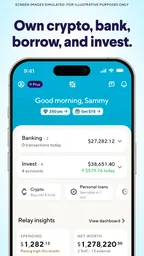
In the first week, the biggest draw is likely the breadth implied by its name: banking, investing, and crypto sit under the same app identity. That can make it easier to start exploring without deciding in advance that you need a dedicated investing platform or a specialist crypto app. The trade-off is that breadth can make the experience feel less focused. If you only want a simple place to monitor spending, the range of financial topics may be more than you need.
I’d use the Coach as a starting point for questions that are easy to postpone: how to think about a savings goal, which financial habit to tackle first, or what to review before making a decision. The useful move is to turn any advice into a small action you can verify yourself, such as checking a recurring bill or writing down a target amount. AI guidance is most valuable as a prompt for clearer thinking, not as an automatic decision-maker. For consequential choices, I would still check the relevant terms and consider whether professional advice is appropriate.
A realistic first-week scenario might be someone who has just received a paycheck and wants to stop letting the whole balance blur together. They could use the app to frame a question about priorities, then decide on a concrete next step, such as setting aside money before discretionary spending. The benefit is not that the app magically knows every detail of that person’s life; it is that a guided prompt can make an otherwise vague intention easier to act on.
It helps to set expectations before connecting a finance routine to any app. I would first decide what I want SoFi to do for me: provide a place to explore financial topics, support a broader account routine, or make investing and crypto easier to consider alongside banking. Without that choice, it is easy to browse features without building a habit. A single initial goal gives the app a fairer test than trying to use every area at once.
What can keep it relevant after the novelty
For month-to-month value, a financial app needs to return something useful at the moment a decision comes up. SoFi’s combination of finance topics and a coach-style guide may suit people whose needs change over time: one month they may be thinking about saving, another about investing, and later about how to approach crypto. Keeping those interests in one app can reduce the effort of switching between separate products, provided the user actually wants that range.
My practical tip is to revisit one goal on a regular schedule rather than opening the app whenever anxiety about money strikes. For example, a short monthly check-in could be used to ask whether the goal still makes sense, identify a decision that needs attention, and note what should be researched before acting. This workflow gives the app a recurring role without turning financial management into a daily chore. It also helps separate useful guidance from endless browsing.
SoFi has a 3.8 average from around 54,000 ratings, with roughly 22,000 written reviews. It has been installed over 5 million times, which suggests that it has reached a substantial audience, but those figures do not tell me whether it fits a particular person’s habits. I’d treat the rating as a reason to read recent user feedback for issues relevant to my own needs, not as a promise that every part of the experience will feel smooth.
The app is rated Everyone, and it is free to install. That lowers the barrier to trying it, but “free” should not be confused with a reason to open accounts or make financial moves without comparing the details. Before acting on anything involving a financial product, I would review its terms in the app and decide whether it suits my situation. The app’s convenience is a starting point for research, not a replacement for it.
Keeping the app useful without creating extra work
Maintenance is where many finance apps lose me. If I have to constantly categorize transactions, update goals, or check multiple screens just to preserve a tidy picture, I stop keeping up. With SoFi, I would keep the routine deliberately light: choose a small number of priorities, revisit them periodically, and avoid treating every prompt as a task. That approach is especially sensible when an app covers several areas of money management, because trying to monitor all of them can become a job of its own.
One non-obvious trade-off of an all-in-one finance app is that convenience can make it tempting to consolidate before you know what you need. I would first use it to understand which parts are genuinely helpful, then decide whether it deserves a deeper role in my routine. Someone who already has a reliable bank app, a preferred brokerage, and a separate crypto service may gain little by adding another place to check unless the combined experience solves a real annoyance.
Another useful habit is to keep a personal note of questions that need an answer beyond the app’s guidance. If the Coach helps you identify a decision but you still need to compare options, write down the specific facts to verify. That prevents a confident-sounding response from becoming the only input. It also makes the tool more useful over time: each visit can move a real decision forward instead of restarting a broad conversation from scratch.
The app is currently version 3.121.0 and requires Android 8.0 or later. Software changes, so I would keep it updated through the app store and check that my device meets the requirement before relying on it. Those basics matter more for a finance app than for a casual game: an outdated or incompatible setup can interrupt a routine at the moment I want to review something important.
Where fatigue can creep in
The main source of fatigue is likely to be choice overload. Banking, investing, and crypto involve different goals, risks, and time horizons. Seeing them gathered together can feel convenient, but it does not make them interchangeable. A user who is trying to build a basic savings habit may find investment and crypto content distracting, while someone focused on a particular investing workflow may prefer a specialist service with a narrower interface.
There is also a natural limit to AI-led guidance. A coach can help make a question more concrete, but personal finance often depends on context: income stability, obligations, timing, and comfort with risk. I would not treat a generated answer as a personalized financial plan simply because it sounds direct. If a recommendation feels too broad, ask a more specific question, verify the underlying details, and pause before making an irreversible or high-stakes choice.
People who want strict budgeting controls, detailed expense categorization, or a highly specialized trading experience should compare alternatives in those exact areas before settling on SoFi. A conventional budgeting app may be better when the central problem is tracking every household expense. A dedicated brokerage may be preferable for someone who already knows their investing approach and wants tools tailored to that activity. The best choice depends on the task, not on how many topics one app can cover.
Another point to consider is habit fit. Some people prefer to manage money through a desktop dashboard or a spreadsheet they control; others want a phone-based guide they can consult in short sessions. SoFi is more compelling for the latter kind of routine. If I know I dislike checking finance apps, adding one more app is unlikely to solve the underlying issue. In that case, a simple calendar reminder or a less frequent review may be more sustainable than chasing a feature-rich setup.
Who I’d recommend it to over the long run
I’d recommend SoFi to someone who wants a broad finance app and finds guided prompts more approachable than figuring out every next step alone. It may also suit a person who is curious about banking, investing, and crypto and wants to explore those subjects in one place, while remaining willing to compare details before committing. The lasting benefit is the possibility of returning to a familiar starting point as financial questions change, rather than downloading a new tool for every new interest.
I’d be more cautious about recommending it to someone who expects an AI coach to make decisions for them, or who needs a narrowly specialized tool with a particular workflow. It is also not the right fit for anyone who would find a broad menu of financial subjects distracting. In those cases, a single-purpose budget tracker, a trusted existing bank app, or a specialist investment service may create less friction and make it easier to stick to one clear routine.
Overall, I think SoFi: Bank, Investing & Crypto can earn lasting space if you give it a defined job and return to it for real decisions, not just curiosity. Its free entry point and Coach-style guidance make it approachable, while its wide scope asks the user to set boundaries and verify important details. I would try it with one practical goal, review whether it still helps after the first few weeks, and keep it only if it genuinely reduces effort or improves the quality of my financial routine.
What we like
- Offers banking and investing tools in one app
- Includes automated investing options for hands-off users
- Provides access to financial education resources
- Supports direct deposit and bill payments
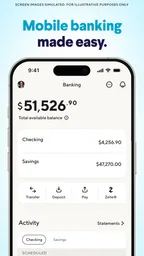
- Shows account activity and balances in one dashboard
What could be better
- Some features may require a SoFi account
- Investment products can involve fees or market risk
- Crypto availability may vary by location
- Customer support options may depend on the issue
- Not every financial service is available in every state





