


Simply Sing: My Singing App review
 Analysis by Appsdrops
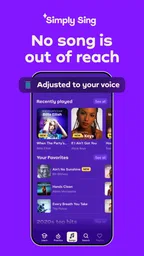
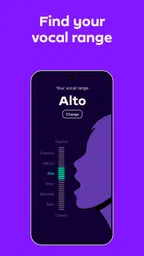
I’d consider Simply Sing when the part of singing that gets in your way is finding a comfortable key. Many songs sit too high or too low for a particular voice, and forcing them can turn a fun sing-along into a struggle. This music and audio app, developed by Simply Ltd, is built around making songs easier to sing in a range that suits you. That focus makes it more specific than a general music player or karaoke app, and it is the first thing I would weigh before installing it.
Decide what you want from a singing app
The useful question is not simply whether you enjoy singing. It is whether you want help adapting songs to your voice. If you are choosing between a standard karaoke experience, a vocal-training tool, and a way to make familiar songs feel more manageable, Simply Sing is aimed at that last need. It is best approached as a companion for singing along, rather than a complete replacement for music streaming or formal vocal lessons.
In practice, that distinction matters. Someone who already knows a song but hesitates when the melody climbs may get more from a comfortable-key approach than from lyrics on a screen alone. A beginner who feels unsure about reaching notes can also benefit from a lower-pressure way to try singing. On the other hand, if your main goal is to record polished performances, study vocal technique in depth, or browse a broad music library, you may want a different kind of app.
The app has a 4.5 average from around 293,000 ratings, and it has passed 10 million installs. Those figures suggest that it has found a substantial audience, but they do not tell you whether its particular approach suits your voice. I would treat them as reassurance that this is an established choice, not as a reason to expect every song or singing style to work equally well for you.
A better fit for practice than performance production
I see the strongest use case as casual, repeatable practice. You might use it to get comfortable singing a chorus, test whether a song feels better in a different range, or build confidence before joining friends for karaoke. That is a more attainable goal than expecting an app to turn an untrained singer into a polished performer. The value is in making it easier to participate and experiment, not in promising a particular level of vocal improvement.
One useful habit is to judge a song by how your voice feels through the whole phrase, not just whether you can reach its highest note once. If you strain, lose control, or have to push to keep up, a more comfortable setting is likely the better choice. That small change in how you assess a song can make practice more sustainable and helps avoid treating every difficult note as a personal failure.
Where Simply Sing stands out
The app’s central advantage is its attention to vocal range. Ordinary karaoke often presents a song in its familiar form and expects the singer to adapt. Simply Sing reverses that emphasis: the song should be more approachable for the person singing it. For anyone who regularly finds popular songs pitched awkwardly, that is a practical difference rather than a cosmetic one.
It can also make everyday singing feel less like a performance test. Imagine having a few minutes at home after work and wanting to sing a favorite song without worrying that the chorus will sit beyond your comfortable range. A tool designed around making songs more singable may help you start, keep going, and try again. That is especially useful if you tend to abandon songs after one difficult section.
For a more thoughtful practice session, I would pick one song rather than jumping between several, sing it at a comfortable setting, and notice which phrases still feel awkward. Repeating the same section gives you a clearer sense of whether the issue is pitch, breath, or simply unfamiliarity. This is a practical way to get more out of the app without treating it as a formal coach or assuming that changing a song’s range automatically fixes every singing challenge.
The trade-off is that a comfortable key does not remove every difficulty. Rhythm, breath control, pronunciation, and musical phrasing still take attention. If a song feels hard because its timing is quick or its lyrics are unfamiliar, adjusting pitch may not solve the problem. I would use the app to reduce one common barrier, not expect it to make every track effortless.
Where other kinds of apps may be better
Compared with conventional karaoke apps, Simply Sing is more compelling when pitch comfort is the issue. A traditional karaoke setup may be a better fit if you mainly want a familiar sing-along format, a social performance atmosphere, or features centered on recording and sharing. Those are different priorities, and the right choice depends on whether you want to sing comfortably or produce a performance others can hear.
A music-streaming app is a more natural alternative if listening is your main activity. Streaming services are generally chosen for discovering and playing music; a singing-focused app makes sense when you want to take an active part in the song. You may still prefer to keep both kinds of apps: one for listening throughout the day and one for occasional singing practice.
For structured vocal study, a dedicated lesson or training app may be more suitable. Changing the challenge of a song can help you sing along, but it is not the same as receiving detailed instruction on technique. If your aim is to work on breath support, vocal health, or a specific skill, look for a tool whose main purpose is teaching those topics. Likewise, singers preparing for a performance may need more control and rehearsal tools than a casual singing companion provides.
What to expect from the everyday experience
For a quick session, I would open it with a particular song in mind and treat the first attempt as a test, not a verdict on my voice. If the song feels uncomfortable, try a more suitable range before deciding it is beyond your ability. If the melody feels fine but the words are the problem, slow down mentally and focus on a short phrase at a time. Separating those challenges makes it easier to tell whether the app is helping with the issue you actually have.
It is also worth choosing songs you already know. Familiarity reduces the effort spent remembering lyrics and melody, leaving more attention for how the notes feel. Once a song becomes comfortable, you can use a less familiar one to see whether the same approach works for you. That progression is more useful than immediately testing yourself with the hardest song in your playlist.
People often wonder whether an app like this is suitable for someone who does not consider themselves a singer. I think that is exactly when a low-pressure, range-conscious approach can be appealing: you can use it for enjoyment and practice without making singing a public performance. But if you want a system that evaluates your technique in detail or gives a structured course, this should not be your only resource.
Another practical question is whether it is free to try. Simply Sing is free to download, with in-app purchases ranging from $6.99 to $89.99 per item. I would check the purchase details in the app before committing to anything and decide whether the experience is useful enough for your habits. Casual users who only sing now and then should be especially clear about what they want from any optional spending.
The app is rated for Everyone, which makes its basic audience broad, though a parent should still make their own decision about a child’s use and any purchases. It runs on Android 8.0 or later. The current version is 2.12.1, so device compatibility is worth checking before you install it, particularly if you use an older phone or tablet.
The cost of switching and trying it out
If you already use karaoke software, the main cost of switching is not learning an entirely new musical habit; it is deciding whether its range-focused approach solves a problem your current setup leaves untouched. Try a song you have repeatedly struggled to sing in its usual form. If making it more comfortable changes the experience, the app has a clear role alongside your existing tools. If the difficulty remains because of rhythm, lyrics, or technique, switching may not help much.
You do not necessarily need to replace a familiar music app. Think of Simply Sing as a specialist rather than an all-purpose library: keep your usual player for listening, and use this when you want to sing. That division avoids expecting one app to do two different jobs and makes it easier to judge whether the singing-focused experience earns a place on your device.
Simply Ltd has released it as a free app, and it has been available since January 11, 2024. The public response is substantial, with around 12,000 written reviews in addition to its ratings. I would still make my decision based on a short personal trial: choose a song you like, pay attention to comfort rather than perfection, and see whether you are more willing to keep singing than you were before.
My recommendation
Simply Sing is worth considering if awkward song ranges are the reason you hold back from singing. Its purpose is focused, and that focus gives it a useful place between ordinary karaoke and more formal vocal instruction. I would recommend it to casual singers, beginners, and anyone who wants a song to feel more approachable without turning a relaxed hobby into a demanding lesson.
I would skip it as a primary choice if you mostly want music discovery, detailed vocal coaching, or tools for producing and sharing finished performances. Those needs call for different categories of app. For everyone else, the sensible test is simple: try a familiar song, notice whether the comfortable range makes you want to continue, and decide whether that improvement is worth keeping the app in your routine.
Simply Sing is most convincing when it helps you sing more freely, not when you expect it to solve every musical challenge. If a friend told me they avoid singing because favorite songs never seem to fit their voice, I would suggest giving it a try. If they were looking for a full music service or a substitute for lessons, I would point them elsewhere.
What we like
- A gentle pitch guide helps beginners match notes.
- Short sessions make practice easy to fit into a busy day.
- Song choices can make vocal exercises feel more engaging.
- Progress feedback can help singers notice pitch improvements.
- The interface is approachable for users without music training.
What could be better
- Some songs and features may require a subscription.
- The catalog may not include every singer's preferred music.
- Pitch feedback can vary with microphone quality and background noise.
- Practice exercises may feel repetitive over time.
- The app may offer limited value to experienced vocalists seeking advanced coaching.





