



YouTube Music review
 Analysis by Appsdrops
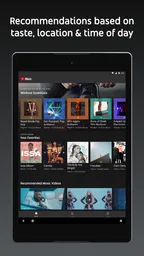
I find YouTube Music most convincing when I treat it as a discovery tool first and a music library second. It can make familiar listening feel less repetitive by drawing on the huge variety of music and music-related material associated with YouTube, but that breadth also means the experience can feel less tidy than a service built around a carefully curated catalogue. If you want a quick route from a known song to new listening, it is an easy app to recommend. If you want strict control over a polished collection, its looser, video-connected character may take getting used to.
Discovery is the app’s strongest argument
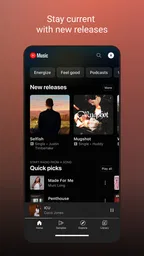
As a music and audio app from Google LLC, YouTube Music has a distinct advantage over services that mainly present standard album and track releases: its identity is closely tied to YouTube’s broad musical ecosystem. That makes it particularly appealing when a song is hard to pin down, when you want to follow a particular performer’s work beyond familiar releases, or when the mood matters more than a precise playlist plan.
The practical benefit is not simply having lots of music to browse. It is the way one listening choice can lead somewhere unexpected: a familiar track can prompt an exploration of related performances, alternate versions, or other material connected to the artist. I find that useful when I have a vague idea of what I want but no patience to assemble a queue from scratch. The app can be more rewarding in that moment than a service that expects me to arrive with an album or carefully defined playlist in mind.
That discovery-first approach suits everyday listening. Imagine getting ready in the morning and starting with one song you already know. Rather than stopping to search for a full album, you can keep moving through music that fits the same general direction. For a walk, a household task, or a low-key evening, that reduces the small decisions that can make music browsing feel like work.
The real strength is the short path from a specific song to a broader listening session. I would not call that a substitute for thoughtful curation; it is a different kind of convenience. The app is at its best when you want to explore and let the next choice emerge, rather than when you need every track to be exactly planned.
Where its breadth helps—and where it asks for judgment
The same openness that makes discovery interesting can make results feel uneven. A search for a song or artist may lead into a mix of material that does not all serve the same purpose. If you are looking for a clean, album-focused listening session, you may need to pay closer attention to what you select instead of assuming every result belongs to a single, consistent release experience.
That is a meaningful trade-off, not a deal-breaker. I would use YouTube Music when I am curious, but I would be more deliberate when I am building a queue for a long drive, a workout, or a setting where interruptions and mismatched selections would be frustrating. Starting with a particular track or a playlist you trust is a sensible way to keep the app’s wide-ranging character from taking over.
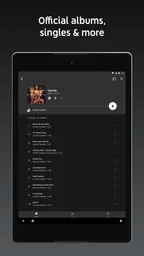
It also helps to think about what “music library” means to you. Some listeners want a compact, dependable shelf of albums and saved favourites. Others enjoy moving between an official release and less formal music discoveries. YouTube Music leans toward the second style. If you approach it expecting a neat digital record collection, its range may feel messy; if you approach it as a place to follow musical curiosity, the variety becomes a more convincing part of the experience.
Useful habits for a more intentional listening session
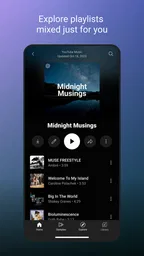
One practical approach is to use search for the moment of discovery, then switch to a deliberate starting point when you want focus. A track that catches your attention can be a good doorway into an artist, but it does not have to dictate the rest of your day. I would save or return to the material that genuinely suits my routine, rather than treating every suggested next step as a recommendation I need to follow.
For a commute, the useful question is not only “What do I want to hear?” but “How much attention can I give the app once I start?” If you will be busy, choose a known starting point before you leave instead of relying on repeated searches while moving around. This is a small workflow change, but it makes a discovery-oriented app more practical in situations where browsing is inconvenient.
For focused work, I would also separate exploration from background listening. Use a short browsing session to find a suitable direction, then settle into music that does not keep pulling your attention back to the screen. The app’s strength is the ability to branch out; that is not necessarily the quality you want during every task.
What to expect from access and cost
The app is free to install, while in-app purchases are available. The listed purchase range runs from five cents to $999.99 per item, so it is worth checking the details of any purchase shown in the app rather than assuming every part of the experience has the same cost. For someone deciding whether to try it, the free starting point lowers the barrier, but the purchase options are a reason to be attentive before confirming anything.
It is rated Teen and has been available since November 12, 2015. Its scale is reflected in an average rating of 4.4 from around 7.9 million ratings, alongside roughly 493,000 written reviews and more than 5 billion installs. Those figures suggest a widely used app with a substantial audience, but they do not guarantee that its discovery-led style will suit every listener. I would weigh them as context, not as a replacement for thinking about how you actually listen.
People often want to know whether this is a sensible choice if they already use another music service. My answer is that it can be, especially if your current app feels too limited when you search beyond standard album listening. It is less compelling as a replacement if your main priority is a highly orderly library and a predictable, album-centred routine. The better fit depends less on which app is universally “best” and more on whether you want exploration or structure to lead.
Who is likely to enjoy it most
I would recommend YouTube Music to listeners who regularly start with a song, artist, or mood and then want room to wander. It is also a natural option for people who like finding music outside the neat boundaries of an album page. If you often think, “I like this—what else is in this direction?”, the app’s character is likely to make sense quickly.
It is a less obvious match for someone who wants an uncluttered listening routine and rarely explores beyond saved albums or carefully maintained playlists. That listener may prefer a service whose main appeal is order and consistency. Likewise, if you dislike having to use judgment while browsing, the app’s breadth can feel like extra sorting rather than a benefit.
My most useful recommendation is to judge it by a real routine, not by a long browsing session. Try it with the kind of listening you already do: a familiar track on the way out, background music while cooking, or a few minutes spent finding something new. Notice whether the next step feels helpful or distracting. That tells you more about the app’s fit than simply counting how many things you can search for.
A fair comparison with familiar alternatives
Compared with a conventional streaming app that centres its experience on albums, saved collections, and playlists, YouTube Music feels more open-ended. That makes it stronger when you are exploring a sound and weaker when you want every listening session to begin from a carefully organised personal catalogue. Neither approach is automatically superior. I would choose based on whether I wanted to discover today or revisit something I already know.
It also differs from simply using a video platform for music. A dedicated music app gives listening its own setting, which is more convenient when music—not watching—is the point. Still, its connection to YouTube’s wider musical world is part of what shapes its personality, so it does not feel like a narrow, conventional audio shelf. That blend is the reason I would try it, and also the reason some listeners may prefer a more traditional alternative.
My verdict: excellent for curiosity, not for everyone
With more than 5 billion installs, YouTube Music is plainly a familiar choice for a vast audience, but its appeal is more specific than its reach might imply. I see it as a strong everyday companion for people who enjoy following a musical thread wherever it leads. The app’s biggest value is not a claim that it will always select the perfect next track; it is the opportunity to move from one known song into a broader search for what sounds good next.
I would recommend it to a friend who enjoys discovery, likes to search by artist or song, and does not mind making occasional choices to keep a session on track. I would suggest a more structured music service to someone who mainly wants a pristine album library and dependable, deliberate playlists. That is the honest dividing line: YouTube Music is most satisfying when curiosity matters more than curation. If that describes your listening, it is well worth trying; if not, its breadth may feel like more browsing than you wanted.
What we like
- Music and video playback works across phones tablets and computers.
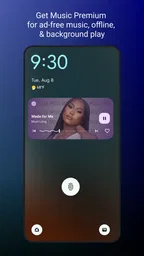
- Background playback is available with a Premium subscription.
- Smart downloads can refresh saved music for offline listening.
- Lyrics are available for many tracks.
- Users can upload personal music to their library.
What could be better
- Offline downloads require a Premium subscription.
- Ad-free listening requires a paid plan.
- Some songs have limited lyrics or no lyrics.
- Recommendations may repeat familiar artists and tracks.
- Audio quality options vary by device and subscription.





