




Remitly: Send Money & Transfer review
 Analysis by Appsdrops
I think of Remitly as a practical tool for a specific job: sending money from one country to someone in another. It is a finance app from Remitly, rather than a general-purpose banking app, and that distinction matters. If you regularly support relatives abroad or need to make occasional cross-border transfers, it is worth considering. If you mainly need local payments, budgeting, or everyday banking, you may get more from an app built for those tasks.
Paying nothing to download is only part of the value
Remitly is free to download, so you can install it and see whether it suits your needs without paying an app purchase price. That is useful, but it does not mean every transfer is free. The cost of sending money can depend on the transfer details, so I would check the amount the recipient is expected to receive and the total shown before confirming a transaction. A free app and a free money transfer are not the same thing.
That distinction is especially important when you send money regularly. Rather than judging value from the download price alone, compare the amount the recipient gets with what you would pay through your usual bank or transfer service. Check the final figures for the specific route and amount you plan to use, and compare them at the same time if possible. Exchange rates and transfer charges can make a headline impression less useful than the final payout.
The app is rated for Everyone, and its long presence in the category may reassure people who want a dedicated service rather than a one-off workaround. Remitly was released in 2013 and is now at version 7.4. Those details give a sense of an established product, but they do not replace checking the terms and transfer estimate for your own transaction.
What the app is designed to do
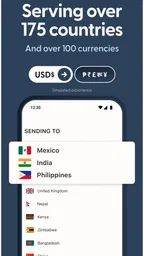
Its central purpose is sending money internationally, with support spanning more than 100 currencies. That breadth can be helpful if your family, work, or personal commitments connect you to more than one country. Still, the currencies figure should not be mistaken for a promise that every transfer route works in the same way. The useful question is whether the particular sending country, destination, and payout method you need are available in the app.
My advice is to check the destination and recipient options before building a routine around the service. A transfer app can look suitable in general and still be inconvenient for a particular recipient. If you are helping someone who has a fixed preference for how money arrives, confirm that the available delivery choices match it before you send.
Remitly has an average rating of 4.8 from around 1.7 million ratings, with roughly 64,000 written reviews and over 10 million installs. Those figures suggest that many people have tried it, but they cannot tell you whether your route will be fast, affordable, or convenient. I would treat popularity as context, not as a substitute for checking the quote and recipient details yourself.
Where the value shows up in everyday use
The clearest value is convenience when sending across borders is already part of your life. Imagine you send money to a parent in another country each month. With a dedicated transfer app, you can handle the task from your phone instead of treating it as an occasional trip to a bank counter or searching for a new provider every time. The practical benefit is having one place to review a transfer and its details before you commit.
A useful habit is to separate the recipient’s needs from your own preferences. You may care most about the total cost, while the person receiving the money may care more about the amount they will get or how they can access it. Before sending, confirm the recipient’s details with them and review the payout information carefully. This small check can prevent a rushed transfer from becoming a frustrating correction exercise.
Another good workflow is to use an early transfer as a test of the process rather than immediately relying on the app for a time-sensitive payment. Start with a transfer that gives you room to understand the screens, review the estimate, and confirm the recipient information without pressure. Once you know how the service fits your particular route, you can decide whether it belongs in your regular routine. That is a more sensible approach than assuming every international transfer service behaves alike.
It can also help to compare providers by recipient outcome instead of by a single advertised fee. If one option appears cheaper but leaves the recipient with a less convenient way to access the money, the apparent saving may not be worth it. Conversely, if your recipient is comfortable with the available method and the total looks competitive for that transfer, the straightforward mobile workflow may be enough to make Remitly worthwhile.
Tradeoffs I would check before relying on it
The main limitation is that a broad international remit does not guarantee that every user’s preferred route will be equally useful. Your decision depends on the countries involved, the currencies, the recipient’s needs, and the final transfer terms. I would not assume that a price or experience seen for one destination applies to another. Get the estimate for your actual transfer rather than relying on a general impression.
There is also a human-detail risk: sending money requires accurate recipient information. If you are arranging a transfer for someone else, do not enter details from memory or copy an old message without checking that they are still correct. Confirm the spelling and relevant information with the recipient, then take a moment to review the completed form before proceeding. This is not a special trick; it is a practical safeguard for any transfer app.
Remitly may also be the wrong tool if you need a broader financial dashboard. Its purpose is international transfers, so someone looking for a daily spending account, local bill management, investment tools, or a way to organize household finances should compare it with products designed for those jobs. A focused app can be convenient precisely because it does less, but that focus is a drawback when you expect one app to cover everything.
Finally, convenience should not replace a cost comparison. If your bank or another transfer provider offers a better total for the same destination and recipient needs, use the option that makes more sense. Check the amount the recipient gets, not just a fee label, and make sure you are comparing equivalent delivery arrangements. For a one-time transfer, a few minutes of comparison may matter more than sticking with the app you already installed.
Who is most likely to get value
I would recommend trying Remitly if you regularly send money abroad, want a mobile-first way to arrange those transfers, and are willing to review the transaction details before confirming. It is particularly relevant for people supporting family in another country, sharing household costs across borders, or making recurring personal transfers. Its free download lowers the barrier to checking whether it fits, while the actual value depends on the specific transfer you need to make.
It is less compelling for someone who rarely sends money internationally and already has a convenient, competitive option through a bank or another service. It is also not an obvious choice for anyone who wants an all-in-one finance app rather than a dedicated transfer tool. In those cases, the extra app may add little, and a service already used by the recipient may be simpler.
For occasional users, I would decide after checking one real transfer estimate and confirming that the recipient can use the available payout option. For frequent users, I would compare the app’s terms periodically rather than assuming the first good experience will always be the best deal. The right choice can vary with the route and the transfer itself.
My verdict: try it, then judge each transfer
As a focused international money-transfer app, Remitly makes sense when sending money abroad is a recurring need. It is free to install, serves a clear purpose, and has a large user base; those are useful reasons to take a look, not guarantees that every transfer will be the right choice. I would use it when its actual quote and recipient options work for the situation in front of me.
The strongest reason to choose it is a convenient way to handle cross-border transfers; the strongest reason to pause is that the real value depends on the details of each transaction. Check the destination, recipient information, payout arrangement, and final amount before you send. If those line up with what you need, it is worth keeping in your toolkit. If another provider gives your recipient a better outcome, there is no reason to stay loyal to an app simply because it is already on your phone.
What we like
- Transfer fees and exchange rates are shown before you confirm.
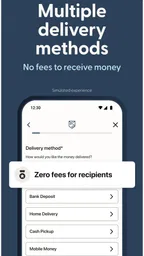
- Delivery options include bank deposit and cash pickup.
- Transfer tracking helps you follow the payment's progress.
- Recipients can often receive money without installing the app.
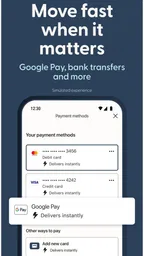
- Multiple payment methods are available depending on your location.
What could be better
- Available services vary by country and transfer route.
- Some payment methods may have extra fees or slower delivery.
- Identity checks can delay a first transfer.
- Exchange rates may include a markup over the mid-market rate.
- Transfer limits may restrict the amount you can send.





