

PSA | Pokémon and Sports Cards review
 Analysis by Appsdrops
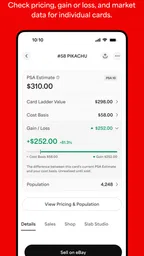
My first impression of PSA | Pokémon and Sports Cards is that it is made for collectors who want their hobby to stay organized beyond the moment they open a pack or buy a card. It is a free Books & Reference app from Professional Sports Authenticator, built around tracking, managing, grading, and collecting. That focus makes it more practical than a general notes app, though it also means casual fans may not find much reason to keep it installed.
From the first scan to a useful collection habit
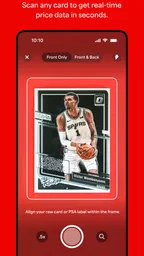
In the first week, the appeal is easy to understand: a collection can be more than a stack of cards in a box. The app gives Pokémon and sports-card collectors a dedicated place to engage with that hobby, and the grading angle is especially relevant if condition and authentication matter to how you collect. Rather than treating every card as just another item, I find the idea of connecting collection management with grading gives the app a clear identity.
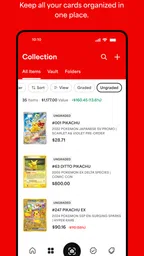
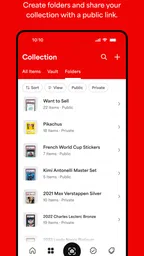
That distinction matters most when a collection starts to spread across binders, storage boxes, and purchases made at different times. A collector can use an app like this as a point of reference while deciding what deserves attention, what they already own, and which cards they may want to have graded. The practical benefit is not simply having an app on your phone; it is having a reason to consult it before making a duplicate purchase or reorganizing a collection.
PSA has a 4.7 average from around 11,000 ratings, and it has been available since June 3, 2015. Those figures suggest it has had time to find a substantial audience, but popularity alone does not make it essential. The real test is whether the app fits the way you collect. If you only buy a few cards now and then and remember where you put them, a spreadsheet or a simple note may be enough. If you revisit your collection often, a purpose-built tool has a stronger case.
Make the first setup useful, not exhaustive
My advice is to begin with the part of your collection you actually need to manage. Trying to document every card at once can turn a hobby into a cataloging project, and that is an easy way to lose interest. Start with cards you are considering for grading, valuable pieces you want to keep track of, or one set you are actively building. That gives you a small, practical test of whether the app earns a regular place in your routine.
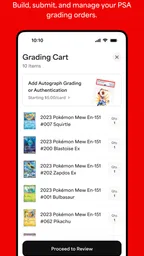
A second useful approach is to use the app around a decision, not just as a digital shelf. Before sending a card for grading, gather the cards you are seriously considering and review them as a group. That creates a more deliberate shortlist than making a separate impulse decision for every card. It also helps keep grading focused on cards that matter to you, rather than making the process feel like an automatic next step for everything you own.
What gives it value after the novelty fades
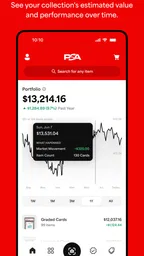
The month-to-month value of a collection app depends on whether it helps with recurring tasks. For this one, those tasks are likely to come up when you acquire cards, revisit grading candidates, or want a clearer picture of what you collect. A digital record is most useful when it changes a decision: checking what you have before a trade, keeping a particular group of cards in view, or deciding which items deserve extra care.
That makes PSA a better fit for active collectors than for people who only browse card content. Its connection to grading is a meaningful difference from a general-purpose collection tracker. A spreadsheet can be more flexible, and a notes app can be faster for a handful of items, but neither is inherently organized around card grading. If that part of the hobby is central to you, the specialized focus can save mental effort even if you still use another tool for broader collection notes.
It is also worth being realistic about what “manage” means for your own habits. The app can help make a collection easier to think about, but it cannot replace good physical storage or careful handling. I would still keep cards protected and arranged in a way that makes sense offline. The app is a companion to the collection, not a substitute for the care the cards need in the real world.
For a collector who trades or buys regularly, one concrete routine is to check the relevant part of the collection before heading to a card show or meeting another collector. That small pause can reduce the chance of buying something you already own and help you focus on gaps you genuinely want to fill. It is a more lasting use than opening the app only to browse once, because it connects the digital record to an actual collecting decision.
Maintenance is manageable, but still a choice
No tracking tool stays useful if its records become stale. Each new purchase adds a little maintenance, and a collector who buys frequently may find that the cataloging takes time away from sorting or enjoying the cards. I would avoid promising myself a perfect inventory. A focused record of the cards that matter most is more sustainable than an ambitious project that becomes frustrating after a few sessions.
One way to keep the workload reasonable is to update the app when a card changes status in a meaningful way: when it joins the collection, becomes a serious grading candidate, or leaves through a trade or sale. That is more useful than repeatedly revisiting every entry without a clear purpose. It also gives the app a natural place in the hobby’s rhythm rather than making it another task to complete every day.
On the practical side, PSA is free and has an Everyone age rating. The current version is 8.2.0, and it requires Android 8.0 or later on Android devices. It has over 1 million installs, which shows that it is used by a broad group of collectors. These details make it approachable to try, but the strongest reason to keep it is still whether its card-focused workflow suits your own collection.
If you collect both Pokémon and sports cards, the shared collecting purpose may be convenient. If your interest is limited to one narrow niche, however, the app’s wider identity may not automatically make it a better fit than a specialist catalog or a personal spreadsheet. I would test it with a small group from the collection before moving everything over. That is a low-effort way to learn whether the app’s structure feels natural to you.
Where routine can turn into fatigue
The main source of fatigue is the same thing that creates value: maintaining a record. Collectors who enjoy sorting and documenting may find that satisfying. Others may feel they are doing clerical work instead of enjoying the cards. If you already abandon spreadsheets after a few weeks, a dedicated app will not necessarily change that habit by itself. It can make the task more relevant to your hobby, but the motivation still has to come from you.
There is also a risk of letting grading become the default measure of a card’s importance. Some cards are worth keeping because of a personal memory, a favorite player, or the joy of completing a set. A grading-oriented tool can support decisions about condition and value, but I would not let it narrow collecting to only the cards that seem most suitable for grading. The app works best as a reference for your hobby, not as a rulebook for what deserves a place in it.
Compared with paper lists, PSA is more convenient to carry and consult, while paper can be quicker for a small collection and does not demand screen time. Compared with a spreadsheet, a dedicated app is more centered on the card-collecting context, but a spreadsheet gives you freedom to organize information exactly as you like. The better choice depends on what you need: if flexible custom tracking matters most, a spreadsheet may win; if the connection between collecting and grading is what you want, PSA has the more relevant focus.
Another useful trade-off is completeness versus consistency. A meticulously detailed catalog sounds ideal, but an incomplete record that you actually keep current is more valuable than a perfect one abandoned halfway through. I would choose a manageable scope and let the catalog grow as the app proves useful. This also makes it easier to judge whether you enjoy checking the app or only liked the idea of having a complete digital collection.
Who should keep it installed
I would recommend PSA to collectors who regularly buy, organize, or consider grading Pokémon and sports cards, especially those who want one mobile place to stay engaged with those parts of the hobby. It is also worth trying if you have enough cards that relying on memory has become inconvenient. The fact that it is free lowers the cost of experimenting with it, and the app’s established presence makes it a familiar option in the card-collecting space.
I would skip it if you own only a small, stable collection, dislike keeping records, or want a broad general-purpose inventory tool. Someone who mainly wants to track cards from a highly specific niche may prefer a specialist resource or their own spreadsheet. And if your collection is already organized in a way that works, there is no need to move it just because a dedicated app exists. A new tool should solve a real annoyance, not create a second system to maintain.
For anyone trying it, I would begin with a handful of cards you are considering for grading and a small set you are actively collecting. Use it during a purchase or trade decision, then see whether it makes that moment easier. If it helps you avoid duplicates, focus your grading choices, or keep an important part of the collection in view, expand gradually. If you find yourself entering details only to satisfy the app, scale back or return to a simpler method.
Overall, PSA | Pokémon and Sports Cards can earn lasting space on a collector’s phone, but not simply because it is specialized. Its staying power comes from a repeatable habit: checking your collection when buying, organizing, or weighing grading choices. For an active collector, that is a meaningful role. For a casual owner who rarely revisits their cards, it may be more app than they need. I see it as a useful companion when it supports the way you collect, and an optional extra when your collection already takes care of itself.
What we like
- Organizes Pokémon and sports cards in one collection.
- Card details help identify specific editions.
- Search tools make large collections easier to browse.
- Useful for collectors tracking cards across categories.
- Focused on collectible cards rather than general entertainment.
What could be better
- Some card entries may be missing or incomplete.
- Prices can vary from real-world market values.
- A large collection may take time to catalog.
- Sports card coverage may vary by player or sport.
- Collectors may need another app for trading or sales.





