
Pregnant Tracker - Baby Bump review
 Analysis by Appsdrops
I see Pregnant Tracker - Baby Bump as a potentially useful companion for keeping pregnancy-related health and wellness in view, rather than as a substitute for prenatal care. Its appeal is easy to understand: pregnancy brings a steady stream of questions and appointments, and a dedicated tracker can give that period a little more structure. My main reservation is that the app’s brief description promises a broad purpose, while the details a parent would need to judge its day-to-day tools are not equally clear. I’d approach it as a practical organizer and source of general guidance, while checking important health decisions with a qualified clinician.
What the app is best positioned to do
This is a free parenting app from Am Foundation Inc, aimed at people who want to follow pregnancy health and wellness from a phone. It is listed for Everyone, and its current version is 1.0.6. The app has an average rating of 3.9 from around 3,500 ratings, with over 1 million installs. Those figures suggest that it has found a substantial audience, though ratings alone cannot tell me whether its advice or tools will suit a particular pregnancy.
The most useful way to think about a pregnancy tracker is as a place to make small, recurring tasks easier. A person might want to keep health-related notes together, revisit general guidance, or prepare a short list of questions before an appointment. That sort of routine is where a phone app can help: it is available between visits, and it can make it less likely that a concern or question disappears in the rush of an ordinary day.
That usefulness depends on how deliberately you use it. I would treat anything presented as general pregnancy guidance as background reading, not personalized medical advice. Pregnancy experiences vary, and a symptom that seems ordinary in an app’s general material may still deserve attention in an individual case. For urgent or worrying symptoms, contacting a healthcare professional is the right next step, not scrolling through a tracker for reassurance.
A workflow that can make appointments more useful
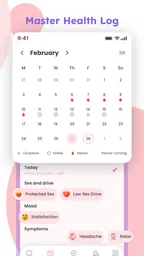
One practical habit I recommend with any pregnancy tracker is to capture questions as they arise, then review them before an appointment. For example, if a concern comes up while getting ready for work, jot down the key point rather than trying to remember it a week later. If the app supports personal notes or logging, that can become a compact prompt for a conversation with a midwife or doctor. I would confirm which logging options are available in the app before building a routine around them.
There is also value in keeping app use short and purposeful. I’d set aside a few minutes to read or update information, then close it instead of checking repeatedly for answers. That approach helps a tracker serve as a reference without turning normal uncertainty into a cycle of searching and worrying. It is especially helpful for first-time parents, who may be processing a lot of new information and need a simple way to organize their thoughts.
A second useful workflow is to separate general learning from personal health records. An app can help you remember what you want to ask, but it should not be the only place where important medical information lives. Keep appointment instructions and clinician-provided guidance in the channel your care team uses, and bring your questions to them directly. This is a sensible safeguard for any pregnancy app, including one whose focus is health and wellness.
Where a tracker can fall short
My biggest caution is that a broad health-and-wellness promise does not, by itself, show how deeply the app supports individual needs. A tracker can be reassuring when it makes information easy to revisit, but less helpful if you are looking for a tailored answer, a detailed medical record, or a specific clinical tool. I would explore the app’s actual screens and options before relying on it for a particular task, rather than assuming that every feature commonly found in pregnancy apps is included here.
That uncertainty matters most for people with a complicated pregnancy or a care plan that changes frequently. They may be better served by a clinician’s instructions and a record-keeping method their care team can review. A general-purpose tracker can still be a supplementary notebook, but it should not become the authority on symptoms, medication, test results, or changes in care. If your main need is precise coordination with a provider, ask what system the clinic recommends.
Another limitation is the potential for information overload. Pregnancy content can prompt more questions than it answers, particularly when general guidance is read without context. I suggest using the app to frame a question, not to diagnose yourself or compare your experience with a presumed norm. If a topic leaves you more anxious, stop browsing and raise it with your provider; a good tracker should support your care, not compete with it.
How it compares with familiar alternatives
Compared with a paper notebook, a phone-based tracker is easier to carry and can make it convenient to revisit health and wellness material in spare moments. A notebook, however, is flexible: you decide what to record, and you are not dependent on an app’s layout or content. If you already have a paper system that keeps appointment questions and personal notes organized, there may be little reason to switch completely.
Compared with a pregnancy app built around a specific specialty, such as appointment planning or detailed symptom logging, Pregnant Tracker - Baby Bump appears best approached for its wider wellness focus. That can be a benefit if you want a general companion rather than a narrow tool. It can also be a drawback if your priority is a particular feature. I would choose based on the task you actually need help with: use a focused tool when you need its defined workflow, and consider this app when a broader pregnancy-oriented reference is more appealing.
It also differs from a direct relationship with a healthcare professional in an important way: an app can help you prepare, but it cannot understand your full medical history or make a care decision for you. The strongest setup is often a combination—use a tracker to stay organized, and use appointments and trusted clinical advice for interpretation. That division of labor keeps the app’s convenience without giving it responsibilities it cannot safely carry.
Who is likely to get the most from it
I’d consider this app if you are looking for a free, phone-based starting point for pregnancy health and wellness, and you are comfortable checking its actual tools before making it part of your routine. It may suit someone who likes having a dedicated place to return to during the day, especially when they want general information close at hand and a prompt to think through questions before a visit.
Picture a realistic weekday: you notice a question while making breakfast, but the appointment is not until later in the week. Rather than searching the same concern repeatedly, you make a brief note, continue with the morning, and bring the question to your clinician. A tracker can be useful in that modest role. The gain is not a dramatic change to prenatal care; it is a small reduction in the mental effort of remembering what you meant to ask.
I would be more cautious if you need a medically supervised record, highly tailored recommendations, or support for a complex care plan. I’d also skip it if you are already happy with the system your provider uses and another app would only create duplicate records. People who find pregnancy-related reading stressful may prefer to keep app use limited and rely on direct conversations with their care team for reassurance.
Choosing it with realistic expectations
The app is listed as released on November 26, 2025, and its current version is 1.0.6. Because a pregnancy companion may be used repeatedly over months, I would check that it works smoothly on your device and that its available tools match your needs before relying on it as a daily routine. I’d also make a habit of keeping essential care details somewhere accessible outside the app, so you are not dependent on one interface when speaking with a provider.
Its audience rating gives a useful, but limited, signal: an average of 3.9 shows a mixed rather than universally enthusiastic response. I would not read that as proof that the app is poor or excellent. Instead, use it as a reason to try the app for your own workflow and judge whether its content is clear, easy to navigate, and genuinely useful to you. A tracker’s value is personal; the right one is the one that helps you stay organized without adding worry.
My verdict
Pregnant Tracker - Baby Bump makes the most sense as a lightweight pregnancy companion, not a medical decision-maker. I like the idea of having health and wellness guidance readily available, and the app’s free access makes it easy to explore without committing to a purchase. Its broad focus may work well for someone who wants a general pregnancy resource and is willing to verify which tools are included before building a routine around them.
The trade-off is that a general tracker cannot replace individualized care, and it may not be the right fit for people who need specialist logging or a provider-connected system. My recommendation is straightforward: try it if you want a convenient place to support your own pregnancy routine, use it to organize questions, and keep your clinician in the loop. If you need precise, personalized medical guidance, choose your care team—not an app—as the source you rely on.
What we like
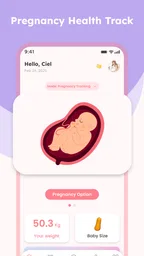
- Tracks pregnancy progress week by week.
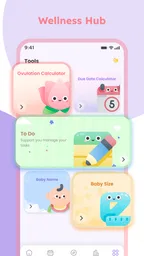
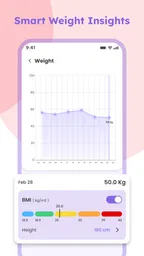
- Includes tools for monitoring weight and appointments.
- Offers helpful reminders for prenatal milestones.
- Provides a countdown to the due date.
- Simple layout makes key information easy to find.
What could be better
- Some features may require a paid upgrade.
- Pregnancy guidance is not a substitute for medical advice.
- Tracking results depend on manually entered information.
- Notifications can feel repetitive over time.
- The app may request personal health details.





