




Pregnancy Tracker & Mom Care review
 Analysis by Appsdrops
I would judge a pregnancy app by whether it helps me feel more prepared without making an already busy time feel like another project to manage. Pregnancy Tracker & Mom Care is aimed at that practical middle ground: an app for following a pregnancy and keeping useful information close at hand. It sits in the parenting category, is free to use, and is developed by ACCONS. For someone who wants a dedicated place to check in on pregnancy-related information, that focus is appealing; for someone who expects a full medical record or hands-on clinical guidance, it is important to keep expectations grounded.
What matters when choosing a pregnancy tracker
Before installing any tracker, I would ask what I actually want it to do in my routine. Some people mainly need a simple way to follow the passage of pregnancy; others want extensive journaling, appointment organization, educational material, or a shared planning space with a partner. Those are different needs, and a good choice depends less on the longest feature list than on which tasks I will return to regularly.
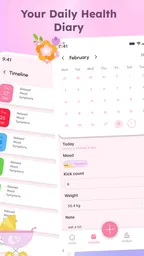
The name and positioning of Pregnancy Tracker & Mom Care make it a natural option to consider for ongoing pregnancy tracking. Its store description points to tools intended to support staying informed and organized, but I would treat that as a broad purpose rather than assume every specific tracker, reminder, or care resource is included. The most useful test is straightforward: after installing it, see whether its available sections answer the questions you tend to have and whether checking them feels easy enough to repeat.
There is also a difference between reassurance and medical advice. A tracker can be a helpful companion for general organization, but it should not be the place I turn to decide whether a symptom is urgent or to replace advice from a midwife, doctor, or other qualified professional. I would use it alongside prenatal care, not instead of it. That distinction matters especially when an app presents pregnancy information in a convenient, confident format.
How it fits into an ordinary day
Imagine opening the app during a quiet moment after breakfast, checking the information available for the current stage, then making a note to ask a clinician about something that has been on your mind. Later, before an appointment, you can use that note as a prompt rather than trying to remember every question in the room. That kind of small routine is where a pregnancy tracker can earn its place: it gives a person a repeatable check-in, while the actual medical conversation remains with their care team.
A useful, non-obvious habit is to keep questions separate from conclusions. If something you read raises a concern, write down the question in your own words and bring it to an appointment instead of treating an app explanation as a diagnosis. Another practical approach is to check the app at a time you already have a little breathing room, rather than responding to every notification or browsing whenever anxiety strikes. A tracker should support a calm routine, not turn pregnancy into a stream of things to monitor.
Where this app may be the better fit
The main advantage of a dedicated pregnancy app is its subject-specific focus. A general calendar can hold appointments, and a notes app can store questions, but neither is designed around pregnancy as its central context. If I want one place to begin a check-in instead of building my own system from scattered tools, Pregnancy Tracker & Mom Care is worth trying. Its free price also makes it easier to explore without first committing money to a tracking routine that may or may not suit me.
Its scale suggests that many people have tried it: it has over 500,000 installs. The average rating is 3.3 from around 2,100 ratings, so I would approach it with measured expectations rather than assume universal satisfaction. That score is a reason to test the actual experience for yourself, not proof that the app will or will not work for your particular needs. A tracker is personal: the organization that feels reassuring to one user can feel unnecessary to another.
For a first pregnancy, a dedicated tool can be especially useful as a starting point. There is often a steady stream of unfamiliar terms, changing questions, and small things to remember. I would use the app to make those check-ins more orderly, then rely on a clinician for advice that depends on my health or circumstances. For someone who already keeps a detailed pregnancy journal elsewhere, the benefit may be smaller; the app needs to save effort, not create a second record that must be maintained.
One practical trade-off is the temptation to track more than is helpful. Before making it part of your routine, decide what you want from it: perhaps a regular information check and a place to organize thoughts. If using it starts to produce more worry than clarity, reduce how often you open it or step back. The best tracker is the one that supports your decisions without becoming another source of pressure.
When another kind of tool may work better
If your priority is appointment logistics, a standard calendar may be more dependable and easier to share with family or a partner. If you mainly want to record personal reflections, a private journal or notes app may give you more control over how entries are organized. If your main concern is understanding a specific symptom or making a health decision, direct contact with a qualified professional is the better option. These alternatives are not necessarily competitors; they can complement a pregnancy tracker when each has a clear job.
I would also be cautious about choosing any pregnancy app solely because its name sounds comprehensive. “Tracker” and “care” can cover a lot of expectations, so it is sensible to open the app and inspect its actual screens before moving personal routines into it. Check whether the information is easy for you to understand, whether the available tools match your needs, and whether you feel comfortable with the way you use the app. If a feature you consider essential is missing or awkward, a simpler calendar-and-notes setup may be more useful than forcing a dedicated app into your day.
People who want detailed customization, a robust shared family system, or a clinically tailored plan should be particularly careful to evaluate the app before relying on it. I would not assume that a general-purpose tracker can provide those things just because it covers pregnancy. The better choice may be a combination of a tracker for general check-ins, a calendar for appointments, and conversations with the care team for personal guidance. Keeping those roles distinct prevents an app from being asked to do a job it was not chosen to do.
Trying it without creating extra work
Switching to a new tracker can have a small but real cost: you may need to learn where information lives, establish a habit, and decide whether to transfer notes from another tool. I would avoid moving everything at once. Start with a short trial in which you use the app for one clear purpose, such as a regular check-in or keeping questions ready for an appointment. If it fits naturally, continue; if not, you can return to your existing calendar or notes without having built a duplicate system.
It is also worth deciding what information belongs in the app and what belongs elsewhere. A question you plan to ask at a visit may be convenient to keep in a tracker, while important medical instructions should remain somewhere you can reliably find and discuss with your care provider. For sensitive details, consider your own comfort before entering them into any app. A little restraint at the start makes it easier to judge the app on its usefulness rather than on the burden of maintaining a large personal archive.
The app is free, rated for Everyone, and currently at version 1.0.5. It was released on July 3, 2026, and lists Android 9 as its minimum operating system requirement. Those basics help with the install decision, but they do not tell me whether its day-to-day approach will match yours. I would install it only if the device requirements are met, then spend a few minutes checking the layout and deciding whether its information is genuinely convenient to revisit.
My recommendation
I would recommend Pregnancy Tracker & Mom Care to someone who wants to try a dedicated pregnancy-focused app at no cost and prefers a single starting point for routine check-ins. It is most promising for people who are new to pregnancy tracking or whose current system is a loose collection of calendar reminders and notes. Its focused purpose gives it a clearer role than a generic organizer, while the modest average rating is a reminder to judge the experience personally instead of expecting a perfect fit.
I would skip it, or use it only alongside other tools, if you need detailed personal medical guidance, a highly customized record, or a dependable shared planning workflow. In those cases, a clinician, calendar, journal, or another tool chosen specifically for that job may serve you better. My practical advice is to try one small routine, keep medical questions for your care team, and stop using the app if it adds anxiety or duplicate work. Used with those boundaries, it can be a convenient companion; it should never have to carry the whole weight of pregnancy care.
What we like
- Tracks pregnancy progress by week with useful developmental updates.
- Includes appointment reminders to help keep prenatal care on schedule.
- Offers practical tips for nutrition and self-care during pregnancy.
- Provides a place to record symptoms and personal notes.
- Simple layout makes key pregnancy information easy to find.
What could be better
- Pregnancy information should not replace advice from a healthcare professional.
- Some features may require an internet connection.
- Reminders are only helpful if notifications are enabled.
- Personalized guidance may be limited without detailed profile information.
- Content may not reflect every individual pregnancy or medical situation.





