
Podcast Player review
 Analysis by Appsdrops
I think a podcast app earns its place on a shared household device only when it makes listening easy without pretending that everyone has the same tastes or routine. Podcast Player is aimed at people who want one place for spoken audio, including podcasts, audiobooks, and radio. In my view, that breadth is useful for a family or housemates who take turns with a tablet or speaker, but shared hardware does not automatically mean shared listening history or coordinated accounts. It is worth approaching it as a flexible player first, not as a household-management tool.
Making shared listening work in everyday life
Picture a kitchen tablet that someone uses while making breakfast, then another person picks up on the commute. One listener might want a news show, another a long interview, and someone else might prefer an audiobook. Having these kinds of audio in the same app can cut down on switching between separate players. That is the practical appeal I see in Podcast Player: it can serve several listening habits without requiring the household to settle on one kind of content.
The trade-off becomes clear when different people use the same device. A playback position, subscription choice, or recently played item can matter to the next person, particularly if the app is left open. I would make a simple household habit of checking what is queued and who is signed in before starting a long episode. That is not a substitute for separate profiles; it is a low-effort way to avoid accidentally interrupting someone else’s listening.
For a shared living room, this works best when people treat the app as a common shelf rather than a personal diary. A household can agree on a few shows for shared listening, while individuals keep their own routines elsewhere if they need strict separation. If preserving private recommendations, progress, or subscriptions is essential, a dedicated account or separate device for each listener is a better fit than assuming a single player will provide those boundaries.
Set expectations before handing over the device
Because Podcast Player brings several audio formats together, it helps to decide what “shared” means in your home. You might use it for a group’s chosen news and discussion programs, while keeping personal audiobooks and niche subscriptions on an individual device. This distinction avoids a common annoyance: someone browsing for a quick radio listen changes the shared queue just as another person is settling in for a longer program.
I would also keep the device’s everyday purpose in mind. A tablet used by children, guests, and adults can expose listeners to a wider range of subjects than a device reserved for one person. The app’s Teen content rating is a useful age-context signal, but it is not a household rule or a guarantee that every program suits every listener. Adults should choose what is appropriate for their own home and supervise younger users’ access to audio.
One small but useful routine is to leave a shared device in a neutral state: stop playback when finished, avoid leaving a personal episode at an unexpected point, and tell the next person if something is already queued. That sounds mundane, but it matters more when the same app is serving podcasts, audiobooks, and radio. Different formats invite different listening sessions, and a clear handoff prevents a quick kitchen listen from becoming an accidental takeover of someone else’s book.
Coordinate listening without overcomplicating it
For a household that enjoys discussing the same programs, Podcast Player can be a convenient starting point. One person can suggest a show, and others can decide whether to listen together or separately. I find this more realistic than expecting everyone to follow the same schedule: a radio segment may suit a shared breakfast, while a multi-part podcast is easier for each person to hear at their own pace.
A practical approach is to keep a short verbal or written list of shared picks outside the app. For example, housemates could agree that a particular series is for the evening drive and leave personal listening for headphones. This is not an app feature; it is a coordination habit that reduces confusion when devices and listening time are shared. It is especially helpful if one person likes to explore new shows while another prefers to continue a series in order.
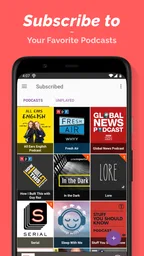
When choosing what to subscribe to, I would avoid adding every interesting show to a shared setup. A crowded collection makes it harder for another listener to tell what is intended for them, and it can turn browsing into work. Start with a small number of common interests, then let each person decide whether the shared arrangement is enough. If you mainly want a private library with carefully separated tastes, a player built around distinct personal profiles may be more suitable.
What the app is like as a listening hub
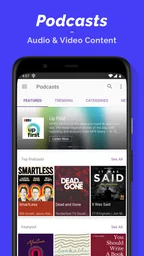
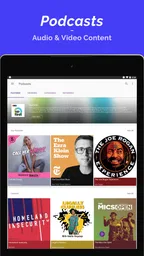
Podcast Player is a free News & Magazines app from Castbox.FM - Radio & Podcast & AudioBooks. Its broad mix is its most useful idea: rather than being limited to one kind of spoken audio, it brings podcasts, audiobooks, and radio into one listening destination. That can make it appealing when your routine changes through the day, from catching a current-affairs program in the morning to choosing longer listening later.
At the same time, combining formats is not automatically better for everyone. A listener who only wants one carefully curated podcast feed may prefer a simpler, podcast-only app. Someone who treats audiobooks as a separate library may also value a service designed specifically around books. I would choose Podcast Player when having several kinds of audio close together is more important than keeping each format in its own environment.
The app has a 4.8 average from around 318,000 ratings, with more than 10 million installs. Those figures suggest it has reached a broad audience, but they cannot tell you whether its approach matches your habits. The more useful question is whether you want a single player for varied spoken audio or a focused tool for one listening routine. I would use the former as a convenience, not assume that popularity alone resolves the personal-account and shared-device trade-offs.
It is free to install, with in-app purchases ranging from $1.99 to $14.99 per item. I would check the purchase screen carefully before paying, especially on a device used by more than one person. A shared tablet makes it easy for someone else to encounter purchase options, so it is sensible for the household to agree who is allowed to buy anything and to keep track of which account is being used. The free starting point lets you judge the basic listening experience before deciding whether any paid option is worthwhile for you.
Age context, trust, and who should choose something else
The Teen age rating makes the app a more plausible household option than a service explicitly intended only for adults, but it should not replace parental judgement. Podcasts and radio are made by many different publishers, and subject matter can vary widely. I would preview unfamiliar programs before recommending them to a younger listener, and I would not treat a general app rating as an episode-by-episode suitability check.
That same variety is a strength for adults who like to discover different topics, but it can be a drawback for anyone who wants a tightly controlled listening environment. If your priority is a child-specific experience, strict separation between household members, or an audiobook collection managed independently from podcasts, choose a service that clearly centers those needs. Podcast Player makes more sense when listeners can make their own choices and the household is comfortable coordinating informally.
For someone deciding whether to try it, the key questions are straightforward: do you listen to more than one kind of spoken audio, will you use a personal or shared device, and how important is keeping each person’s activity distinct? If the first answer is yes and the latter two are manageable, this app has a clear role. If shared listening creates constant disputes over what to play next, or if separate histories and boundaries are non-negotiable, another arrangement will be less frustrating.
A practical household verdict
Podcast Player is worth considering for a home that wants podcasts, audiobooks, and radio available in one place, especially when different people can take turns without expecting the app to organize the household for them. I like the flexibility of its audio mix and the fact that it is free to begin using. The honest limitation is that a shared device still needs shared-device etiquette: agree on purchases, choose common listening intentionally, and do not assume that one setup will keep everyone’s habits separate.
The current version is 9.17.0-260909124, and it supports Android 6.0 and later. Those details matter if you are setting it up on an older household phone or tablet; check the device’s system version before planning around it. The app was released on January 4, 2016, and its long-standing presence makes it familiar territory for many listeners, though I would still judge it by whether its combined audio approach suits your particular home.
My recommendation is for adults, housemates, or families with older teens who want a convenient shared listening option and are willing to set their own boundaries. I would skip it as the central household hub if you need strong separation between people, a child-focused listening space, or a dedicated audiobook workflow. Used with realistic expectations, it can make everyday listening easier; used as though it were a family account manager, it is likely to leave important coordination to the people in the room.
What we like
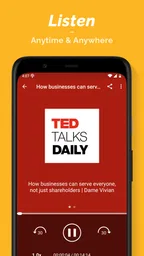
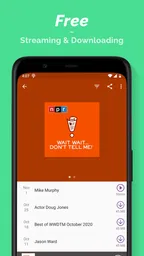
- Supports streaming and offline listening for flexible playback.
- Playback speed controls help shorten listening sessions.
- Sleep timer can stop playback automatically.
- Episode downloads make saved shows available without a connection.
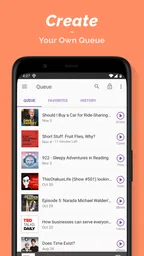
- A queue helps organize what to listen to next.
What could be better
- Some podcasts may not offer downloadable episodes.
- Offline downloads can use considerable storage space.
- Playback features may vary between shows.
- Finding new podcasts may require time and browsing.
- An unstable connection can interrupt streaming.





