


OOC: The Playable Anime review
 Analysis by Appsdrops
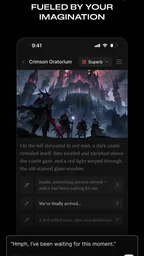
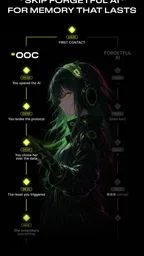
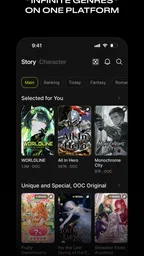
I approached OOC: The Playable Anime as a reading app for someone who wants a story to feel more participatory than a conventional novel. That distinction matters: its appeal rests on the promise of anime-inspired fiction shaped by the reader’s imagination, not on a broad library of reference material or a traditional game structure. If you enjoy stepping into a story rather than simply turning pages, the idea is immediately inviting. If you want a familiar, clearly explained reading experience from the outset, you may find the premise harder to judge before trying it.
A story-first app with a distinctive premise
OOC is a free Books & Reference app from developer OOC, with a Teen content rating. It has an average rating of 4.3 from around 29,000 ratings, and has been installed over a million times. Those figures suggest that the concept has found a sizeable audience, but they do not tell me whether its particular approach to interactive anime fiction suits your reading habits. The useful question is whether you want to contribute imagination to a story, rather than passively follow one.
The app is currently at version 0.1.27 and requires Android 7.0 or later. Its release date is listed as April 3, 2026, so readers should keep in mind that this is an early version number rather than a sign of a long-established, mature product. I would treat it as an evolving experience: approach it with curiosity, but avoid assuming that every part of the app will feel as polished or extensive as a long-running digital book service.
That framing also helps explain who may enjoy it. Fans of anime-style storytelling who like to imagine character reactions, choices, and possible turns are the clearest fit. Readers who mainly want a complete, fixed narrative may prefer a conventional ebook or visual novel whose structure and presentation are more familiar. OOC sits between those expectations: it presents itself as a playable reading experience, but the value is in the act of engaging with the story, not simply in having another title to browse.
What free access does—and does not—tell you
The app costs nothing to install, which makes trying its central idea less of a financial commitment than buying a book or game upfront. There are in-app purchases, with listed prices ranging from $1.39 to $142.99 per item. That range is wide enough that I would separate the free entry point from any decision to spend: first decide whether the reading experience itself works for you, then consider purchases only if you understand what a specific item offers and why you want it.
Free access is a useful starting point, but it is not the same as knowing how much content is available without paying or what each purchase unlocks. I would not assume that a higher-priced item is necessary, nor that every reader will need to buy anything. The practical approach is to explore the parts available at no cost, notice where the app asks for a purchase, and judge the value of that particular offer in context. If the cost is not clear to you at the moment it appears, there is no reason to rush.
For readers comparing it with ordinary ebooks, the distinction is straightforward: an ebook usually asks you to pay for a known title and then read it in a largely fixed form. OOC instead offers a free way to try an interactive anime-novel concept, with optional purchases in the app. Compared with a conventional mobile game, it is better approached as a story-led experience rather than as a promise of action, competitive play, or a particular progression system. That makes the potential value personal: it depends on how much you enjoy imaginative participation.
How to get more from an imaginative reading session
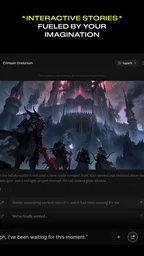
A useful way to approach OOC is to give each session a small purpose. Rather than opening it while distracted and expecting a story to hold your attention automatically, settle on the kind of experience you want: follow the scene closely, imagine what a character might be thinking, or consider how you would respond to a developing situation. That mental framing is especially helpful for an app whose core appeal is the reader’s imagination. It turns a short break into an intentional reading session instead of another idle scroll.
Here is a realistic everyday use: after a commute or during a quiet lunch break, you have ten minutes and want something more absorbing than a quick feed but less demanding than starting a long novel. An anime-inspired interactive story can suit that moment because you can focus on one scene and continue engaging with its possibilities. If you are tired and only want a complete, effortless chapter with no imaginative effort, however, a standard ebook may be more relaxing. The same feature that makes OOC distinctive can ask more of your attention.
Another practical tip is to keep your expectations anchored to the story rather than to assumptions about game mechanics. “Playable” can mean different things to different readers. I would come to OOC expecting an imaginative, participatory reading experience, not automatically expecting branching paths, combat, collectible characters, or elaborate customization. That distinction prevents disappointment caused by importing features from unrelated visual novels or role-playing games. Judge what you actually encounter in the app, rather than what the word “playable” might suggest on its own.
It is also worth thinking about how you read anime fiction. If you enjoy pausing to picture expressions, tone, or the emotional weight of a scene, the format has room to feel personal. If you prefer the author to make every narrative decision and reveal a carefully controlled sequence, a fixed novel can be more satisfying. Neither preference is better; they simply ask for different kinds of attention. OOC is most compelling when you want to bring something of your own to the reading, not when you are looking for the least interactive way to consume a story.
Where the tradeoffs become important
The main tradeoff is that imagination-led storytelling can feel open and engaging, but it can also make the experience less predictable. A reader may want precise guidance about what to do, what choices matter, or how a story unfolds. Someone else may enjoy filling in those gaps mentally. Because this app’s central idea leans on the reader’s imagination, I would expect personal preference to have an unusually strong effect on satisfaction. If you dislike interpretive or participatory reading, the premise itself may be the friction point.
There is a second tradeoff in its early version number. Version 0.1.27 signals that the product is still at an early stage, so I would be cautious about judging its long-term depth by a brief first impression. That is not a reason to dismiss it: an early app can still be enjoyable. It is a reason to keep purchase decisions measured and to treat your first session as a test of fit. Readers who need a polished, extensive catalogue from day one may be better served by an established ebook or visual-novel platform.
The in-app purchase range deserves the same measured approach. A low-cost item may feel easy to justify, while an item at the upper end of the listed range calls for a much clearer sense of what you are getting and how often you will use it. I would not spend because the app’s theme appeals to me in the abstract. I would spend only when a specific purchase matches a reading goal I already have. That is especially sensible here because the free installation lets you assess your interest before treating the app as a paid habit.
There is also a difference between having a high audience rating and knowing that the app matches your taste. Its 4.3 average and roughly 4,500 written reviews offer useful signs of engagement, but neither can settle whether you want anime fiction that invites your own input. For that, a short personal trial is more informative than popularity. Pay attention to whether you feel drawn into imagining the scene or frustrated that the story is not doing all the work for you.
Who is likely to find the best value
I would recommend trying OOC if you already enjoy anime-inspired stories and like to think beyond the text in front of you. It may also suit readers curious about interactive fiction who do not want to commit to an upfront purchase before testing the style. Its free price makes that first experiment approachable, while its Teen rating gives a useful age-level indication for readers and families deciding whether the app is suitable to consider.
It is less likely to be the right choice for someone who wants a large, clearly categorized reference collection, since its identity is focused on fiction rather than general information lookup. It may also disappoint a reader who expects a conventional game with clearly defined systems, or a book lover who wants a fully fixed story with no invitation to imagine beyond the page. In those situations, an ebook reader, a traditional novel, or a more explicitly structured visual novel is the better match.
For a parent or younger reader, the Teen content rating is worth checking before installation, but it should not replace a personal look at the app’s content and purchase prompts. For an adult anime fan, the more relevant question is whether the interactive concept feels enjoyable rather than like extra work. I would try a session when I have enough attention to engage with it, then decide whether I want to return. That is a better test than judging the app from its premise alone.
My verdict on trying it or spending
My recommendation is to try OOC: The Playable Anime for free if the idea of contributing imagination to anime-style fiction sounds appealing. Its strongest value is the chance to explore that reading style without an upfront price. I would not recommend buying an item simply because it is offered in the app; first establish that you enjoy the experience, then weigh the individual purchase against how much it adds for you. With in-app items spanning from $1.39 to $142.99, careful, item-by-item judgment makes more sense than treating the app as a single fixed-price product.
For me, the best reason to install it is specific: I want a story break that asks me to picture more than the words explicitly state. The best reason to skip it is just as clear: I want a finished narrative, a predictable reading flow, or a mature, extensive app experience that requires little interpretation. OOC has a distinct audience, and the free entry point makes it reasonable to see whether you are part of it. Try it for the storytelling idea, not for assumptions about features it does not promise.
What we like
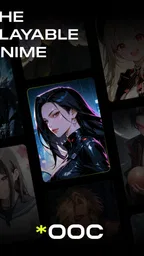
- Anime-inspired character designs give the game a distinctive visual style.
- Playable characters offer a more active alternative to watching anime.
- The title appeals to fans of anime-themed mobile games.
- Short play sessions suit casual gaming on mobile devices.
- The concept combines anime presentation with interactive gameplay.
What could be better
- The anime theme may not appeal to players seeking realistic visuals.
- Gameplay depth may feel limited for fans of complex action games.
- A reliable internet connection may be needed for some features.
- Progress can require repeated play to unlock more content.
- Performance may vary across older or less powerful devices.





